
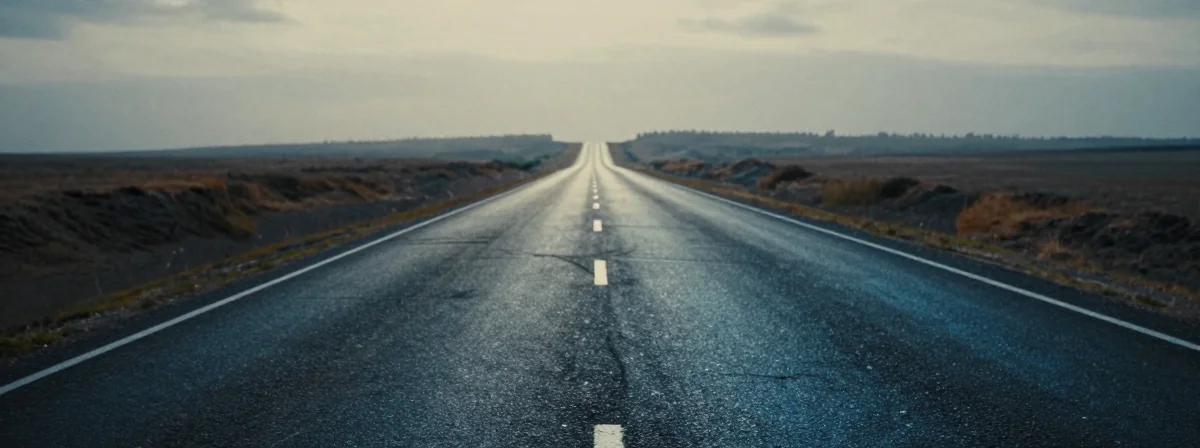
Has estado conduciendo bajo un sol implacable, y de repente, ves un charco de agua brillante en el asfalto a lo lejos. Te preparas para esquivarlo, pero a medida que te acercas, el charco se mueve y desaparece. Esto no es magia ni un truco de Hollywood—it’s a mirage, a physical phenomenon that bends light in ways your brain struggles to interpret correctly.
What you’re experiencing is more than just a visual trick—it’s a demonstration of how light behaves differently when traveling through air of varying temperatures. The hotter the air, the less dense it becomes, and this change in density alters the speed and path of light rays. It’s a subtle yet profound interaction between physics and perception that we encounter daily without even realizing it.
Consider this: you’re not actually seeing water on the road. You’re seeing the sky reflected onto the ground due to the way light bends through layers of hot and cool air. This isn’t just an optical illusion—it’s a tangible example of atmospheric physics playing out right before your eyes.
¿Por Qué El Cielo Se Proyecta Sobre El Asfalto?
The phenomenon begins with the sun heating the ground. When pavement or sand gets hot, it warms the air directly above it. This creates a layer of hot, less dense air sitting beneath cooler, denser air from higher up. Light travels slower through denser air and faster through less dense air, causing the light rays to bend as they pass through these different layers.
Imagine light rays coming from the sky. As they approach the hot air near the ground, they speed up and bend upward, away from the road. Your brain, however, assumes light travels in a straight line. When it receives these bent rays, it traces them backward in a straight line, perceiving them as coming from the road surface rather than the sky. This misinterpretation creates the illusion of a reflective surface on the ground.
The effect is similar to what happens when you look at a straw in a glass of water—it appears bent because light changes speed as it moves from water to air. In the case of a mirage, the “bending medium” is layers of air with different temperatures instead of water and air.
¿Cómo Se Forman Esas “Piedras” Que Se Mueven?
Mirages aren’t static—they flicker and shift because the hot air above the ground is constantly moving and changing. This turbulence causes the light rays to bend in slightly different ways moment by moment, creating the characteristic shimmering effect that looks like rippling water.
When you see a mirage, you’re witnessing light rays that have been bent so effectively that they’re reflecting like a mirror. In extreme cases, the temperature gradient is steep enough to create what’s called an “inferior mirage,” where the image appears below the actual object. This is why mirages often look like pools of water on the road—your brain interprets this reflected, inverted image as a reflective surface.
It’s worth noting that while we typically associate mirages with deserts or hot roads, they can occur anywhere there’s a significant temperature gradient in the air. You might even see them on hot days over dark asphalt parking lots or even on highways where the pavement heats up rapidly.
¿Por Qué Tu Cerebro Se Deja Engañar Tan Fácilmente?
Our brains are wired to interpret light traveling in straight lines. This assumption works well in most everyday situations, but it fails when light behaves unexpectedly due to atmospheric conditions. When your visual system receives bent light rays, it doesn’t know they’ve been altered—it simply processes them as if they traveled directly from their apparent source.
This misinterpretation isn’t a flaw in your perception—it’s a byproduct of evolution. Early humans who could quickly identify reflective surfaces like water had a survival advantage. So our brains developed pattern recognition that associates certain visual cues with water, even when those cues are created by atmospheric phenomena rather than actual water.
The strength of a mirage depends on the temperature difference between the ground and the air above it. The greater the difference, the more pronounced the bending of light, and the more convincing the illusion becomes. This is why mirages are more common and dramatic on extremely hot days.
¿Existe Algún Beneficio Práctico En Entender Esto?
Understanding how mirages work isn’t just an academic exercise—it has practical implications. Pilots, for instance, need to be aware of mirages to avoid misjudging distances or terrain features. In desert navigation, recognizing mirages can prevent travelers from mistaking them for actual water sources.
Photographers also benefit from understanding light refraction—knowing how heat haze affects images can help them adjust their shooting techniques or equipment settings to compensate for these atmospheric effects.
Even in everyday driving, recognizing a mirage as just an optical phenomenon can prevent unnecessary lane changes or sudden maneuvers that might endanger yourself and others on the road.
¿Qué Otros Fenómenos Ópticos Están Relacionados?
Mirages are part of a broader category of atmospheric optical phenomena that result from light bending through air of varying densities. Other related phenomena include:
- Superior mirages: Where the image appears above the actual object, often seen over cold surfaces like ice or snow
- Fata Morgana: A complex mirage that appears as towering, rapidly changing structures, often seen over water or flat terrain
- Heat haze: The shimmering effect seen above hot surfaces that distorts rather than reflects images
All these phenomena share the same fundamental principle: light traveling through air with varying temperatures and densities bends in ways that create unusual visual effects.
Reencuadre: Más Allá De La Ilusión
The next time you see what appears to be water on a hot road or pavement, take a moment to appreciate the complex physics at work. You’re witnessing light rays bending through layers of air with different temperatures, creating an illusion that your brain interprets as a familiar reflective surface.
This phenomenon isn’t just a curiosity—it’s a tangible demonstration of how our perception is shaped by both the physical world and the way our brains interpret sensory information. It reminds us that what we see isn’t always what’s there, and that understanding the underlying science can enrich our experience of the world around us.
So the next time you encounter a mirage, don’t just dismiss it as an optical trick. Recognize it as a beautiful intersection of physics and perception, a reminder of the fascinating ways our reality can play tricks on us—and how understanding those tricks can deepen our appreciation of the natural world.