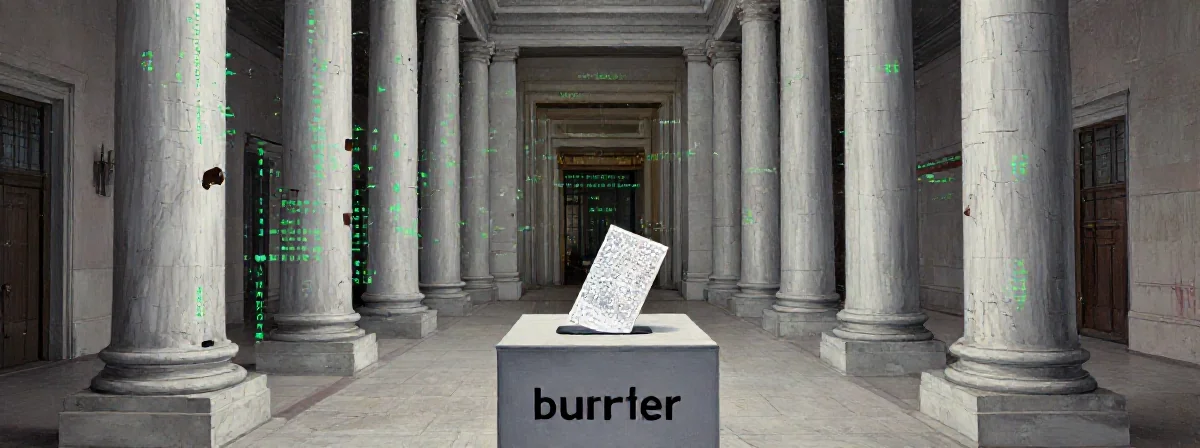
You’re staring at the interface, realizing it’s primary election day, and you have absolutely zero data on the candidates. It’s a classic user error: you’ve been treating the general election in November like the only system update, missing the fact that the backend has been running beta tests for months. Most people treat politics like a binary switch—on or off, blue or red—but the actual operating system is a mess of undocumented APIs and legacy code that nobody knows how to refactor.
If you want to navigate this without crashing your own cognitive load, you have to stop looking at the GUI and start analyzing the logic underneath.
The Architecture
Garbage In, Garbage Out? The Voting Dilemma You’re debating whether to input random data into the system or abstain entirely. It’s a classic engineering trade-off: noise vs. signal. If you don’t know the variables—candidates, policies, local implications—voting is just adding entropy to the dataset. However, the system is designed to run on aggregate inputs, so even a low-information vote is a ping that the server is active. Just don’t expect the output to be optimized for your specific needs if you’re clicking buttons at random.
Pre-Production vs. Release Day You thought the November general election was the only deployment, but you missed the beta testing phase: the primaries. This is where the parties filter the bugs before the final release. If you skip this, you’re stuck with whatever default character skin the algorithm selects for you. You don’t need to deep-dive into the documentation for every minor NPC; just identify the two or three front-runners and patch your knowledge accordingly.
The US-Iran Protocol Isn’t About Flags Stop looking at the UI—tweets about “freedom”—and check the backend logs. The conflict between the US and Israel against Iran is a resource management issue. They are trying to degrade a hostile node to secure the network’s bandwidth (oil) and cut off support for proxy botnets (Hamas, Hezbollah). It’s not about declarations of war—that feature was deprecated in 1942. It’s about maintaining root access in a region where Russia and China are trying to establish their own servers.
Legacy Code is Hard to Kill You wonder why a politician like Henry Cuellar keeps winning despite “bugs” in his alignment with the party. It’s because he has deep integration with the local hardware—border security. To the users in his district, he’s a stable driver that solves their specific lag issues. National sentiment doesn’t override local dependencies; an incumbent with 20 years of uptime is a fortress, even if the code is messy.
The Admin Account with No 2FA It’s a terrifying design flaw, but yes, the President has a singular “sudo” command for nuclear launch. There is no multi-factor authentication required from Congress once the codes are verified. The system prioritizes speed over consensus, assuming the human firewall is stable. It’s the ultimate single point of failure in the entire US defense stack.
The Decentralized Firewall “Stealing” a national election isn’t a script kiddy exploit; it’s impossible because the architecture is too fragmented. You have 50 different state servers and 3,000+ county nodes running different versions of the software. There is no single root password to hack. While you can tilt the scales with micro-targeted ads or gerrymandering (tweaking the RNG), a blatant brute-force attack would trigger intrusion detection systems immediately.
Just Ignore the Packet Loss You’re asking if the rumors about a candidate’s physical mishaps are real data or just noise. It’s almost certainly just noise—low-bandwidth static generated by opposition trolls. Don’t waste your CPU cycles analyzing every glitch in the video feed; focus on the actual output of the system.
Optimization Tips
The system isn’t broken, it’s just open-source and messy. You can’t refactor the entire codebase, but you can optimize your own node. Read the manual before the next deployment, stop trusting the GUI, and remember that the backend logic is rarely about what it says on the screen.