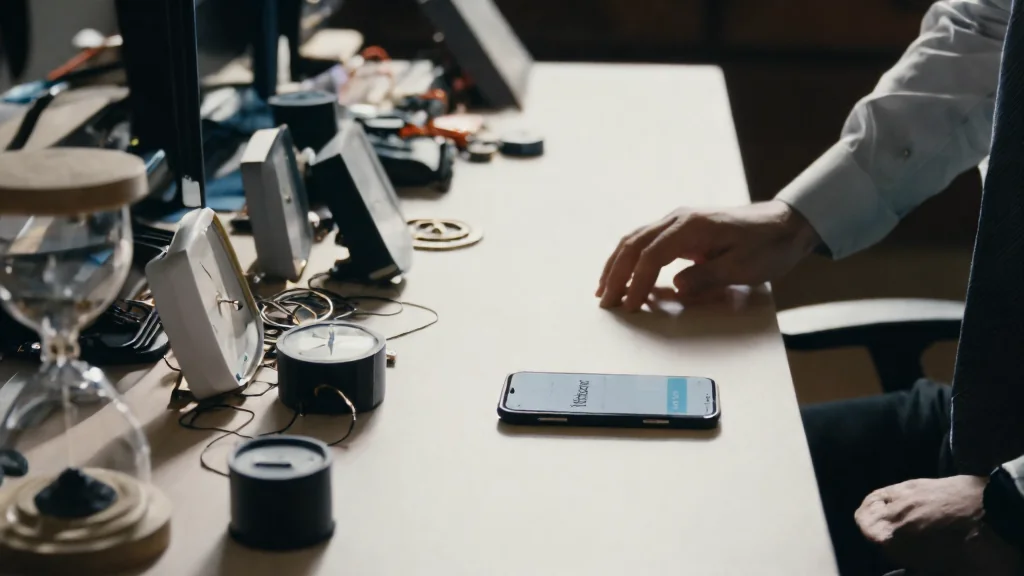
There is a strange, quiet moment that happens to almost everyone. You are young, and life feels long. There is time to kill today. You assume the path stretches out infinitely before you, a long, lazy road where you can always get back on track tomorrow. And then, one day, you turn around and realize ten years have got behind you. No one told you when to run. You missed the starting gun.
It is a haunting realization, the sudden awareness that the currency of time is finite and you’ve been spending it on things that don’t matter. We often think our biggest regrets will be the mistakes we made—the wrong turns, the failed relationships, the foolish risks. But if you sit with an older soul, someone who has walked the path already, you will hear something different. The true ghosts that haunt us are not the errors of action, but the paralysis of inaction.
We spend our lives waiting for a feeling of readiness that never arrives. We chase perfection while our potential withers on the vine. We trade our limited sunlight for a cubicle, thinking our employer will care about our loyalty, only to realize they will post our job opening before our obituary is even printed.
Why Waiting for Perfection Keeps You Stuck
There is a peculiar trap many of us fall into, especially when we are young. We believe that if we cannot do something perfectly, we should not do it at all. We want to start the business, write the book, or take the trip, but we wait until the stars align. We wait until we feel “ready.” Here is the hard truth: you will never feel ready. The wall of resistance you feel is not a sign to stop; it is a test to see if you want it badly enough.
Anything worth doing is worth doing half-assed. It is a controversial thought, I know, but consider it. A half-assed effort is infinitely better than a perfect intention that never materializes. So many of us waste decades mentally chasing the idea of perfection, ironically doing absolutely nothing in reality while the world moves on without us. Sometimes, you just have to start. You have to be willing to be messy, to be imperfect, and to figure it out as you go. The energy you spend fighting yourself to start is often far greater than the energy required to simply finish the task.
The Cost of Playing It Safe
We are taught from a young age to play it safe. Take the secure job. Save every penny. Don’t take unnecessary risks. And there is wisdom in prudence, certainly. But there is a dangerous side to safety. When you look back, the safe choices often cost you more memories than you realized. You might regret not taking that chance when you had nothing to lose, not quitting that job you hated, or not moving across-country when you had the freedom.
However, life is a delicate balance. If you hadn’t been safe, perhaps you would be in a worse spot emotionally or financially today. Maybe the safe path led you to meet your spouse or provided the stability you needed to raise your family. It is all a crapshoot. The danger isn’t necessarily in being safe; it is in being safe by default. It is in letting the fear of what might go wrong prevent you from ever seeing what could go gloriously right. You have to ask yourself if the safety is serving you, or if you are just hiding from the possibility of failure.
The Compound Interest of Health and Maintenance
There is a cruel irony in how we treat our physical selves. In our twenties and thirties, we feel invincible. We skip the dentist, eat whatever we want, and ignore the aches and pains, assuming our bodies are machines that will run forever. But the body keeps the score. It is much harder to get back into shape and change your diet in your forties after a major health scare than it is to maintain good habits in your twenties.
This applies to the smaller things, too. Maybe you threw a fit about getting braces when you were a kid, and now you are an adult, self-conscious about your smile, trying to figure out how to pay out of pocket to fix it. Or perhaps you were so afraid of losing your job that you never allowed yourself to let loose, to experiment, or to experience the world, only to find yourself in your eighties with money and time but no way to safely enjoy the vices you denied yourself. Take care of your teeth. Take care of your heart. It is the only vessel you have to carry you through this life.
Why We Trade Our Sunlight for a Cubicle
Perhaps the most common lament is the decades spent being the “reliable person.” We show up. We never miss a day. We tether our self-worth to our productivity and our loyalty to a company that views us as a line item on a spreadsheet. We trade the best years of our lives for a paycheck that disappears as soon as it arrives.
There is nothing wrong with hard work, but there is a tragedy in missing the world because you were staring at a screen. You might regret spending thirty years being reliable instead of being the person who saw the world, who took the weird trips, who said yes to the random opportunities. Most of the best memories start with the thought, “This might be a terrible idea,” and end with a story you tell for the rest of your life. Your company will replace you in a week. Your family and your memories are yours alone.
The Fleeting Window of Connection
One of the quietest sorrows is the realization that you did not understand how limited your time was with certain people. When you are young, you are surrounded by your peers—in college, in early jobs. You think there will always be a party, always a single person to talk to, always a friend just down the hall. But that window closes. People drift away. They get married, they move, they change.
You might regret waiting for someone to realize you were awesome instead of simply asking them out. You might regret not taking more pictures, not documenting the mundane moments that later become precious. A mediocre photograph is better than no photograph at all. It is proof that you were there, that you laughed, that you lived. Get in the habit of capturing the moments, not just the milestones. You will treasure those blurry, imperfect snapshots decades later, especially when the faces in them have changed or left your life.
How to Stop Haunting Your Future Self
So, what do we do with this knowledge? Do we spiral into despair over the time we have lost? No. Regret is a useful tool only if it serves as a compass, not a shackle. Some people reach the end of their journey and say they have no regrets—not because their life was perfect, but because they accept that every step, every wrong turn, and every delay led them to exactly where they are right now.
If you are happy here, if you love the people around you, then your life was a success. But if you feel the tug of something unfinished, listen to it. Do not wait until you are fifty or eighty to wish you had started. You will forever be haunted by telling yourself, “I thought I would have more time.” You don’t. Do it now. Be happy. That is the goal. Not to be big, not to be rich, not to be perfect. Just to be here, fully and completely, while you still have the chance.