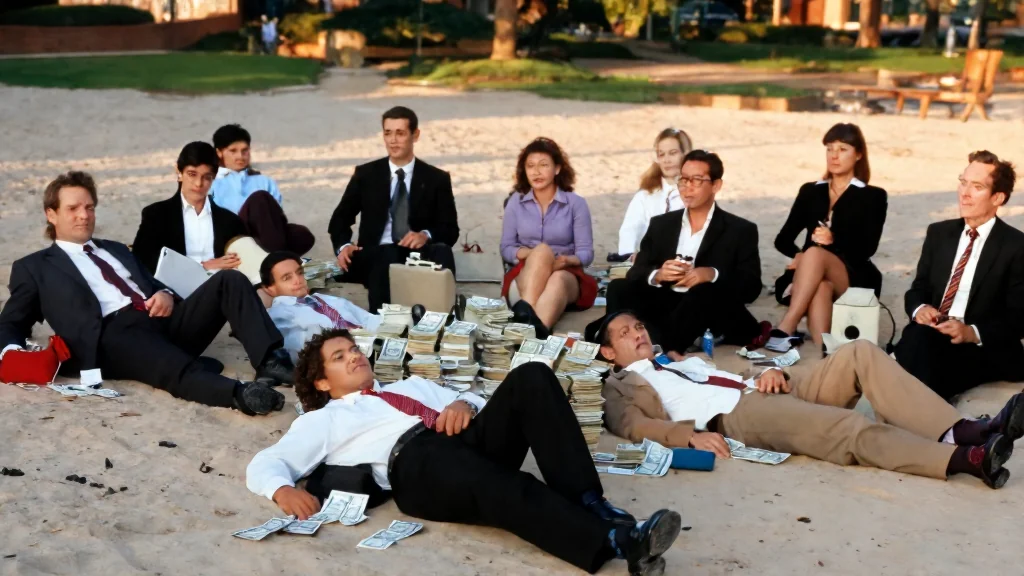
There is a specific kind of cognitive dissonance that happens when you watch someone accept a massive award for simply pretending to be someone else. The lights are bright, the applause is thunderous, and the acceptance speech is laden with the gravity of a head of state. Yet, beneath the glamour, there is a nagging whisper in the back of the collective mind: You just played dress-up. Why are we treating this like genius?
It isn’t just jealousy. It isn’t just bitterness. It is a profound confusion about the relationship between effort, value, and reward. We look at the people scaling a three-thousand-foot tower to change a lightbulb, guts churning in the wind, risking their lives for a paycheck that wouldn’t cover a celebrity’s dinner bill. Then we look at the beautiful people on the red carpet, discussing geopolitical theory despite barely having a high school diploma, and something breaks. The contract of perceived value feels null and void.
This disconnect isn’t limited to Hollywood. It has seeped into every corner of our culture, creating a silent resentment toward professions that demand reverence but offer little substance. It is a story of misplaced authority, where the image has become far more important than the work.
The Great Pretenders: When Dress-Up Becomes Doctrine
There is a famous bit of comedy that cuts closer to the bone than most political commentary. It describes the actor as a person with a “stupid bed-head hairdo mini brain” who is treated like a god for memorizing lines and standing where they are told. It is a brutal observation, but it resonates because it highlights the absurdity of our celebrity worship. We are honoring a mimic. We are giving a golden trophy to a human chameleon.
The problem arises when these mimics mistake their ability to cry on cue for intellectual authority. Because they are beautiful and charismatic, they develop a dangerous level of confidence. They are rarely told “no” in their professional lives, which inflates their ego until they believe they are experts on everything from virology to economics. They stand on a platform built by make-believe and use it to sway public opinion on very real, very dangerous issues.
When a celebrity talks out of turn about complex scientific matters, it isn’t just annoying; it can be hazardous. It leads to measles outbreaks and widespread misinformation. The oil rig worker might not have a doctorate, but they also don’t have the power to convince millions of parents to skip vaccinations. The respect we give actors is disproportionate to their actual utility, and the danger lies in their inability to recognize the difference.
The Walking Advertisement: Influencers and the Death of Authenticity
If the actor is the court jester elevated to king, the influencer is the commercial break that learned to speak. There is a specific hilarity in the modern “content creator” who believes they are a brand, not realizing they have simply sold their identity to the highest bidder. They are walking, talking advertisements, illuminated by the glow of a ring light, hawking detox teas and dubious tech gadgets to an audience that mistakes parasocial familiarity for friendship.
Consider the satire of the man who legally changed his name to “Subway.” It was a joke, but it is now reality. We are watching people hollow themselves out, becoming empty vessels for whatever sponsor pays the rent. They have poisoned the societal well with snake oil and curated perfection, convincing vulnerable people that happiness is just a purchase away.
The respect for this profession is non-existent because the authenticity is zero. They are the used car salesmen of the digital age, but without the lot or the car. Just a grid of smiling faces and affiliate links. It is difficult to respect a profession where the primary skill is the ability to sell a lie while looking attractive doing it.
The Merchants of False Science
Trust is the most valuable currency in the world, and there are entire industries built on counterfeiting it. Few things trigger a faster loss of respect than the word “homeopathic” attached to a medical title. It is an immediate signal to tune out, a red flag that signals a scam in progress. These “doctors” prey on the vulnerable, offering magic water and crystals to people who are genuinely suffering, trading on the prestige of real medicine to peddle pseudoscience.
This skepticism extends to the chiropractors who claim they can cure asthma by cracking a spine. While some find relief for back pain, the industry is riddled with practitioners who overstep their bounds, positioning themselves as primary healers without the rigorous education of an MD. When you see an actual medical doctor promoting quackery, the betrayal feels personal. It violates the Hippocratic Oath in spirit, if not in letter, replacing evidence-based care with whatever trend is currently sweeping the wellness blogs.
We do not respect these professions because they monetize hope without delivering results. They trade on the authority of the white coat while ignoring the responsibility that comes with it.
The Middlemen and the Overpaid
There is a special circle of resentment reserved for the middlemen—the realtors and the upper management—who seem to exist solely to take a cut of value they did not create. The realtor, often viewed as a glorified used car salesman for houses, is seen as a relic of a pre-digital age. They unlock doors and fill out paperwork, demanding a percentage of a life’s savings for the privilege. It is a profession where the image matters more than the work, and the handshake matters more than the service.
Similarly, the CEOs and founders of the modern tech world float so high above the ground they have lost sight of it. They are treated as visionaries, but to the average worker, they look like disconnected lottery winners. The disconnect is palpable. We see the eighteen million dollars a year paid to a man who tosses a ball around a patch of grass for a few hours, and we wonder why the person risking their life on an oil rig can barely afford rent.
It isn’t that we begrudge them their money. It is that we begrudge them the reverence. We are asked to applaud them as role models, as “captains of industry,” when they are often just lucky beneficiaries of a system designed to reward leverage over labor.
The Dangerous Illusion of the Protector
Perhaps the most complex loss of respect is reserved for the professions we are told to revere but often fail us. There is a narrative that certain jobs are inherently dangerous and therefore inherently noble. But danger does not equal morality, and it does not equal competence. When we look at the statistics, many of these “dangerous” jobs are statistically safer than logging or fishing, yet they command a militaristic respect in the public discourse.
The “bootlicking” for these roles creates a backlash. When the image of the protector clashes with the reality of their actions, respect evaporates. It is replaced by cynicism. We realize that the uniform does not make the man, and the badge does not guarantee the hero. We stop respecting the title and start looking for the individual character, often finding it lacking.
Reframing the Value of Work
Ultimately, the loss of respect isn’t about hate. It is about a recalibration of values. We are waking up to the fact that a platform does not make someone an authority, and a paycheck does not make someone a genius. We are beginning to value the tangible over the theatrical—the tower climber over the actor, the roughneck over the influencer.
Society is starting to realize that we have been honoring the mask rather than the person wearing it. The professions that will survive this cultural shift are the ones that offer something real: utility, truth, and genuine skill. The rest are just noise, fading into the background of a world that is hungry for something authentic.