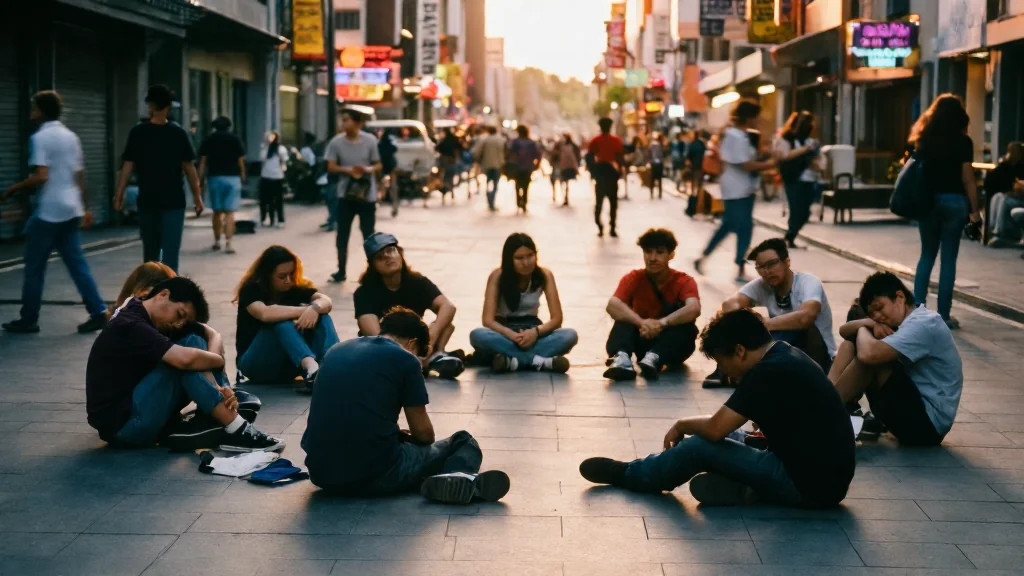
There is a peculiar kind of loneliness that comes from standing still while the rest of the world sprints. You look around at the frenzy—the flashing lights, the viral dances, the desperate need to be seen—and you feel a quiet disconnect. It isn’t that you are incapable of enjoying things; it’s that the volume of modern life has been turned up so high that the signal is getting lost in the static. You might find yourself wondering if everyone else has received a manual for living that you somehow missed.
We often mistake popularity for value. Just because a crowd gathers doesn’t mean there is a fire worth watching; sometimes, it’s just people standing around getting warm. When we uncouple our sense of self from the things we are “supposed” to love, we create space for the things we actually love. It is not about being a contrarian for the sake of it, but about being selective with your limited time on this earth.
Consider the energy you spend trying to appreciate things that simply do not resonate with you. It is exhausting to clap for a show you find boring, simply because the people around you are applauding.
The Illusion of the “Hustle”
We have created a culture that worships busyness as if it were a deity. You see it everywhere—the constant posting about “the grind,” the videos filmed from parking lots at odd hours, the performative exhaustion. But here is the truth about labor: it is a means to an end, not the end itself. There is a profound difference between being productive and being busy. One builds a life; the other often just builds a frantic feeling of importance.
True work is often quiet. It is the 20 or 30 hours a week put in without fanfare, the bills paid without a caption, the problems solved without an audience. The loudest workers are often the least effective, masking their inefficiency with the noise of their struggle. You do not need to broadcast your effort to the world to make it real. If you are working simply to take a picture of yourself working, you aren’t building a future; you are building a brand.
The Trap of Parasocial Relationships
Why do we care so deeply about the lives of people who do not know we exist? Whether it’s reality TV stars, global pop icons releasing the same album in new packaging, or influencers arguing over dramas we cannot touch, it is all a spectacle. It is like watching a play from the nosebleed section, convinced that the actors on stage are your friends. They are not. They are narratives projected onto a screen, designed to keep you watching so that someone else can sell you something.
There is a hollowness to this connection. When you base your emotional landscape on the ups and downs of a celebrity, you give away your stability. You allow your mood to be dictated by the marketing cycle of a stranger. It is far more courageous to turn off the screen and have a conversation with the person sitting right next to you.
The Cost of Digital Performance
Social media was supposed to connect us, but often it just encourages us to curate. Think of the traveler who documents every meal but never tastes the food, or the person who films a concert but never hears the music. We are becoming tourists in our own lives, prioritizing the evidence of the experience over the experience itself. This constant chronicling steals the moment from you. It turns a memory into a piece of content, fragile and fleeting.
Then there is the frantic pace of platforms built on short attention spans. Watching ten-second tutorials on complex subjects or endless loops of dancing is like trying to drink from a firehose. You get wet, but you never quench your thirst. It is a diet of mental junk food—tasty in the moment, but leaving you malnourished.
Aesthetics Over Function
There is a strange trend in modern aesthetics where looking impractical is considered a virtue. Take the obsession with long, sculpted nails that render basic tasks—like typing on a phone or picking up a coin—into a clumsy ordeal. Or the beauty standards that demand we paint ourselves orange or freeze our faces with toxins until we resemble statues rather than living, breathing humans.
When we prioritize a look over our ability to function, we restrict ourselves. We put our bodies on display like museum pieces, forgetting that we are the ones who have to live inside them. Comfort and utility are not enemies of beauty; they are its foundation. There is a grace in moving through the world unencumbered, a freedom that no amount of polish can replicate.
The Gamification of Consumption
We have also gamified our spending in ways that bypass our logic. Mystery boxes, blind bags, and collectibles where you don’t know what you are buying until you have already paid for it. It is a赌徒’s fallacy wrapped in plastic. We buy the thrill of the unknown, but we are left with clutter that we didn’t choose and often don’t want.
This extends to our vehicles and tools, too. We are replacing tactile, reliable knobs and dials with touchscreens in cars and planes, trading safety and muscle memory for a sleek, futuristic aesthetic. But when you are bouncing down a bumpy road or fighting turbulence, you do not want a delicate interface; you want something you can control without looking. Complexity is not a feature; it is often a liability.
Questioning the Default Scripts
Perhaps the most difficult obsession to navigate is the pressure to follow the “default” life script. For many, that means having children. It is viewed as the next logical step, a checkbox on the list of adulthood. But a life lived on autopilot is rarely a fulfilling one. Choosing not to have children is a valid path, yet those who walk it are often met with confusion or hostility. It takes courage to look at the roadmap everyone else is following and decide to hike your own trail.
Similarly, the tribalism of sports or religion can alienate those who seek a more personal connection. Crying, fighting, or dedicating your identity to a team of athletes you have never met, or adhering to dogmas that feel like fairy tales, can seem absurd to the outside observer. Passion is a beautiful thing, but it should be rooted in things that actually feed your soul.
Finding Your Own Frequency
At the end of the day, the common thread among these obsessions is a lack of intentionality. We drink energy drinks that make us grumpy because we are too tired to stop. We buy things we don’t need because we are lonely. We watch people we don’t know because we are bored with our own company.
The antidote is not to hate everything popular. The antidote is to ask yourself, simply, “Does this serve me?” You are allowed to find pumpkin spice overrated. You are allowed to think truffle fries are just fries with dirt on them. You are allowed to opt out of the noise. When you stop clapping for the things you don’t enjoy, you finally have your hands free to hold onto the things that actually matter.