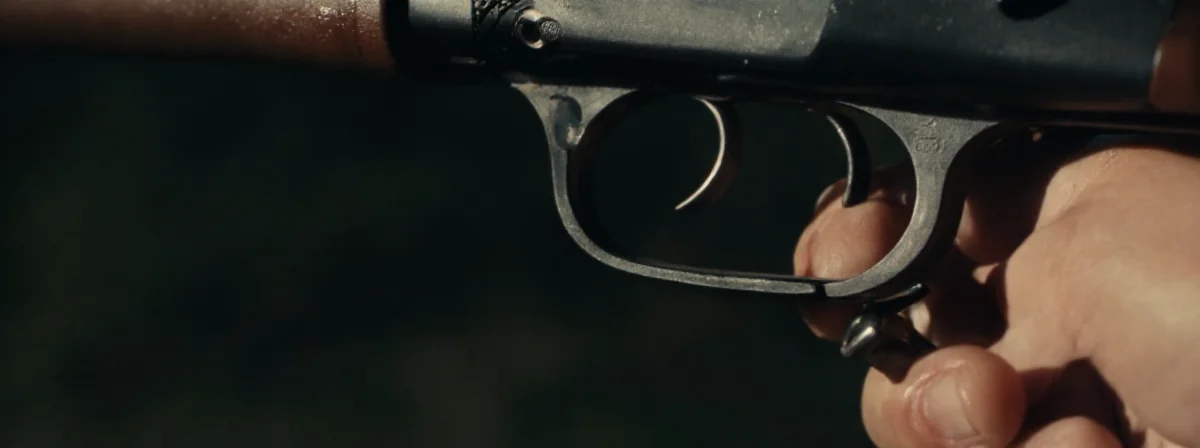
Fear makes us clumsy. When the adrenaline spikes and your heart hammers against your ribs, your brain defaults to the simplest possible action: push hard, break things, survive. It is in that precise moment of blind panic that your tools—and your habits—either save you or betray you.
I’ve watched people design their lives like a hair-trigger, ready to go off at the slightest provocation, but there is profound wisdom in designing systems that force us to pause.
The Lesson
Design Your Defaults to Require Intent There is a mechanical beauty in the way some rifles are built, specifically the old AK-47 selector switch. When the dust kicks up and the shooting starts, a terrified soldier will naturally slam the lever down as hard as they can. If down meant “fully automatic,” that soldier would dump their entire magazine into the dirt in a second. Instead, the designers placed the safety on top, the automatic setting in the middle, and the semi-automatic setting at the very bottom. The tension of the spring is set so that a violent, panicked slam skips the auto setting entirely and lands on single shot. It forces you to be deliberate about destruction. You have to consciously, carefully pull the switch up if you really want to unleash chaos.
You Cannot Count on Your Memory When Chaos Arrives In the heat of the moment, your brain cannot track complex variables. Ask a soldier in a firefight how many bullets they have left, and they likely won’t know the number. That is why wise warriors use visual cues—like loading a tracer round every fifth bullet, or placing a few tracers at the bottom of the magazine. It isn’t for the enemy; it is a signal for themselves. When they see that distinct streak of light, they know without counting that they are running on fumes. You need similar signals in your own life—simple, visible indicators that tell you when your energy is low so you aren’t surprised when the well runs dry.
Value the Empty Vessel It is tempting, when you are exhausted and moving fast, to discard what you’ve used and just grab something new. But in many professional armies, losing a magazine is a nightmare of paperwork and logistical headache. Soldiers carry “dump pouches” on their gear—not for trash, but to securely hold empty magazines until they can be refilled. An empty magazine is not useless; it is potential that just needs to be reloaded. Throwing it away is a failure of discipline. Do not discard the structures of your life—your routines, your tools, your relationships—just because they are currently empty. Keep them close. Refill them.
Trust No One Else to Load Your Weapon There is an old rule in the field: you bomb up your own magazines. You verify every round, check for damage, and ensure the spring is seated correctly. You do not pass this off to a squire or a supply clerk because if that weapon jams when you need it most, the consequences are entirely yours. Preparation is a solitary, sacred duty. Whether it is your presentation for work or your mental state for a difficult conversation, do not outsource the readiness. If you haven’t checked it yourself, it isn’t ready.
Reload in the Quiet Moments The golden rule is never to be caught reloading while the enemy is firing. You change your magazine after you clear a room, while you are behind cover, or during a lull in the conversation. It requires a strange sort of foresight to prepare for the next battle while the current one is still raging, but it is the only way to stay alive. You do not wait until you are completely empty to seek renewal. You refill while you still have breath in your lungs.
What to Remember
Panic will try to make you waste your resources, whether that is dumping a magazine blindly or burning yourself out with worry. But if you build your life with the right mechanical safeties—habits that force you to slow down, cues that tell you when you are low, and a respect for the empty spaces—you won’t have to rely on luck.
The goal isn’t to eliminate fear; it is to build a system where your fear cannot accidentally pull the trigger.