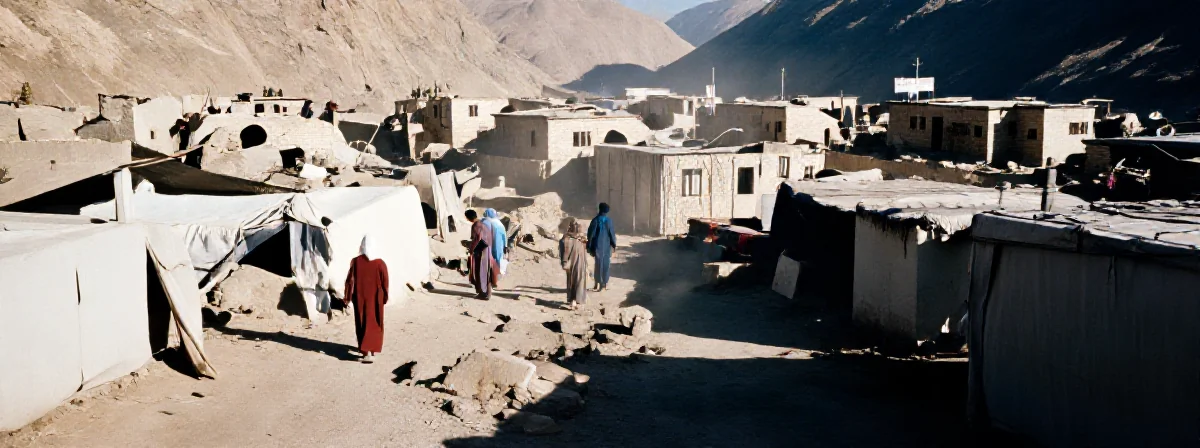
Imagine being one of 40 million people who just don’t appear on a map. You’ve got a culture, a language, and a history that goes back centuries, but no flag to call your own. That’s the reality for the Kurds, stuck in a geopolitical limbo that most of the world tries really hard not to think about.
It’s not just about drawing lines on a map, though. It’s about what happens when you get caught between four different countries that really, really don’t want to share.
Basically
It’s easy to blame the British for drawing straight lines When the Ottoman Empire collapsed after WWI, the British and French basically played a game of Risk with the Middle East. They promised the Kurds their own land, but then Turkey swooped in and took it, and the West just sort of shrugged. Now you have 40 million people spread across Turkey, Iraq, Syria, and Iran because someone decided borders looked better straight.
Nobody wants to give up their backyard For the Kurds to get a country, Turkey, Syria, Iraq, and Iran would all have to give up chunks of their own territory. Unsurprisingly, none of them are in a rush to sign those papers. It makes the Kurds pretty unpopular with their neighbors, not because of who they are, but simply because of where they live.
It stopped being about politics a long time ago You might think this is just a standard independence movement, but for a lot of Kurds, it’s literally about survival. We’re talking about banned languages, denied IDs, and horrific violence like the Anfal campaign where tens of thousands vanished. When you’re being erased by the state you live in, having your own country isn’t just a dream—it’s a shield. Independence means the international community might actually care if someone attacks you, instead of it just being “internal police business.”
The map problem is a total nightmare Think about it like this: if a city wants to break away but is totally surrounded by the country it’s leaving, how does that even work? You see this in places like Spain too, where one town votes to leave and the neighbor wants to stay. For the Kurds, their land is a patchwork quilt spread across mountains and borders, making a clean break almost impossible without moving millions of people.
They’re the Jews before 1948, or the Romanis with a flag It’s a unique spot to be in—too big to just assimilate and disappear, but scattered enough that nobody wants to see them unite. They’re often rural folks in less developed regions, looked down on by the ruling elites who prefer a nice, tidy European-style nationalism. It creates a tension that just doesn’t seem to have an off switch.
You’re not going to solve this in a day, and honestly, nobody’s found a magic fix for a hundred years.
Maybe the real takeaway is that lines on paper are a lot harder to erase than they are to draw. Until the world figures out how to handle people without a place, the Kurds are going to keep fighting just to exist on their own terms.
tags:
- kurdistan
- geopolitics
- middle-east-history
- stateless-nations