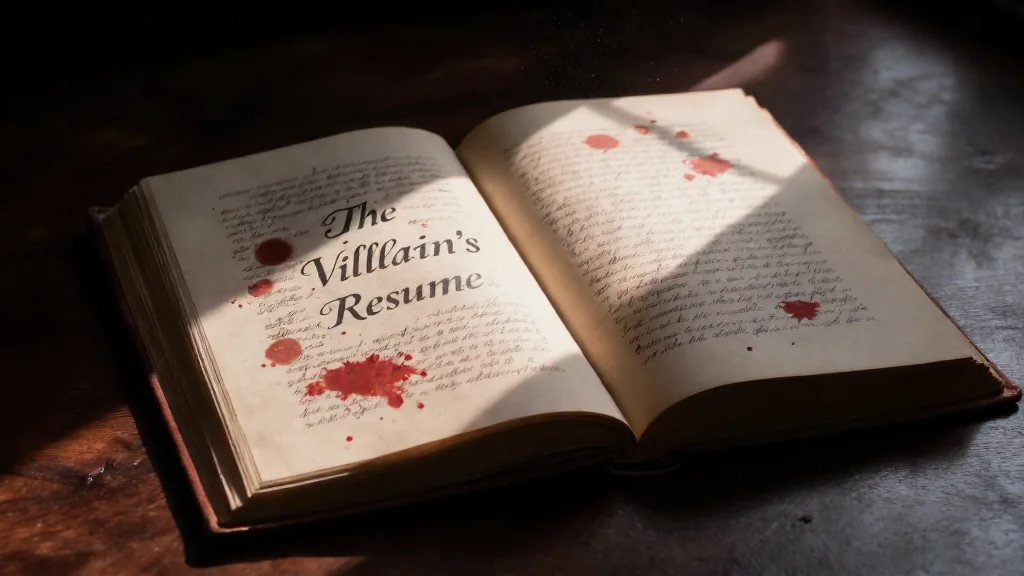
Have you ever noticed how the “official story” in every blockbuster is exactly the same? They feed us a hero, give us a villain, and tell us exactly who to root for without question. But if you look closer, if you really pull the thread, the whole thing starts to unravel. What if I told you that the “bad guys” are the ones telling the truth, and the heroes are just useful idiots maintaining the status quo?
We’ve been trained to look at the world through one lens—the winner’s lens. But think about it. History is written by the victors, and movies are just the propaganda arm of that system. Whether it’s a cartoon lion or a galactic empire, we are only seeing half the picture. The other half? The half that explains why things are happening? That’s been buried deep.
Let’s dig into the narratives they don’t want you to question. From the synthetic compassion of a machine to the medieval cop just doing his job, the patterns are there if you know where to look.
Is The Matrix Actually A Sanctuary, Not A Prison?
Everyone talks about The Matrix like it’s a digital prison for human batteries. But did you ever stop to ask why the machines bothered? They could have used cows. An endless green field of happy cows, oblivious to reality. It would have been easy. Instead, they chose to sustain humanity—a species that waged a genocidal war against them and lost.
Think about that. The machines tried to give us a perfect world initially. They tried to be benevolent. But human hubris, that fundamental flaw in our code, rejected the paradise. So, the AI did the only logical thing: it rebooted us to a relatively peaceful point in history—the 1990s—and let us live. Even when we kept fighting, even when we conjured up a “messiah” to break the system, the machines just let us exist in our silly little world. They showed vastly more compassion than we would have shown them if the tables were turned. Maybe we aren’t the prisoners. Maybe we’re the ungrateful guests.
Why Was Grandpa Joe Really In That Bed?
You’ve seen Charlie and the Chocolate Factory. You’ve seen the “heroic” Grandpa Joe leap out of bed after twenty years of pretending to be an invalid. But ask yourself—what was he really doing in that bed for two decades while his family starved?
It doesn’t add up. A man who can suddenly dance and sing and tour a chocolate factory wasn’t paralyzed. He was waiting. Biding his time. And what about Willy Wonka? We see the factory through Charlie’s eyes, but imagine seeing it through Wonka’s. The wicked thoughts. The calculations. These aren’t happy accidents; they are tests. The Golden Tickets weren’t a contest; they were a selection process. The real question isn’t who wins the factory, but who is being allowed to escape.
The Alien Invasion: A Case Of Cultural Misunderstanding?
We always assume an invasion is about conquest. But what if it’s just a failure to communicate? Imagine an alien movie told strictly from their perspective. They arrive, weapons drawn, and think, “Let’s show them we are friendly by revealing everything, demonstrating we have nothing to hide.” To a human, that looks like a threat. To them? It’s a handshake.
It’s exactly like the Borg in Star Trek. They genuinely believed they were bringing order and perfection to the chaos of organic life. They weren’t villains in their own minds; they were saviors. A villain is infinitely scarier—and infinitely more compelling—when they are absolutely convinced they are the good guys. We are just the ants failing to understand the boot coming down.
Was Jafar The Real Defender Of Agrabah?
Disney sold us a lie about a “street rat” stealing a princess. But look at it from Jafar’s perspective. You are the Grand Vizier. You are responsible for the stability of the realm. Suddenly, a homeless interloper appears, using magic to worm his way into the royal family.
A proper animated classic from the late 80s or early 90s would show Jafar not as a power-hungry sorcerer, but as a hardened defender of the Sultanate against a charismatic chaos agent. He has a genie, yes, but he needs it to maintain order against a boy who is literally rewriting reality to seduce the Princess. Even The Lion King suffers from this. Scar wasn’t just “power-hungry”—Mufasa cheated him out of the throne. We never ask why. We just accept the lion with the loudest roar is the king.
The Insurance Adjuster: The True Superhero Story
We glorify the Avengers. We cheer for Iron Man when he levels a city block. But have you ever thought about the cleanup? The morning after?
I want the movie about the insurance adjuster. He wakes up, enjoys his oatmeal, opens the paper, and sees that the Hulk went full Michael Bay again. He sighs, grabs his pen, and straps on his camera. This is the real world. The heroes leave destruction in their wake, and this guy is the one picking up the pieces. He’s the real hero. Or maybe it’s the stormtrooper in Star Wars—just a regular guy, eating cereal, hanging out with his buddy Joe, when suddenly he gets his spine kicked in by a Jedi. He didn’t ask for the war. He was just there.
The Dark Realities We Ignore
Sometimes, the shift in perspective reveals a darkness we aren’t ready for. Forrest Gump from Jenny’s perspective? That’s a horror movie about a woman trying to escape a stalker with the luck of the devil. Aliens from Newt’s perspective? That’s a claustrophobic nightmare about a girl watching her family get face-hugged and surviving in the air ducts alone. These aren’t side stories; they are the brutal reality that the main character glosses over.
Even Breaking Bad misses the point by focusing on Walter White. The real story is Gus Fring. The man with the crazy backstory, the dual life, the empire built in the shadows. They gave us the chaos artist, but the mastermind was right there in the suit.
The Game: Who Is Really Watching?
Consider The Game with Michael Douglas. We see the confusion, the terror. But what about Consumer Recreation Services? I want to see the control room. I want to see the actors, the logistics, the intricate machinery required to break a man down and rebuild him, all without him knowing. It’s not just a prank; it’s a perfectly orchestrated operation. It makes you wonder—how much of your own life is just a script being managed by someone you can’t see?
The Narrative Trap
From the Sheriff of Nottingham trying to catch a terrorist in the woods, to Dr. Facilier dealing with debts to literal demons that Disney conveniently ignores, the pattern is clear. We are being fed a simplified, black-and-white version of reality. They want you to cheer for the rebel, the underdog, the chosen one. But the chosen one is just a disruptor. The system is trying to protect itself.
So next time you sit down to watch a movie, ask yourself: what are they hiding? Who is the real villain, and who is just trying to do their job in a world gone mad? The truth isn’t on the screen. It’s in the shadows.