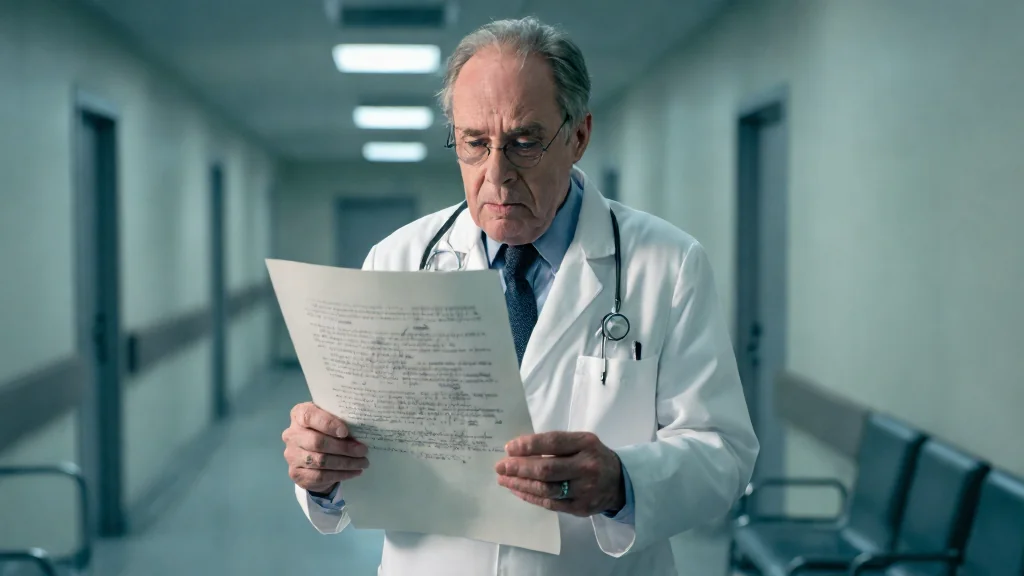
There is a distinct shift in power that happens the moment a physician walks into a clinic not as a provider, but as a patient. It’s a subtle, almost invisible transaction that most of us never get to witness. We assume that because a doctor has the medical knowledge, they simply self-diagnose, write their own scripts, and skip the line. But the reality is far more complex—and it holds the key to getting better care for yourself.
I’ve spent years analyzing the dynamics of the exam room, looking for the patterns that separate a standard visit from a truly effective one. What I’ve found is that medical professionals treat their own healthcare as a high-stakes investigation. They don’t just passively receive care; they actively curate the interaction, often using counterintuitive strategies to ensure they get the truth. It turns out, the way doctors behave when they are sick reveals a blueprint for how we should all be navigating the system.
Do Doctors Self-Diagnose or Play Dumb?
Here is a clue that might surprise you: many doctors actually hide their credentials when seeking treatment for themselves or their families. It sounds paradoxical. Why wouldn’t you want your physician to know you understand the medicine? The evidence points to a strategy of intentional ignorance.
Consider the case of a family physician who took her one-year-old daughter to a pediatrician. She deliberately never told the doctor she was a physician. Her goal? She wanted to be treated like any other anxious parent. She wanted the doctor to explain everything to her like she was five years old. Why? Because she feared that if the pediatrician knew she was a doctor, they might skip over the basics, assume a level of knowledge she didn’t actually possess regarding pediatrics, or be less thorough.
This is a critical finding. When you pretend to know less than you do, you force the specialist to explain their reasoning from the ground up. It eliminates the risk of them glossing over important details because they assume you already know. It’s a way to audit the doctor’s thought process in real-time.
The “Group Project” Mentality
When a doctor does reveal their profession to another doctor, the dynamic shifts immediately. It is no longer a hierarchical relationship; it becomes a collaboration. Think of it less like a student-teacher interaction and more like a group project where both parties are trying to solve the same equation.
One emergency room physician noted that when treating other doctors, the conversation becomes incredibly efficient. The patient can present a comprehensive history and relevant symptoms in about thirty seconds flat. Because they speak the language, they cut straight to the data points that matter. The ER doctor can then immediately offer a management plan. It’s the fastest consultation imaginable.
But there’s a deeper layer to this. Doctors report that when they see each other, the defensive medicine drops. They stop practicing “just in case” medicine and start practicing “honest” medicine. They can have open discussions about probability rather than certainty. “We could do test ABC,” a doctor might say to a colleague, “but honestly, you probably have X. Take this, and if it doesn’t get better, then we’ll do the test.” That level of nuanced risk assessment is rarely offered to laypeople.
The Power of Precise Vocabulary
You don’t need to go to medical school to adopt this specific tactic. The most reliable predictor of a successful doctor-patient interaction, according to our investigation, is the patient’s ability to use precise vocabulary.
People living with chronic illnesses often master this skill early on. They learn the specific names of their conditions, the acronyms for their blood panels, and the terminology for their symptoms. When they speak to a doctor, they aren’t saying, “I feel weird”; they are saying, “My creatinine levels are elevated and I’m concerned about AKI.”
This changes how the doctor perceives you. You aren’t viewed as a passive complaint box; you become a “sophisticated historian.” You signal that you are a reliable and active participant in your own care. This doesn’t mean you are trying to be the doctor’s equal. You are simply proving that you can handle the truth. Doctors are much more willing to have frank, complex discussions with patients who demonstrate they can understand the data.
The Danger of the “Little Knowledge”
However, there is a trap you must avoid. While doctors appreciate sophisticated vocabulary, they despise the “Dr. Google” effect. The worst patients are often those who have just a little bit of medical knowledge—enough to be dangerous, but not enough to be accurate.
We see this all the time in the evidence. A patient comes in demanding a specific test or medication because their aunt, who is a nurse, suggested it. They aren’t asking for a professional opinion; they are demanding a confirmation of their own bias. This shuts down the collaborative spirit. It forces the doctor to spend valuable time debunking bad information rather than solving the actual problem.
The distinction is subtle but vital. The good patient asks, “I noticed my symptoms align with X, what do you think?” The difficult patient states, “I have X and I need a prescription for Y.” One is a lead for the detective to follow; the other is an attempt to hijack the investigation.
When Knowledge Becomes a Burden
It’s important to acknowledge the dark side of medical expertise. There are times when knowing too much is a curse. We found harrowing accounts of specialists who became patients and were paralyzed by their own knowledge.
One breast cancer surgeon described walking into a room to see her own scans. She didn’t need the doctor to explain what she was seeing. She instantly knew the statistical survival rates, the grueling nature of the chemotherapy ahead, and the likelihood of surgery. The flood of information was so overwhelming that she barely heard a word the treating physician said. She was diagnosing herself in real-time, and the terror of that knowledge blocked her ability to cope.
This is why some doctors, even those with terminal illnesses, eventually choose to step back and just be the patient. As the neurosurgeon Paul Kalanithi wrote in his final days, there comes a point where you have to stop being the doctor and let someone else drive. You have to trust the pilot so you can focus on surviving the crash.
The Verdict on Your Next Visit
So, what is the takeaway from this investigation? You shouldn’t pretend to be a doctor, but you should stop acting like a passive passenger. The goal isn’t to outsmart your physician; it’s to facilitate the most accurate diagnosis possible.
Whether you choose to play dumb to ensure a thorough explanation, or use precise terminology to fast-track the conversation, the strategy remains the same: take ownership of the data. Be a historian of your own body. Present the evidence clearly and without emotion. When you treat the visit like a collaborative investigation rather than a service transaction, you change the outcome. The doctors are just waiting for you to bring them the clues they need to solve the case.