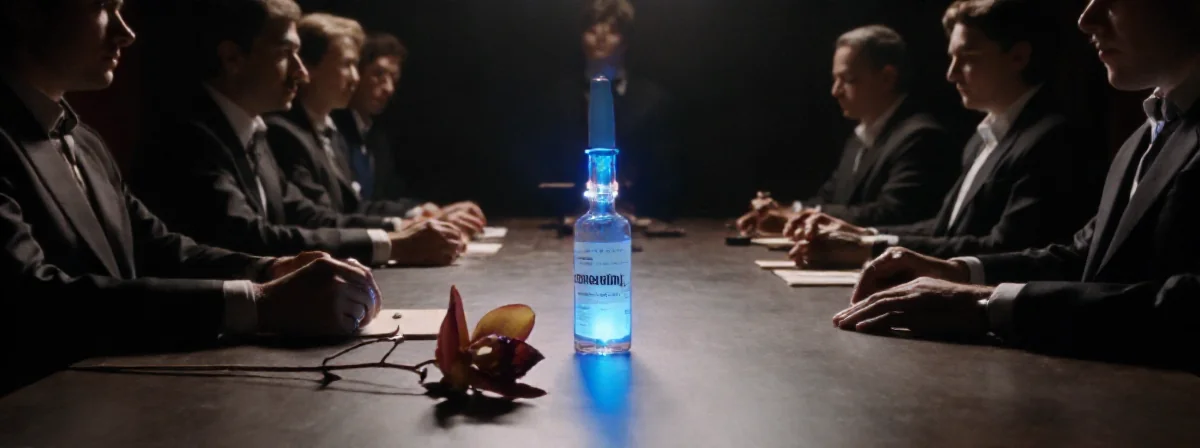
Have you ever felt like the entire timeline of human history is playing a cruel joke on you personally? You spend your youth wishing you had more time, more energy, more resources, only to reach the finish line and realize the technology was finally released five minutes after you collapsed. It’s a pattern I’ve noticed repeating over and over again, and it’s too precise to be an accident.
Think about it. We are currently on the precipice of reversing the aging process, of stopping the biological clock dead in its tracks. But for who? Not for you. Not for me. It’s for the generation that hasn’t been born yet, or perhaps, for the ones who can already afford to buy their way out of the grave. The timing is always just wrong enough to make you wonder if someone is pulling the strings from behind the curtain.
I’ve been looking at the data, and the implications are terrifying. We are the transition generation—the ones born just early enough to witness the miracles, but too late to actually benefit from them. And if you look closely at the safety trials, the cost, and the legislation, you start to see a picture that looks less like progress and more like a trap.
Is The Timeline Rigged Against Us?
Imagine, for a second, you make it to 90. You are a husk of the person you used to be, your mind sharp but your body failing. Suddenly, they announce the cure. They figured out how to stop the aging process, allowing you to live as long as you want in your current body. Would you take it? Most people would say yes in a heartbeat. But isn’t it convenient that this breakthrough always seems to arrive when we are least capable of enjoying it?
It’s the same pattern we saw with Formula 1 safety. It took decades of trial and error, of heartbreak and tragedy, to reach the technology we have today. The safety measures didn’t exist when the drivers needed them most; they arrived for the next generation. It feels like the universe is running a beta test on our lives, working out the bugs so that the next batch of souls gets the polished, finished product. We are just the crash test dummies.
The “Coco” Trap: Stuck in Time
There’s a theory that keeps me up at night, a concept ripped straight from folklore but applicable to our high-tech reality. In the movie Coco, the dead exist in the afterlife as the age they were when they died. Die young, and you’re forever young. Die old, and you’re trapped in a decaying form for eternity. Now, apply that to our current trajectory of “stopping aging.”
As far as we understand, ‘stopping aging’ isn’t possible without also ‘reversing’ it. You can’t freeze the decay without fixing the damage first. So, if they freeze you at 90, are you just a 90-year-old consciousness stuck in a loop forever? It sounds like a hell designed by a bureaucrat. You get the “gift” of immortality, but only after they’ve stripped away everything that made life worth living. They sell you the dream of infinite time, but they hide the fine print: you’ll be spending that eternity in a broken vessel.
The Billionaire’s Secret to Eternal Life
Let’s be honest about who this technology is really for. I have good news, bad news, and even worse news for you. The worse news? The billionaires have likely already made it illegal—or at least impossible to access—for the “poors” to get the immortality treatment. The cost will be in the millions, naturally.
The good news is that the technology exists. The bad news is that it doesn’t matter. In 100 years, immortality won’t be a joke by definition for everybody; it will be a reality strictly for the super-wealthy. It’s the ultimate divide. One class gets to ascend, to watch history unfold for centuries, while the rest of us are left to the mercy of probability. It’s not just about money anymore; it’s about buying time itself. And if you think they’re going to share that secret, you haven’t been paying attention to how the game is played.
The Probability Paradox of Living Forever
Even if you ignore the class warfare aspect, there’s a mathematical trap waiting at the end of the infinite road. Immortality is a joke by definition because of the law of averages. Even if you stop biological aging, you cannot stop a car wreck. You cannot stop a freak accident. You cannot stop the sheer chaos of the universe.
By sheer probability, if you live long enough, death is going to claim everybody eventually. It’s the sad, bitter truth they don’t put in the brochures. You might live for five centuries, but eventually, the odds will stack up against you. The longer you play the game, the closer you get to the house winning. So, are they really selling immortality? Or are they just selling a longer, more terrifying waiting room for the inevitable?
Why Your Grandfather’s Life Was the Real Test
Look at the rapid acceleration of the last century. A grandfather born in 1922 in rural Kansas went from a life with no technology—no refrigerators, party line phones, zero cars—to a world of smartphones and the internet. He remembered seeing his town’s first car. That has to be such a mindblowing and exhausting lifetime.
It reminds me of The Shawshank Redemption, but with less culture shock and more relentless sensory overload. We are living through a compression of history that is tearing our minds apart. We are the bridge generation, spanning the gap between the analog silence of the past and the digital screaming match of the future. No one is meant to hold that much context in their heads. Is it any wonder we feel like we’re losing our minds?
The Curse of the Late Arrival
We’ve all had the thought: “If only this existed when I was in my prime.” It’s the old man wishing for the wheelchair when he could still run, or the man wishing for Viagra when he didn’t need it. It’s a cruel irony that defines the human experience. We always long for the tools that arrive too late.
There is a group of people who are prideful of not needing these new innovations, who say, “Thank god this didn’t exist when I was young.” They point to the brainrot content fed to kids today, the endless scrolling, the dopamine loops. And sure, the brainrot of the 80s was different, but was it really better? Or was it just slower? Every generation accuses the youth of rotting, but maybe they’re just jealous that the youth are being destroyed by technology that is actually exciting, rather than the slow boredom of the past.
The Final Deception
So where does that leave us? Squeezing out a few more years, hoping to be the last old person before the singularity hits? It’s a gamble. But maybe the real secret isn’t that the technology is arriving too late. Maybe the deception is believing that the “good old days” were any better.
We are thankful our youth was free of the surveillance state, free of the algorithmic leash. But we are also here, right now, watching the horizon. The question isn’t whether they will invent the cure for aging. The question is whether you’ll be allowed to have it, or if you’re just here to watch the rich fly away into a future you were never meant to see.