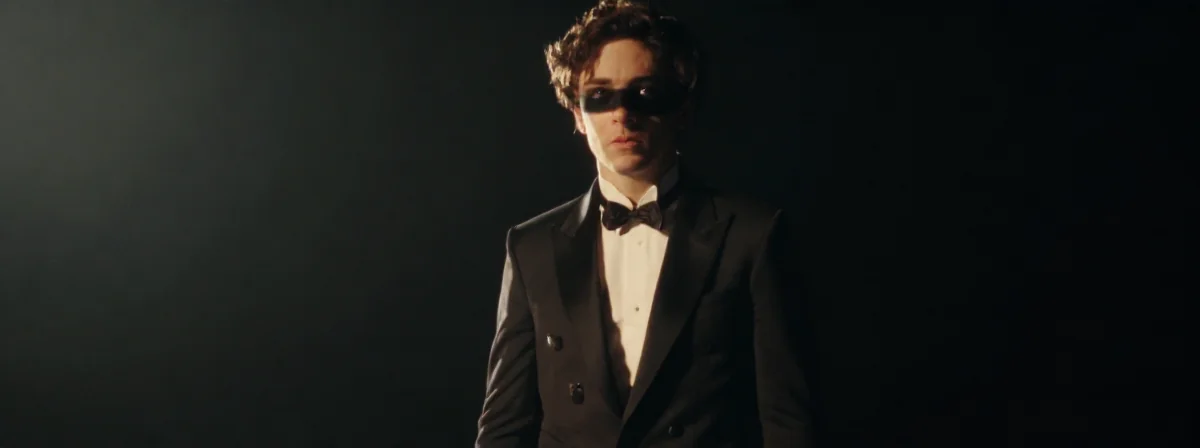
It wasn’t a scandal. There was no leaked tape, no arrest record, no public meltdown in a late-night drive-thru. Instead, it was a slow, steady drip of small moments—clues left behind at press junkets, in interviews, and in the whispers of industry insiders—that eventually cracked the case wide open. We’re looking at the sudden, precipitous fall from grace of an actor who could do no wrong, and trying to understand exactly when the tide turned.
If you’ve been paying attention, you’ve felt the shift. The collective adoration curdled into something colder, more skeptical. We need to sift through the evidence to understand why the public’s patience snapped. It’s not just about one bad movie or one awkward interview; it’s about a pattern of behavior that suggests the “humble artist” persona might have been a mask all along.
The timeline is fascinating. We saw a meteoric rise from relative obscurity to dominating the screen in what felt like a blink of an eye. That kind of speed usually breeds resentment, but in this case, the resentment feels earned. Let’s look at the exhibits.
The Opera Incident: The Smoking Gun
Every investigation has a turning point, a piece of evidence that makes the other clues fall into place. For our subject, it was a televised town hall. During a conversation about the industry, he decided to take a swing at two of the most difficult art forms in existence: ballet and opera.
He didn’t just express a lack of interest; he went for the jugular. He dismissed these disciplines as things “no one cares about anymore,” contrasting them with blockbuster hits like Barbie or Oppenheimer. He even cracked a joke about losing “14 cents” in viewership if he offended the dance community. When you look at the transcript, the arrogance is palpable. He prefaced the insults with “All respect to the ballet and opera people,” which is the classic “I’m about to insult you, but don’t get mad” defense.
It was a calculated risk that backfired. He tried to frame it as a hard truth about modern audiences, but it came off as a cheap shot from someone sitting at the cool table. It signaled a fundamental lack of respect for the grind of other artists.
The Family Connection: The Ultimate Irony
Here is where the investigation gets truly baffling. Context is everything, and when you dig into this actor’s background, the comments become even more egregious. You don’t have to look far to find that his own family is deeply rooted in the very art forms he was mocking.
His mother and grandmother were professional ballet dancers. He grew up around the discipline, the pain, and the sheer financial precarity of that world. To dismiss it as irrelevant isn’t just ignorant; it feels like a betrayal of his own bloodline. It suggests a man who believes his success is purely a result of his own genius, completely ignoring the cultural foundation that raised him.
It paints a picture of someone who has forgotten where they came from. When you have that kind of lineage, you don’t get to look down on the struggle. You should be the first one to defend it.
The Breakfast Rumors: Fact vs. Fiction
When a reputation starts to sour, the rumors begin to flow. We have to be careful here, distinguishing between verified evidence and character assassination. A story circulated about a private chef who claimed he was required to make three separate breakfast options every morning, only for the actor to eat one and toss the others.
On the surface, this looks like the behavior of a tyrant. But if you trace the source, the lead goes cold. The story didn’t come from the chef; it came from a comedian recounting a bit. Furthermore, the alleged punchline—that the actor offered the extra food to the chef—actually makes him look decent, not wasteful. It’s a classic game of telephone where the nuance was stripped away to fit a narrative.
However, the fact that people believed it instantly is the real clue. It was a credible lie because it fit the profile that was being built. If the public thought he was a decent guy, that story would have been laughed off immediately. Instead, it stuck because it confirmed what people already suspected: that he has become a diva.
The Cookie Crumb Trail: Investigating Viral Myths
We see the same phenomenon with the viral story about him snatching a cookie off Sarah Paulson’s plate. The quote attributed to him—“I’m Timothée Chalamet, I eat whatever I want”—is deliciously villainous. It perfectly encapsulates the “Hollywood brat” trope we love to hate.
But again, we have to look at the source material. There is no video evidence. There is no witness verification. It appears to be an invention, perhaps a joke that got out of hand or a fabrication designed to fuel the fire. Yet, it spread like wildfire because we are now looking for reasons to be annoyed. When a narrative shifts, people stop giving the benefit of the doubt. We become eager to believe the worst.
The Oscar Obsession: Desperation or Dedication?
Step back and look at the broader motive. Why the sudden arrogance? Why the need to punch down at opera and ballet? You have to look at the awards circuit narrative. There is an aggressive thirst for that gold statue that is becoming uncomfortable to watch.
He has openly referred to his own performances as “top-of-the-line” and “committed.” While confidence is necessary, there is a fine line between self-assuredness and egomania. When you are campaigning that hard, when you are acting like the award is your birthright, the public tends to root against you. It’s the “Icarus” effect—we love to watch people fly too close to the sun, especially when they seem to be doing it just to show off their wings.
He went from the indie darling who seemed surprised to be there to the front-runner who acts like he owns the place. That transition is rarely smooth, and in his case, it’s been littered with PR landmines.
The Verdict: It’s Not Just About the Art
So, what is the final verdict? Why does the internet suddenly hate him? It’s not just because he dislikes ballet or because he might be dating a controversial figure. It’s the accumulation of “icks.”
He made comments about the child-free life being “bleak,” alienating a massive portion of his demographic. He projects an air of being “hand-delivered” into greatness, seemingly blind to the privilege that accelerated his career. He forgot that the thing that made him famous in the first place was his relatability, his ability to seem like the sensitive kid next door.
He tried to shed that skin and become a powerhouse, but he did it without the grace or the humility to back it up. We don’t hate him because he’s successful; we hate him because he acts like his success was inevitable and that the rest of us just don’t understand the art of “real” cinema like he does. The mask slipped, and unfortunately for him, we didn’t like what we saw underneath.