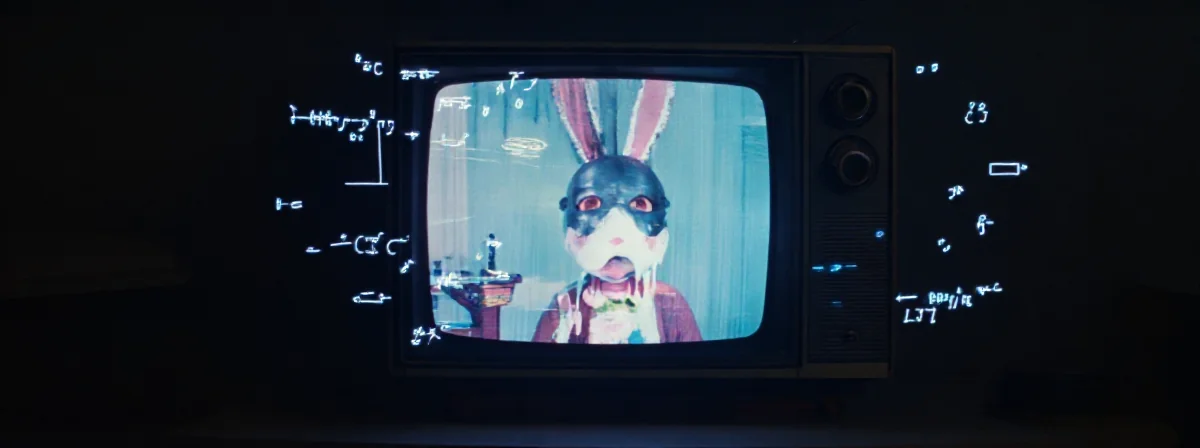
There is a specific kind of teenage angst that feels like a fever dream, and for the early 2000s, that dream had a giant rabbit mask. You remember the first time you watched it—the confusion, the dread, the strange feeling that you were witnessing a prophecy. But here is the clue most people miss: the magic of this film relies entirely on what you don’t know.
I’ve gone through the files, and the evidence suggests that trying to understand the plot of Donnie Darko is actually the worst thing you can do for your enjoyment of it.
What I Found
The Director’s Cut ruins the mystery I investigated the extended version of the film, and the findings are damning. The theatrical cut leaves you in the dark, forcing you to feel your way through the narrative, while the director’s cut shines a floodlight on the mechanics of the tangent universe. It reveals too much, turning a poetic experience into a dry sci-fi lecture about wormholes and artifacts. One viewing of the cut was enough to keep me away from the movie for a decade; it exposes the director’s success as a fluke, proving the movie was saved in the editing room, not conceived on the page.
Seth Rogen’s feature film debut is perfect Look closely at the background bully in the hallway scene. That is Seth Rogen, delivering his first-ever line in a feature film: “I like your boobs.” It’s a crude little clue that grounds this high-concept nightmare in the messy reality of high school hallways. Even in a movie about time travel and mental illness, the teenage boys are just teenage boys.
The soundtrack was a last-minute save The director originally wanted “Never Tear Us Apart” by INXS for the opening, but he couldn’t get the rights. Fate stepped in. “The Killing Moon” by Echo & The Bunnymen creates a mood that the INXS track simply couldn’t match—it’s ominous, it fits the lunar themes, and it sets the entire tone. We have Drew Barrymore to thank for bringing that band to the production’s attention, proving she was the conduit for the film’s entire atmosphere.
This movie was a happy accident Digging into the production logs, you find that the actors worked for peanuts because they believed in the script, while the budget was blown on visual effects. It suggests the film was a perfect alignment of casting and editing that saved a messy script from itself. The more you analyze the intended vision, the more it looks like lightning in a bottle rather than a master plan.
Understanding the plot is a trap You can spend hours reading about the Living Receiver and the Manipulated Dead, trying to make sense of the rift in spacetime. But once you solve the puzzle of the tangent universe, the movie loses its power. The ambiguity isn’t a bug; it’s the feature that makes the film feel like a memory rather than a physics lesson.
Case Closed
The movie works best when you stop trying to solve it and start feeling it. It’s a dark, edgy precursor to modern indie vibes that captures the specific pain of growing up, saved only by the mystery of its edit. Sometimes, the best detective work is knowing when to close the file and just enjoy the confusion.