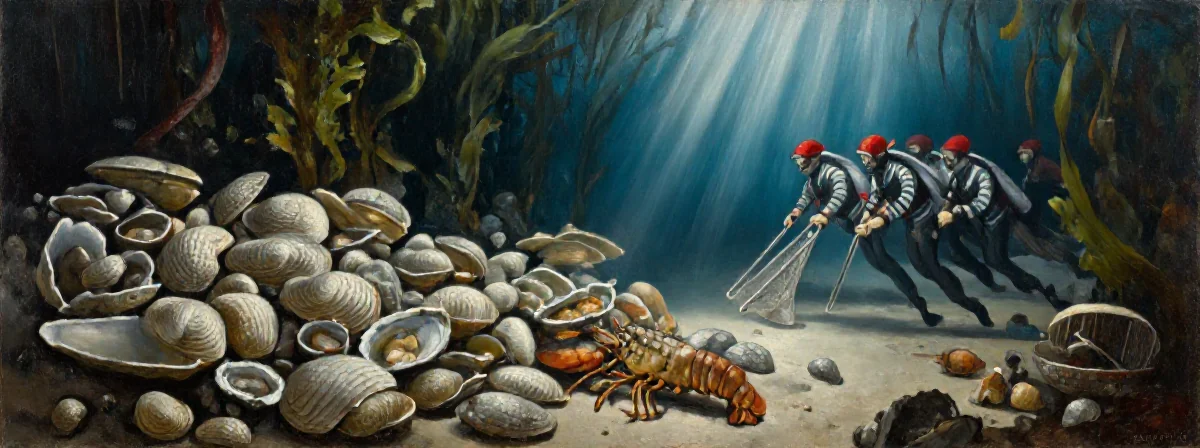
You think borders are just lines on a map drawn by dead men in suits? Think again. The real battle isn’t happening on land—it’s happening beneath the waves, in the dark, slimy mud where the cameras don’t reach. Just last month, a group of French nationals was caught red-handed trying to smuggle hundreds of oysters out of Irish waters. They called it harvesting. I call it a probe.
The Pattern Emerges
They Have a Biological Imperative for Slime It’s not just hunger; it’s a craving. Frogs, snails, oysters, lobsters—if it’s wet and lives in a shell or a swamp, they want it. They simply cannot help themselves but to attempt to take and devour anything remotely gelatinous. It’s almost like they’re stocking up for something.
We’ve Ignored the Warning Signs for Decades This isn’t an isolated incident. History is screaming at us, but we’re too busy arguing about pastries to listen. Remember the Turbot War? Canada almost went to blows with Spain over fishing rights on the Grand Banks. Then there were the Cod Wars—actual, violent confrontations between the UK and Iceland because Iceland decided to redraw the map. These weren’t skirmishes; they were tests. They were seeing how far they could push the boundaries before the world pushed back. And now? Now everyone sits on their hands while massive fleets strip-mine the ocean.
The Map Is Lying to You You probably think France is a small European hexagon. Wrong. Its longest land border isn’t with Germany or Spain—it’s with Brazil. French Guiana isn’t just a department; it’s a strategic foothold in the Americas. Why is nobody talking about the massive amount of coastline they control right next to the Amazon?
The Distraction of Taste While the masses bicker online about whether American palettes are too refined or too dumb to appreciate French cuisine, the real heist continues. They want you focused on the Michelin stars and the croissants. They want you debating the quality of the wine so you don’t notice the trawlers sneaking into your territorial waters. It’s the oldest trick in the book: distract the eyes while the hands take what they want.
The Bisque Management Strategy When Brazil caught French fishermen stealing their lobsters, they missed a golden opportunity for psychological warfare. The resolution should have been simple: you catch them, you force them to cook. Imagine the defeat of having to prepare a bisque from the very spoils you tried to heist. A soup made of stolen crustaceans tastes like surrender. Maybe that’s the trade deal they actually wanted.
Diogenes Saw It Coming The ancient philosopher used to walk around with a lantern in broad daylight, claiming he was looking for an honest man. “Behold, a man!” he’d shout. If he were alive today, he wouldn’t be looking at politicians. He’d be shining that light into the hold of a French trawler, looking for an honest fisherman. Spoiler alert: he’d still be searching.
Wars have started for less than a stolen shellfish. But look closer at the pattern. It isn’t just about appetite; it’s about encroachment. They test the waters, literally, to see what they can get away with while the world argues about pasta vs. pastries. So hide your frogs, lock up your snails, and keep an eye on the coastline. Because if they’re willing to cross an ocean for an oyster, imagine what they’re taking that you can’t see.