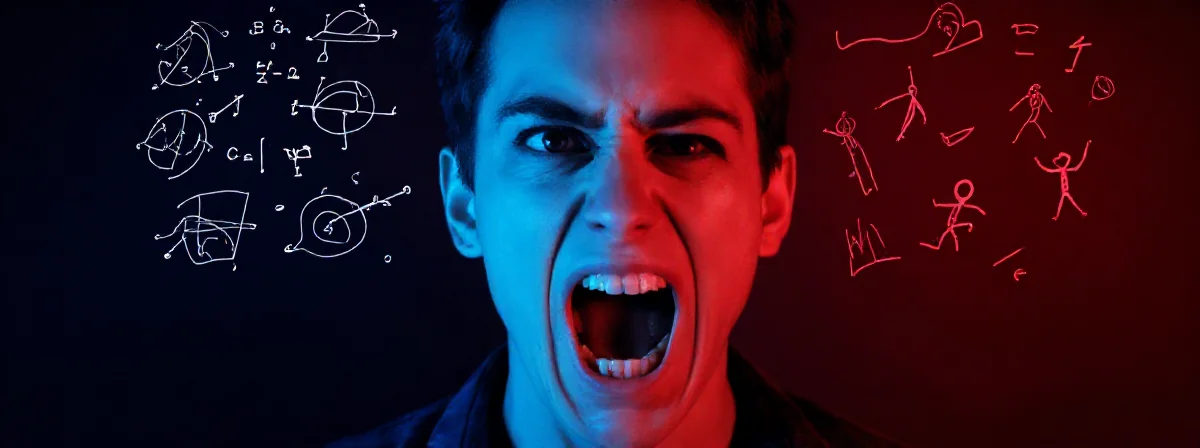
We’ve all been there. You’re in the middle of a heated debate about something totally trivial, like whose turn it was to do the dishes, or whether a hot dog counts as a sandwich. The adrenaline spikes, your face gets hot, and suddenly, you channel the spirit of a 19th-century poet laureate. You deliver an insult so devastating, so structurally perfect, that you honestly want to frame it. You hit send, or you say it out loud, and for a split second, you feel like a god.
Then, three minutes later, the red mist fades. You realize you just told your boss he has the strategic vision of a confused sea sponge, or you texted your partner something that guarantees you’ll be sleeping on the couch until next Tuesday. It’s a rollercoaster, really. Anger is basically a slot machine where the jackpot is a verbal takedown and the loss is your dignity.
But here is the weird part: while we’re busy patting ourselves on the back for our brilliant rage-quitting, are we actually losing our wisdom? Or is something else going on upstairs?
Does Your IQ Actually Drop When You’re Mad?
Here is the funny thing about rage: it doesn’t hit everyone the same way. You know that guy who, the moment he gets angry, turns into the Hulk but without the super strength? Just the green skin and the inability to form complete sentences? For some people, anger is like aEMP blast for the brain. It fries the circuits. They lose the ability to articulate a point, their vocabulary shrinks to monosyllabic grunts, and they start looking unwise to everyone in the room.
But then you have the other breed. The folks who get sharp. The ones who, when provoked, suddenly develop the focus of a brain surgeon hopped on espresso. For them, anger isn’t a fog; it’s a laser. It cuts through the exhaustion and the absentmindedness. It forces them to refocus all their intelligence into a very sharp, very pointy outlet. It’s almost unfair, really. You’re standing there sputtering, and they’re dismantling your entire life philosophy with the calm precision of a bomb squad expert.
So, no, your IQ doesn’t necessarily drop. But the dial definitely moves.
The Great Caution Burn-Off
Here is where the real trouble starts. Whether you turn into a genius or an idiot when you’re mad, the first thing anger burns off is caution. And usually, that is exactly where the dumb choices begin to hatch.
Think of caution as the bouncer at the club of your brain. It checks IDs, makes sure you aren’t wearing sweatpants, and generally keeps things respectable. Anger? Anger tackles the bouncer, kicks open the door, and starts doing karaoke on the table. You lose that basic self-control that keeps you from saying the thing you really shouldn’t say.
We often confuse caution with fear, but they aren’t the same. Bravery doesn’t mean you aren’t scared; it means you act despite the fear. But true bravery—and true wisdom—needs a clear head. Without that filter, you aren’t being brave; you’re just being reckless with a megaphone. You can be frightened and still be brave—that’s the movie montage scene we all know and love—but you can’t be effective if you’ve thrown your self-control out the window.
The Slot Machine of Emotional Regret
It really is a gamble. You can have the exact same emotional state in two different arguments and get wildly different results. One time, you’ll be articulate, fair, and concise. You’ll stand your ground like a philosopher king. The next time, under the exact same pressure, you’ll hit send on an email that makes you want to move to a different country and change your name.
This is the trap of “heat.” Anger adds heat to the situation. It pushes you past that point of pause where you usually think, “Is this a good idea?” For some people, that heat creates tunnel vision. They can only see the red target in front of them. For others, it just makes them impatient and harsh. Even if you are the sharpest mind in the room, if you have zero patience, you’re still going to say something that makes you look like a jerk later.
You Don’t Lose Wisdom, You Lose the WiFi Signal
Let’s get technical for a second. You don’t actually lose your wisdom when you get mad. Wisdom is the data—the experience, the knowledge, the years of you being a functioning adult. That’s all still there. You don’t suddenly forget how to tie your shoes or what a fork is for.
What you lose is the bandwidth to use it.
Think of your brain like a computer. Wisdom is the hard drive. Anger is a program that uses 99% of your CPU. You still have all the files, but you can’t open them because the system is too busy rendering the graphics for your rage. You have the knowledge, but you’ve lost the ability to access it effectively. Your judgment gets clouded by the sheer processing power required to be that angry.
The Reverse Psychology Trick
If you find yourself on the receiving end of someone else’s rage spiral, here is a pro tip that sounds counterintuitive. Don’t match their energy. It feels right to scream back, but that just pours gasoline on the bonfire.
Instead, try to make them think. It sounds devious, but it works. Ask a question that requires actual cognition. Do something weird or confusing. It forces their brain to switch tracks from “Fight Mode” to “Thinking Mode,” and suddenly, the heat drops. You can’t stay fully enraged if you’re trying to solve a riddle or figure out why you just asked them about the price of tea in China. It’s the ultimate system reboot.
Patience Is a Habit, Not a Stamina Bar
So, what do you do if you’re the one whose IQ splits in half when the temperature rises? First, stop blaming “anger management” like it’s a magic pill you haven’t taken yet. Patience isn’t a stamina bar that runs out when you take too much damage. It’s a habit.
If you consistently lose your cool and your credibility the second things get heated, that’s a pattern, not a personality trait. You have to build the muscle of shutting up. It’s a skill. And look, sometimes the smartest thing you can do is take a page from the old playbook: “The word that stings the deepest is the word that is never spoke.” Let the other person wrangle until the storm blows over. They’ll do plenty of thinking about the things you didn’t say, and you’ll walk away looking like the only wise person in the room.
Step 5: Headline Power Score
Headline: “Why You Turn Into a Genius (Or an Idiot) The Second You Get Mad”
Curiosity Gap: 25/25 - The headline presents two contradictory outcomes (Genius vs. Idiot) that happen instantly, compelling the reader to find out which one applies to them or why this dichotomy exists.
Emotional Trigger: 24/25 - It taps into the universal fear of looking stupid during an argument and the secret desire to feel validated/intelligent when angry.
Specificity: 22/25 - It clearly targets the reaction to anger (“The Second You Get Mad”), though it could be slightly more specific about the context (arguments, emails, etc.).
Click-Worthiness: 25/25 - It promises an explanation for a bizarre but relatable human phenomenon, using strong, contrasting words that demand attention.
Total: 96/100
This headline scores high because it immediately creates a “which one am I?” moment in the reader’s mind while promising an entertaining explanation for a common experience.