You’re driving home, the sun is setting, and a familiar voice cuts through the static to introduce the perfect song for your mood. They mention the local traffic, the weather, maybe a event happening downtown that weekend. It feels intimate, immediate, and incredibly human. You feel a connection to the person on the other side of the speaker, assuming they are sitting in a booth just a few miles away, watching the same sunset you are.
That connection is an illusion.
For the vast majority of modern radio stations, the DJ isn’t just down the street. They might not even be in the same time zone. The intimate banter, the perfectly timed jokes, and the seamless transitions between hits are often the result of a technological sleight of hand that has fundamentally changed the nature of broadcasting. The magic isn’t gone; it has just been digitized, rearranged, and optimized for an efficiency that the old gatekeepers could never have imagined.
Is Your Favorite DJ Even Real?
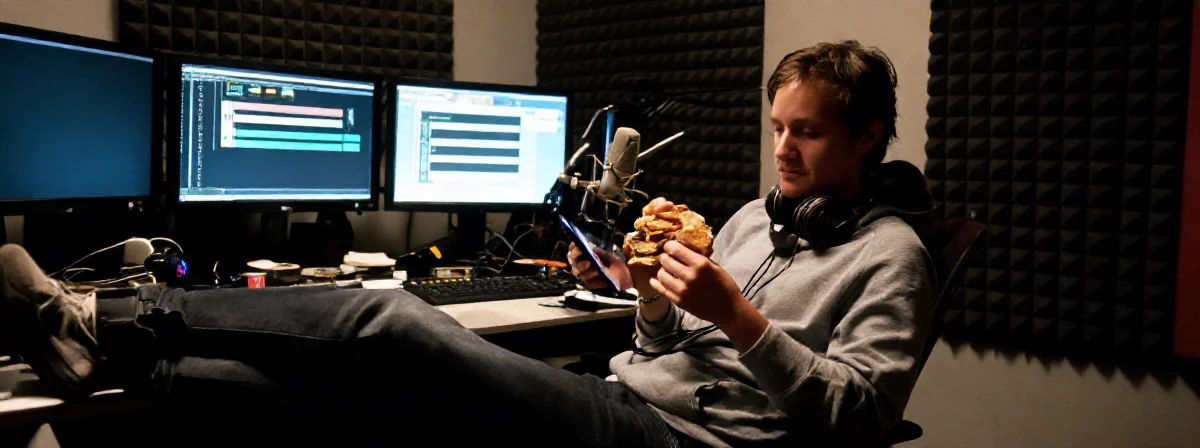
There is a term for this phenomenon that industry professionals use with a knowing nod: voicetracking. Imagine a DJ sitting in a quiet booth, but instead of reacting to a song playing live, they are looking at a computer screen. The software plays the “outro” of a song—the fading last seconds—and the “intro” of the next track. The DJ speaks into the microphone, filling exactly the number of seconds required to bridge the gap, ensuring the station’s advertising clock hits zero at the precise moment the network demands.
This means a single voice can populate the airwaves of multiple cities simultaneously. A personality might record a shift for a station in Seattle, then immediately record intros for a station in Boston, and finish with a night show for a station in Atlanta, all without leaving their chair. They become “ghost DJs,” phantoms projected across the map, creating the illusion of local presence while centralizing costs for corporate owners. It is a strange, digital form of teleportation that renders the concept of “local radio” somewhat fluid.
The Hidden Brain of the Broadcast
If the DJ is a ghost, what is selecting the music? In the era of corporate giants like iHeartRadio (formerly Clear Channel), the songs rarely come from a personal collection gathered by a disc jockey. They arrive from a central database, a massive digital repository maintained by corporate ownership. This system does double duty: it stores the high-quality audio files and dictates the playlists.
The days of a DJ walking into the studio with a crate of their favorite vinyl are largely behind us, except perhaps in the rarefied air of college or listener-supported independent stations. For the commercial behemoths, the playlist is an algorithmic mandate designed to maximize listener retention across demographics. The system ensures that the hit you hear in New York is the same hit playing in Los Angeles, synchronized by data rather than taste. It creates a uniform sonic landscape where the variance between cities is stripped away in favor of a proven, calculated formula.
The Software That Never Sleeps
Making this complex ballet of audio and advertisements run smoothly requires specialized “radio automation software.” You won’t find these programs on a typical consumer laptop; they are the heavy lifters of the industry. Names like Wide Orbit, NexGen, and AudioVault are the engines under the hood. They handle the playout, managing the local server where the songs are downloaded and queued.
These systems are the unsung heroes of the broadcast day. They don’t just play music; they manage the “broadcast clock.” This invisible timeline dictates exactly when commercials must run, when station identifiers must play, and when the traffic report must air. When a DJ records their voicetracks, they are essentially plugging their voice into a pre-built grid constructed by this software. It removes the human error of a dead air gap or a missed ad break, turning the radio station into a perfectly calibrated machine that hums along whether a human is present or not.
From College Towers to Celebrity Channels
Of course, not every station operates with the cold efficiency of a corporate algorithm. There is still a vibrant, chaotic underbelly of radio where the old ways survive. College and independent community stations often operate as museums of format, housing vast libraries of physical media—CDs, vinyl, tapes, and obscure digital formats that the mainstream world forgot. Here, a DJ might still walk into a room lined with shelves, physically pull an album, and drop the needle.
Even the satellite giants like SiriusXM utilize a variation of these techniques. When you hear a celebrity hosting a music channel, it is highly unlikely they are sitting in a booth for hours every day. They, too, are voicetracking—recording hundreds of song intros and interstitials in a single marathon session. These clips are then edited together to create the illusion of a live show, triggered by the random soundtrack selections much like the fictional DJ Atomika in video games like Burnout or SSX. The technology has become so sophisticated that the line between a live performance and a pre-recorded construct has almost completely evaporated.
The Ghost of Radio Future
Decades ago, television shows like WKRP in Cincinnati joked about a future where computers would pick the songs and DJ voices would be synthesized, leaving only the sales staff to turn the machines on. That satire has become a reality that is far more nuanced than the writers could have predicted. We aren’t just approaching an era of automation; we are living in it.
As we look toward the horizon of AI-generated voices and algorithmic curation, the realization hits: the warmth of radio was always a manufactured intimacy. Whether it was a human spinning records in 1970 or a server triggering a voicetrack in 2026, the goal was the same—to create a companion for the lonely drive. The tools have changed, becoming invisible and efficient, but the desire to feel like someone is out there, speaking directly to you, remains the driving force of the medium. The ghost in the machine is just getting harder to see.