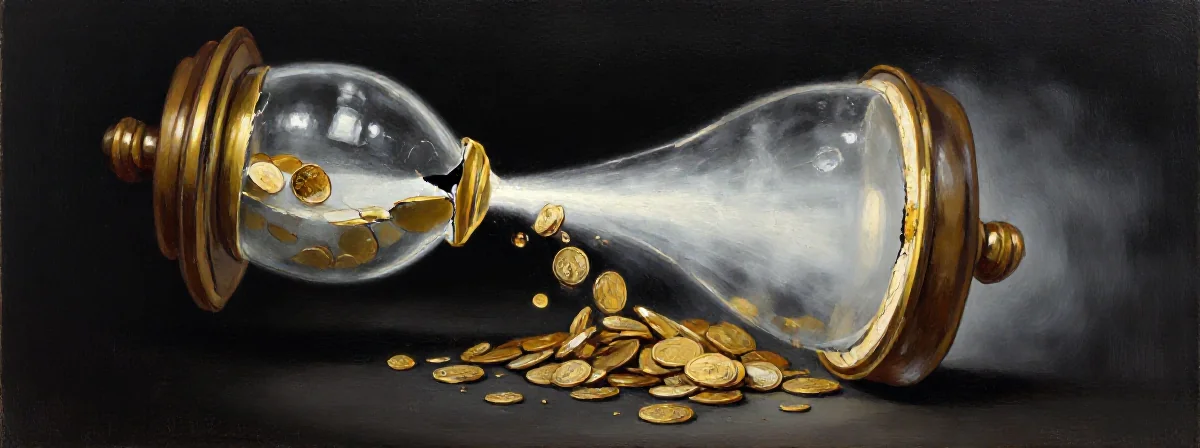
You’re driving down the highway, the engine humming, when a familiar guitar riff tears through the speakers. You reach for the volume knob, ready for the epic, atmospheric intro that defines the song—the buildup, the slow burn, the release. But instead, you’re dropped straight into the chorus. The soul of the track has been surgically removed to fit a commercial break. It’s a frustratingly common experience, a tiny theft of art that happens every day. But what if you found out that sometimes, those missing intros aren’t just filler? What if those thirty seconds of silence or instrumentation are actually a separate, lucrative product designed to game the system?
There is a hidden economy in the gaps between your favorite songs. For decades, artists and labels have utilized a clever, sometimes controversial loophole in royalty collection. By slicing a track into pieces—separating an intro from the main body, or cutting a long suite into distinct movements—they can trigger multiple payouts for a single play. It sounds like a technicality, a boring bit of accounting, but it has fundamentally shaped how we hear music on the radio and how albums are constructed.
Consider the Steve Miller Band. The intro to “Jet Airliner,” officially titled “Threshold,” wasn’t just a creative choice; it was a financial one. By listing it as a separate entity, the artist ensures that every time that song plays, they aren’t just paid for the hit. They are paid for the intro, too. It is a strategy that turns seconds into dollars, and it is more prevalent than you might realize.
Why Radio Stations Chop Up Your Favorite Tracks
Turn on any classic rock station during prime commuting hours, and you will notice the music feels… accelerated. The radio environment is a battlefield for attention, and long, winding intros are often the first casualty. You rarely hear the haunting, spoken-word intro to Pink Floyd’s “Empty Spaces” bleed into “Young Lust.” You almost never catch Judas Priest’s “The Hellion” transitioning into the thunderous opening of “Electric Eye.” To the station program director, these are wasted seconds that could be used for another ad or a faster rotation of hits.
The logic is ruthless but efficient. A listener might tune out during a slow, minute-long build-up. So, the station cuts to the chase. But this isn’t just about impatience; it’s about regulations. For years, Federal Communications Commission (FCC) rules limited how many songs by a single artist could be played within a given hour. If a station wants to play a deep cut or a massive hit but has already hit their quota for that band, they might avoid the intro if it is listed as a separate track, or vice versa, to maximize their playlist flexibility.
Yet, something shifts when the sun goes down. Late at night, during off-peak hours, the rules relax. That is when you might finally hear “Eruption” bleed perfectly into Van Halen’s “You Really Got Me.” It is a reminder that the “complete” version of the song still exists, preserved for the dedicated insomniacs and the purists who refuse to accept the chopped-up fast food version of art.
The Royalty Loophole That Changes Everything
Here is where the math gets interesting, and slightly cynical. In the music business, royalties are often calculated per track, not necessarily per minute of listening time. If a song is six minutes long, it earns one royalty. If you chop that song into six separate one-minute tracks, you theoretically earn six royalties for the same listening experience.
This is why some artists have aggressively divided their albums into tiny fragments. If you listen to a concept album where every track is a distinct piece, the artist earns a payout for every single one. If you release a six-minute suite, you earn one. By splitting an intro, an interlude, and an outro into their own track IDs, an artist can multiply their earnings significantly without adding a single second of new music. It is essentially the same tactic used by YouTubers who chop a ten-minute video into ten parts to farm views, applied to the highest echelons of the music industry.
Of course, this comes with a catch. If the royalties are based on the “artistic value” or the track count, then the cost of licensing that music for movies or commercials skyrockets. Instead of paying for one license to use a hit song, a production company now has to negotiate for the intro, the song, and the outro separately. It creates a financial windfall for the artist, but a logistical headache for anyone trying to use the music legally.
When the Intro Is Actually the Main Event
Not every separated track is a cash grab, though. Sometimes, the intro is simply too powerful to be buried as “Track 1, Part B.” There are moments in music where the introduction eclipses the song it introduces, becoming a legendary piece of art in its own right. For many, the ominous synth swells of “The Hellion” are superior to the racing speed metal of “Electric Eye.” They are two sides of the same coin, but the first side sets a mood that the second simply rides.
Take the band Nightwish. Their song “Storytime” is preceded by “Taikatalvi,” a delicate, Finnish-language lullaby that sounds like a father singing a child to sleep before the bombastic, nightmare-fuel rock opera kicks in. It is a jarring, beautiful contrast that defines the album’s narrative. Similarly, the video game Octopath Traveleller II utilizes this technique masterfully. The boss theme “Critical Clash II” features a unique intro snippet for each of the game’s eight protagonists. One character might get a hopeful violin melody, another a driving percussion beat, before they all slam into the same heavy metal confrontation. It adds character-specific flavor that would be lost if the game just skipped to the “action” part of the track.
Even the Beatles stumbled into this by accident. “Her Majesty” was originally meant to be cut from Abbey Road. An engineer, told to destroy the tape, instead tacked it onto the end of the album with fourteen seconds of silence. For fifty-five years, that tiny fragment of a song has been generating its own separate royalties, a happy accident that proved the value of the “hidden” track.
The Dark Side of Songwriting Credits
While some use track splitting for artistic reasons, others have used it as a weapon in band wars. The history of Pink Floyd is riddled with tension over credits and royalties, and the album Animals is a prime example. The album consists of only five tracks, with the centerpiece being the 17-minute epic “Dogs.” Guitarist David Gilmour wrote the vast majority of the music for this track, yet bassist Roger Waters, who handled the lyrics, managed to secure a significant portion of the music publishing as well by rearranging the structure.
But the real money grab was in the bookends. The intro and outro, “Pigs on the Wing (Part 1)” and “Part 2,” are barely over a minute long each. They feature simple acoustic strumming. Because they are separate tracks, Waters earned full songwriting royalties for them, effectively boosting his share of the album’s total payout massively. It is a tactic that contributed to the band’s eventual implosion—Gilmour pulling his weight on the instrumentals while watching the credits—and the royalties—slide away to his bandmate. It is a stark reminder that in the music business, the pencil can be just as mighty as the guitar.
Why Streaming Ruined the Strategy
For a long time, this track-splitting strategy worked wonders on vinyl and CD, and even in radio play logs. But the modern era of streaming has thrown a wrench in the gears. Platforms like Spotify and Pandora operate on algorithms that favor continuity, or conversely, total chaos.
If an artist splits a song into thirty-second parts to farm royalties, the streaming services have a counter-measure: they will insert a millisecond of silence between tracks. This destroys the seamless transition the artist intended. If you have shuffle play turned on, listening to a concept album becomes a disjointed mess. You might hear the intro to a song, followed immediately by a completely different track from a different artist. It renders the “album experience” obsolete.
Furthermore, listeners refuse to click through a playlist thirty times to listen to one symphony. If the music is too difficult to consume, people simply won’t listen to it. The platform might even delist the fragmented versions in favor of a “complete” single edit, rendering the artist’s complex royalty scheme useless. The loophole is closing, not because of laws, but because the technology has moved on.
The Hidden Value in the Silence
Ultimately, the battle over intros and track splits is a battle over how we value music. Is a song just a collection of disposable minutes, or is it a cohesive piece of art where every second matters? When a radio station cuts the intro to save time, or an artist splits a track to make money, they are both making a calculation about the worth of those opening moments.
But for the listener, those moments are often where the magic lives. The heartbeat that opens “Dark Side of the Moon,” causing you to check your speakers; the stomping beat of “We Will Rock You” that demands you sing along to “We Are the Champions” immediately after. These aren’t just tracks on a spreadsheet. They are the emotional hooks that drag us into the song’s world.
So the next time you hear a song start abruptly on the radio, know that something is missing. And the next time you see a one-minute track on an album, don’t skip it. It might be a cash grab, or it might be the most beautiful part of the record. Either way, it deserves to be heard.