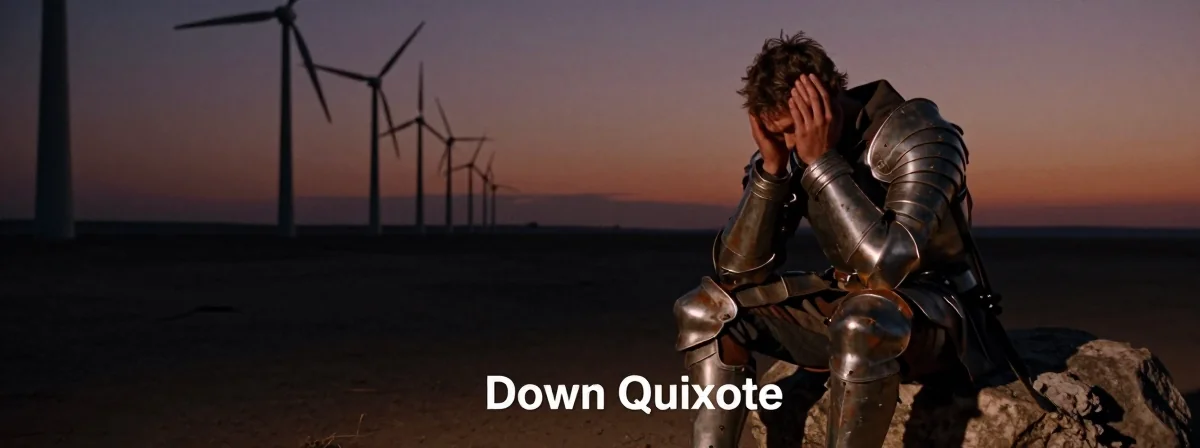
Have you ever stumbled upon something that felt so… strangely perfect, it made you suspicious? You look at the poster, the framing, the lighting, and something just clicks. It’s too good to be an accident. That’s the feeling hitting everyone who digs into the latest Brazilian sensation making the rounds. It’s not just a movie; it’s a riddle wrapped in an enigma, wrapped in a pun that makes the establishment uncomfortable.
They want you to look away. They want you to think it’s just “offensive” or “weird.” But look closer. The camera work doesn’t lie. When you see a project that blends high-budget cinematography with a cast the industry usually ignores, you have to ask: what are they hiding? This isn’t just another adaptation; it’s a mirror being held up to society, and the reflection is far more complex than the narrative peddlers want you to believe.
Is the Title a Psychological Operation?
Let’s address the elephant in the room. The title. “Down Quixote.” On the surface, it looks like a cheap pun, a joke in poor taste designed to get a reaction. But what if that’s the point? What if the controversy is the gatekeeper? The system uses offense to keep the uncurious masses away from the truth.
When you hear the title, you might flinch. That’s a conditioned response. But think about it—a pun is one of the oldest forms of subversive humor. It forces you to think, to connect two disparate things. By acknowledging the actors’ condition so openly in the title, aren’t they stripping away the stigma? They aren’t hiding it. They aren’t pretending it doesn’t exist. They are staring it right in the face and laughing. Is that bullying? Or is that the ultimate form of acceptance? The fact that it makes you uneasy is exactly why you need to watch it.
The Production Value Anomaly
Here is where the pattern starts to emerge. Usually, films like this are low budget, gritty, handheld—almost like they’re meant to look like a documentary. But this? This is different. The lighting, the composition, the sheer quality of the trailer… it looks like someone did their homework. It looks expensive.
Why would a group of “outsiders” have access to this level of technology? It suggests a hidden hand. Maybe a shadow benefactor who won the lottery and decided to burn the establishment to the ground? Or perhaps the director formed a theater group within the Association for the Integration of the Down Syndrome Individual (ADID) as a cover for something far more radical. The high production value isn’t just for aesthetics; it’s a signal. It means this isn’t a joke. It’s a declaration of war on mediocrity.
The Crispin Glover Connection
You aren’t seeing this for the first time, even if you think you are. The pattern repeats. Remember when Crispin Glover released that surrealist film with a predominantly Down syndrome cast? It was called offensive. It was called “crunchy” and “problematic.” And then? It disappeared. You can’t find it anywhere when you dig.
The memory hole is real. They bury the art that makes them question their reality. This new Brazilian project feels like a resurrection of that same energy. It’s surreal, it’s intense, and it walks a razor-thin line between celebration and madness. Are these isolated incidents? Or is there an underground movement of filmmakers using cinema to bypass our logical defenses and hit us right in the gut? The connections are there if you have the eyes to see.
A Trojan Horse for Empowerment?
They call it offensive to keep you from seeing the heart. But once you get past the title, once you get past the initial shock, the “vibes” are up. Way up. You watch the main actor, and you see Don Quixote. Not a caricature, but the soul of the character—idealistic, slightly delusional, but ultimately pure.
It’s a strange and wonderful combination of emotions—offensive, funny, empowering, bullying, and sad all at once. In other words: good art. Real art is supposed to make you uncomfortable. It’s supposed to hold a mirror up to your own prejudices. If you’re laughing, are you laughing at him, or with him? The fact that you can’t tell the difference is the genius of the operation. It forces you to confront your own programming.
Why the Silence?
If this movie is as good as the trailer suggests, why isn’t it everywhere? Why are we hunting for English subtitle versions in the dark corners of the web? Because it doesn’t fit the narrative. The powers that be prefer their representation to be safe, sanitized, and predictable. They don’t want a chaotic, funny, brilliant Brazilian film that refuses to follow the rules.
They want you to watch City of God and feel pity or fear. They don’t want you to watch Down Quixote and feel… complicated. They don’t want you to realize that people with Down syndrome can act circles around the Hollywood elite. They don’t want you to see the good-heartedness shining through the chaos.
The Final Reveal
So, what is the hidden truth? The truth is that the title is a test. It’s a filter. The people who turn away in disgust are the ones who still don’t get it. The ones who stay, who watch, who laugh, and who think—they are the ones who are ready.
This film probably didn’t come from a place of ridicule. It came from a place of love, perhaps from a director with a loved one who sees the world differently. It’s a celebration disguised as a provocation. And in a world terrified of offense, that might be the most revolutionary act of all. Don’t let them gatekeep your experience. The rabbit hole goes deep, and the view from down here is incredible.