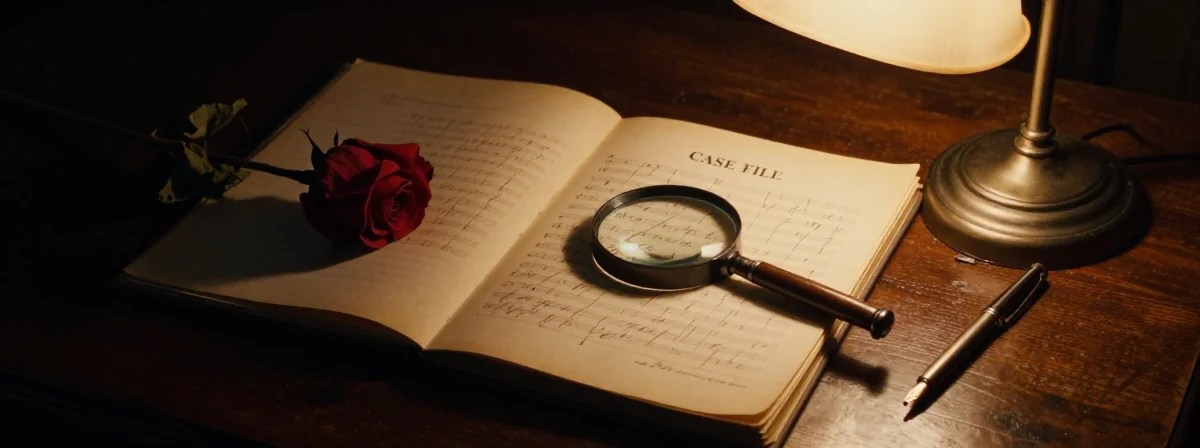
You walk into a dimly lit room, the needle drops, and suddenly you’re staring at a crime scene—your own past. We treat music like entertainment, but often, it’s actually an interrogation. The lyrics that gut you aren’t just poetry; they’re evidence of a wound you thought you’d bandaged up, or a truth you’re trying to suppress. You aren’t just listening to a melody. You’re hearing a testimony.
Let’s look at the exhibits. The clues are all there, hidden in the verses we can’t forget.
Connecting the Dots
The Cycle of Neglect is a Cold Case That Never Closes Take a close look at the evidence in Tracy Chapman’s “Fast Car.” On the surface, it sounds like freedom—the wind in your hair, the escape. But look at the timeline. First, the subject quits school to care for a drunk father because “somebody’s got to take care of him.” Then, she swaps him for a partner who “stays out drinking late at the bar” and sees more of his friends than his kids. The cycle doesn’t break; it just recycles. You think you’re driving toward a new life, but the map is actually a loop. The hope is the trap.
Jealousy Wears a Disguise of Resignation There is a specific kind of agony in the line, “One day you’ll be a star in somebody else’s sky, but why can’t it be mine?” It’s not just heartbreak; it’s a logical deduction that feels like a physical blow. You examine the facts—they are brilliant, they are lovable, they are destined for greatness—and the only conclusion is that you are not the one who gets to witness it up close. It’s the realization that you were the rehearsal, not the main event.
“Whiskey Lullaby” is a Murder-Suicide Ballad Hidden in Plain Sight This isn’t just a sad song; it’s a coroner’s report set to a fiddle. You have the motive—she broke his heart. You have the weapon—the bottle to the head. The clue that really ties it together? The note found in the pillow that says, “I’ll love her till I die.” The final nail in the coffin is when she joins him, buried under the willow while the angels sing. It’s a grim reminder that grief can be a contagion, and sometimes the survivor doesn’t actually survive.
The “Fix You” Delusion is a Dangerous Trap “I will try to fix you.” It sounds noble, doesn’t it? But dig a little deeper and you find the smoking gun: you can’t. You can’t make your heart feel something it won’t, and you can’t make someone love you if they don’t. The hardest part of this investigation is admitting that you are not the savior. You’re just a witness to someone else’s demolition. Standing there with a toolbox doesn’t help when the house is already on fire.
Generational Trauma is Just a Game of Telephone “My boy was just like me.” That line from “Cat’s in the Cradle” is the final verdict in a lifelong trial. The father spent decades prioritizing work over his son, teaching him exactly how to neglect a parent. The son didn’t learn to be distant on purpose; he learned by watching the master. The evidence was there the whole time, stacking up in missed birthdays and phone calls, but the father only saw the pattern when it was too late to change the outcome.
Domestic Violence Often Hides Behind a Sweet Melody You have to read the fine print with Hozier’s “Cherry Wine.” It sounds romantic, even gentle, until you analyze the description of the relationship. The “bruise” that looks like a “bloom,” the way the violence is framed as something to be tolerated or even admired because of the moments of peace in between. It’s a masterclass in how abusers gaslight their victims—and sometimes the audience—into thinking the pain is just part of the love story.
Grief is an Interrogation of the Afterlife “Would you know my name if I saw you in heaven?” Eric Clapton isn’t singing a lullaby; he’s cross-examining the universe. He’s looking for evidence that the bond survives death, that the connection is strong enough to transcend the ultimate separation. It’s a desperate plea for continuity in the face of absolute loss. The terrifying part isn’t the answer; it’s the silence that follows the question.
Final Findings
We keep these songs because they validate our own suspicious findings about life—that it’s hard, it’s unfair, and it often repeats itself. You aren’t listening to them to feel bad; you’re listening to prove that you aren’t the only one under investigation. The music doesn’t lie, even when the rest of the world tries to.
So turn the volume up. Let the evidence play out.