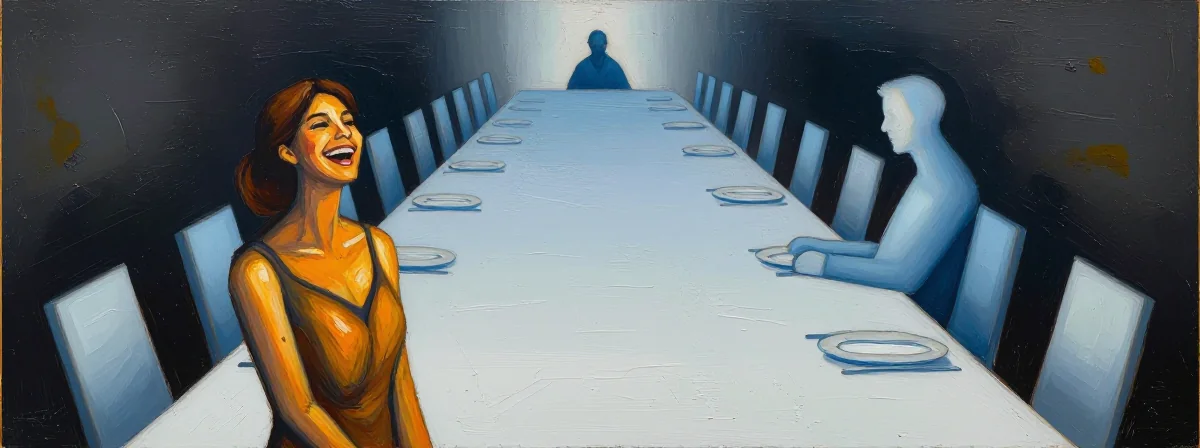
Have you ever stared at the seating chart for a holiday dinner and realized you have absolutely no idea who “Uncle” Bob actually is? You know he’s related to someone—you think your aunt?—but the biological math is starting to look like a calculus final you failed in high school. We’ve all been there, nodding politely while trying to figure out if this person is a blood relative or just someone who got sucked into the family orbit by marriage and couldn’t escape.
Here is the mind-bending truth that might blow your hair back: your cousins have cousins who aren’t your cousins. I know, take a moment to pick your jaw up off the floor. It sounds like the plot of a lost Game of Thrones episode, but it’s just basic arithmetic. My sister’s sister is my sister (obviously), but my brother’s brother on his dad’s side? That guy is basically a stranger with a familiar last name. We are walking around with these tangled vines of connection, pretending we understand the rules, when really, most of us are just improvising.
Family isn’t just about checking DNA percentages like you’re a vendor at a farmer’s market. It’s way messier, weirder, and frankly, a lot more fun than that. Whether you’re embracing the “village” mentality or carefully curating your circle like a museum exhibit, the way we define connection is changing faster than you can say “pass the potatoes.”
Wait, So We’re Not All Related?
Let’s break down the “cousin paradox” because it’s the perfect example of how arbitrary these lines are. If you have cousins on your mom’s side and cousins on your dad’s side, those two groups of people are related to you, but they aren’t related to each other. Put them in a room together, and they’re just two strangers who both happen to know your embarrassing childhood stories. They are family to you, but not to each other. It’s the social equivalent of a Venn diagram where the circles only touch inside your head.
And then you throw in-laws into the mix. Your sister-in-law has siblings. Are those people your siblings? Legally? No. Socially? Maybe, if you vibe. Biologically? Absolutely not. They are people you wouldn’t look twice at on the subway, but because your sibling married their sibling, you’re suddenly exchanging pleasantries over cranberry sauce once a year. It’s a bizarre social contract we all just silently agreed to, and honestly? It’s kind of beautiful in its chaos.
Is DNA Really All That Matters?
There is a certain breed of person who treats family like an exclusive club where the cover charge is genetics. They act like sharing a bloodline is some sort of VIP pass that automatically grants you access to their inner sanctum. It’s a very “royal lineage” mindset—the kind of paranoia that had kings marrying cousins just to keep the bloodline “pure.” (And we all saw how that turned out for the royal gene pool. Spoiler: not great).
Here is the hot take of the century: there isn’t much difference between a step-family and any other relation by marriage. My dad remarried, and his partner has daughters. Are they my “stepsisters”? Technically, sure. But do we text each other memes and talk about our lives? Constantly. I consider them full siblings in every way that matters, despite the zero percent DNA overlap. Conversely, I have biological relatives I haven’t spoken to since the Bush administration. If the connection is there, it’s there. If it’s not, a shared last name isn’t going to magically superglue it together.
Why Saying “No Thanks” Isn’t a Crime
Now, let’s pivot to the controversial side of the dinner table. We love to praise the “found family” narrative, but what if you just… don’t want to? There is this weird pressure in our culture to be the Dalai Lama of Family Dynamics, embracing every distant relative with open arms. But sometimes, you look at your brother’s other family—the ones you didn’t grow up with—and you just think, “Yeah, I’m good.”
And that is okay! It doesn’t make you a monster; it makes you someone with boundaries. You are not obligated to perform emotional labor for people you don’t know just because you share a parent or a grandparent. You can easily turn yourself into an only child in a family of eight kids just by choosing not to engage with the other seven. Is it a choice? Yes. Is it cold? Maybe a little. But is it honest? Absolutely. If the vibe isn’t there, forcing a connection is just awkward for everyone involved.
The Magic of the “Chosen” Family
On the flip side, some of us subscribe to the “chosen family” model with the fervor of a religious convert. This is especially common in communities where blood family hasn’t always been safe or supportive. I’ve always admired how, for instance, many Hispanic and Latino cultures approach this. It’s like “Hey, you’re cool, you’re my cousin now.” Everyone is a Tia or Tio. It’s a beautiful, expansive way to move through the world where the door is always swinging open.
When you subscribe to this model, your family becomes a curated playlist of the people who actually get you. It’s your best friend from college, your neighbor who brings you soup when you’re sick, and that coworker who actually laughs at your jokes. You aren’t limited to the hand you were dealt; you can trade cards, draw new ones, and maybe even flip the table over if the game isn’t fun anymore. It’s empowering, realizing that “family” is a verb, not a noun.
How to Define Your Own Circle
So, how do we navigate this minefield without losing our minds? You have to accept that family is defined by three different buckets: biological, social, and personal. The biological bucket is just science—cold, hard facts. The social bucket is who society says is your family based on marriage and laws. But the personal bucket? That’s the boss level. That is where you decide who actually gets a seat at your table.
The real power move is realizing that the personal bucket allows you to subtract people, too. You can have a biological parent who doesn’t make the cut for your personal family because, let’s face it, they’re toxic. You can have a step-sister who is your ride-or-die. The people who get irritated by this—those who insist that blood is the only thing that counts—are usually just mad that you’re rewriting the script they’ve been following blindly for years.
Family Is a Feeling, Not a Pedigree
At the end of the day, obsessing over who is “technically” related to you is like worrying about the paint color on a car that doesn’t run. It misses the point entirely. Whether you’re collecting cousins like Pokémon or keeping your circle tight and tiny, the goal is to have people around you who make your life better. If those people share your DNA, cool. If they don’t, also cool.
The only wrong way to do family is to let someone else write the rules for you. You don’t have to connect with your step-brother’s half-sister if you don’t want to, but you also don’t have to disown your best friend just because there’s no marriage license involved. Life is short, and the holiday table is only so big. Fill it with the people who make you laugh, the ones who show up when it matters, and the ones who know exactly how you take your coffee. Everything else is just details.