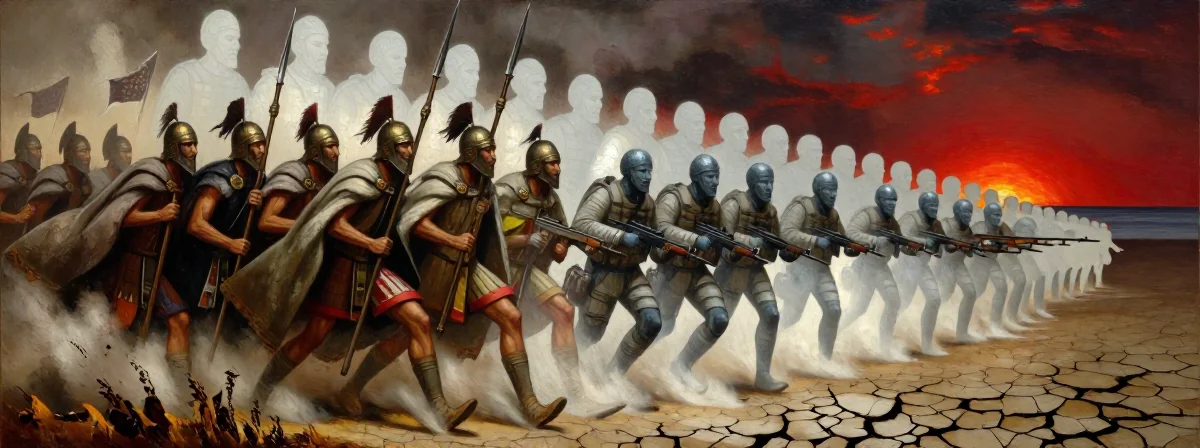
There is a specific brand of British outrage that feels as old as the hills themselves, usually involving a sturdy cup of tea and a grumble about whoever just moved in next door. You know the vibe. It’s the feeling that things were better back in the “good old days” before everyone started showing up with their newfangled ways and, heaven forbid, their beverages. It turns out, this isn’t just a modern phenomenon. We’ve been doing this dance for literally thousands of years, and honestly? It’s getting a bit predictable.
If you’ve ever seen that classic Stewart Lee sketch where he rants about the “bloody beaker folk coming over here with their drinking vessels,” you know exactly what I’m talking about. It’s biting, surreal, and uncomfortably close to the actual headlines we see today. But here’s the kicker: the joke is rooted in actual history. There really was a massive migration of people called the Beaker Folk who rolled into Britain around 2500 BC, and they really did change everything. But the way we talk about “invasions” versus “migrations” says a lot more about our current anxieties than it does about prehistoric pottery.
It’s fascinating to look back at a time when the biggest controversy wasn’t tax rates or WiFi speeds, but whether or not it was an affront to God to drink out of a cup instead of slurping water out of a puddle like a cat. So, let’s grab a mug (irony intended) and take a look at the original “bloody immigrants.”
What’s Wrong With Just Drinking Like a Cat?
Imagine the scene: You’re a rugged Mesolithic hunter-gatherer. You’ve spent your life mastering the art of cupping water in your hands and lapping it up like a majestic, if slightly damp, feline. It’s natural. It’s what God intended, right? He gave us hands, not handles. Then, suddenly, these newcomers arrive with their fancy, curved ceramics. It’s an absolute affront.
This is the comedy of progress. We laugh at the idea of someone being offended by a cup, but aren’t we all just a little bit like that? Think about the last time you saw a teenager using a piece of technology you didn’t understand. Did you nod sagely and say, “Good for them”? Or did you grumble about how back in your day, you looked at a map to get around, not some glowing rectangle? The Beaker Folk didn’t just bring cups; they brought a whole new lifestyle that made the old way of doing things look, well, a bit uncivilized.
The Original “Bloody Immigrants” Panic
Here is where it gets real. Around 4,000 to 5,000 years ago, Britain wasn’t the peaceful, empty idyll we might imagine. The Neolithic farmers who were already here had themselves replaced the earlier hunter-gatherers. It was a cycle of replacement that would make a reality TV producer blush. Then the Beaker Folk arrived from the European mainland—likely from what is now the Netherlands—and things got intense.
We’re not talking about a polite dinner party where everyone shares recipes. Genetic evidence suggests a massive scale of movement, somewhere around 90% of the population was replaced. That’s not just “taking our jobs”; that’s a total reboot of the system. The local Britons didn’t just lose their employment; they were genetically swamped by these newcomers. It’s the kind of historical event that usually gets glossed over in school textbooks in favor of pictures of guys in tunics standing by Stonehenge, but it was likely brutal, chaotic, and absolutely world-changing.
Why Hunter-Gatherers Were the First to Get Cancelled
It’s easy to feel bad for the locals, but let’s be real: the Hunter-Gatherers had a rough run. Before the farmers showed up, they were the kings of the castle. Then the farmers arrived with their “agriculture” and their “permanent settlements,” completely changing the landscape to suit their needs. They introduced entirely new concepts of ownership and labor, effectively inventing the concept of a “job” to be taken.
It creates a hilarious, if tragic, echo chamber of complaint. The Mesolithic Britons probably sat around their fires grumbling, “Bloody farmers, coming over here and introducing entirely new socioeconomic structures!” It’s a reminder that nobody is ever truly the “native” son for long. We’re all just standing on a layer of someone else’s history, complaining about the new guys laying down the pavement.
The Secret Allure of a Sexy Clay Pot
We can talk about genetics and migration routes all day, but let’s address the elephant in the room: the women wanted vessels in the huts. It’s a crude generalization, sure, but there is something undeniably attractive about a well-made piece of pottery. When the Beaker Folk arrived, they didn’t just bring muddy cups; they brought aesthetic. They brought style. They brought curves that a simple wooden bowl just couldn’t compete with.
It’s the ancient equivalent of upgrading from a flip phone to the latest smartphone. Once you’ve seen the high-resolution screen and felt the sleek glass, you aren’t going back to clicking buttons with your thumbnail. The local population, regardless of gender or status, likely looked at these Bell Beakers and thought, “Yes, this is the future I want to be part of.” It wasn’t just survival; it was a rebranding.
The “Bitten Apple” Cult: What Future Humans Will Think of Us
It’s fun to laugh at the ancients, but take a moment to consider how future archaeologists will judge us. Imagine a dig in the year 4026. They sift through the rubble of our civilization and find a specific layer. What do they see? Fidget spinners. Millions of them, solid metal and plastic, scattered everywhere.
They might conclude we were a species obsessed with rotational symmetry, perhaps using the spinners in some sort of fertility ritual to ward off boredom. Or worse, they find the “bitten apple” symbols engraved on millions of glass and metal tablets carried in every pocket. They’ll assume we worshipped a fruit-deity, recording our sacred texts on iPhones. “The Cult of the Bitten Apple,” they’ll call it, noting that the civilization collapsed shortly after the era of the Great Scroll (TikTok).
When Alexander the Great Met the Ultimate Party Guests
History isn’t just about replacement; it’s about the weird interactions that happen when cultures collide. Take Alexander the Great, for example. When he marched his armies into Iran, he didn’t just find enemies; he found Celts. Or, at least, a group of Gauls who fit the description of the ultimate mercenaries.
Instead of an epic, CGI-heavy battle scene, they seemed to just vibe with each other. Alexander was intrigued by these wild, independent warriors, and they respected his military might. They feasted, exchanged gifts, and the Celts essentially became vassals without a fight. It’s a heartwarming story, really, until you realize these same Gauls would later go on to raid the Temple of Apollo at Delos and eventually settle in Anatolia (modern-day Turkey), giving their name to Galatia. They were the original tourists who refused to leave, and they did it with such style that we’re still talking about them.
We Are All Just the Next Wave of “Bloody Immigrants”
So, what’s the takeaway from all this pottery, genetics, and ancient grumbling? It’s that change is the only constant. The Beaker Folk weren’t villains; they were just people looking for a better life, bringing their tech (cups), their language (Proto-Indo-European), and their genes. They wiped the slate clean, not out of malice, but because that’s what history does. It moves.
We worry so much about preserving our culture and keeping things “the way they were,” but “the way they were” was usually just a temporary stopgap until the next group showed up with a better idea. Whether it’s the “finned cunts” of 400 million years ago crawling onto land, or the steppe nomads bringing their DNA across Europe, everyone is coming from somewhere else. So, the next time you feel the urge to complain about the new neighbors, just remember: your ancestors probably did the exact same thing, and they probably had a really nice cup to do it with.