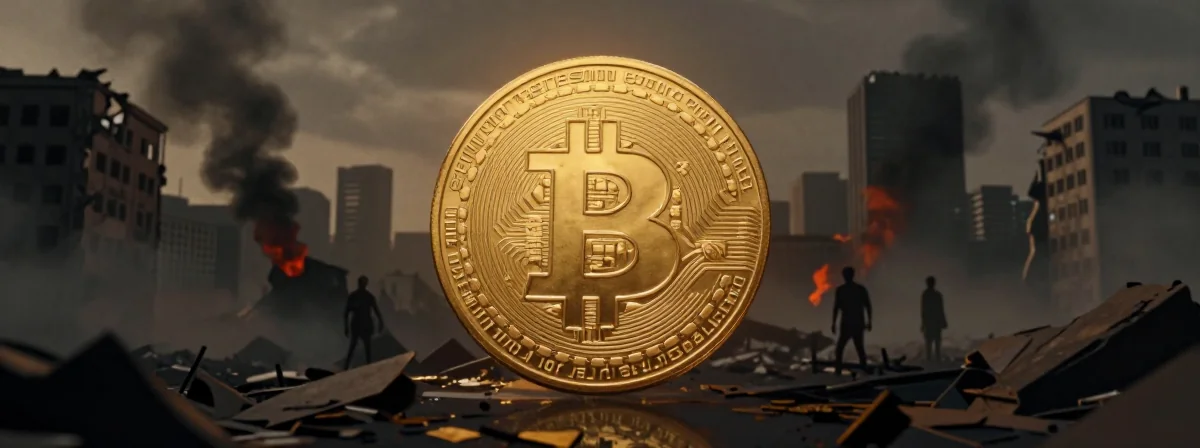
Okay, can we talk about the absolute situation that is El Salvador right now? Like, remember when the internet wouldn’t shut up about the country going all-in on Bitcoin? It was giving major futuristic vibes, a total glow-up for a nation that usually flies under the radar. Everyone was hyping it up as this bold, tech-forward experiment that was going to change everything. But bestie, if you zoom out a little, you realize the crypto hype was basically just a really shiny, glittery distraction from some truly terrifying stuff happening backstage.
It feels like we all got played. While everyone was obsessing over whether Bitcoin was legal tender or watching the president’s laser eyes on Twitter, the government was quietly—and not so quietly—dismantling democracy. It’s giving “look over there!” energy while they were busy locking up literally anyone they pleased. The narrative flipped so fast, it’s enough to give you whiplash. One minute we’re talking about blockchain beaches, the next we’re hearing about mass incarcerations that would make a dystopian novelist blush.
And here’s the kicker: the Bitcoin thing? It didn’t even really work. It was a flop financially, but it was chef’s kiss for PR. It made the leadership look like innovators instead of… well, what they’re actually turning into. It’s wild how a little bit of tech sparkle can make people ignore the screaming red flags.
Was the Bitcoin Hype Just a Distraction?
Let’s be real for a sec. Buying hundreds of millions in crypto and changing the law to make Bitcoin legal tender was definitely a bold move. It was the kind of chaos that gets you on the cover of magazines. But in hindsight, it feels like the ultimate magic trick. You keep the eyes glued to the volatile charts and the “volcano bonds” so nobody notices the civil liberties evaporating into thin air.
People in the know saw the crypto play as a joke, and honestly, the numbers back that up. But the distraction worked perfectly. While the international community was debating the merits of decentralized currency, the administration was busy consolidating power. It’s almost impressive how well it worked—they used the image of being “cool tech leaders” to completely flip the narrative on what was actually happening in the streets. It’s not a coincidence that the loudest moment for crypto was right before the crackdowns got intense.
The Real Cost of “Safety” in El Salvador
Now we have to address the elephant in the room, and it’s a big, scary one. Sure, the murder rate dropped. Crime is down, and for a lot of people, that feels like a win. But at what cost? We’re talking about a “war on gangs” that looks suspiciously like a war on young men in general. The government has locked up 2% of the entire country’s population. Let that sink in. Two percent.
To put that in perspective for you, it would be the equivalent of the USA locking up 40% of African American men. Obviously, if you just round up everyone and throw them in jail, crime is going to go down. That’s not rocket science; it’s just brute force. But when the vast majority of those people aren’t actually gang members? When they’re just pulled off the street on flimsy pretexts because they fit a profile? That’s not justice, babe. That’s a human rights violation wrapped in a bow.
When 2% of a Country Ends Up in Prison
It’s genuinely disturbing when you look at the details. We’re talking about torture, killings in prison by security forces, and intimidation tactics that belong in a history book, not 2026. There are reports of at least 260 people being murdered by security forces in custody. They built a “mega prison” that looks like something out of a horror movie, packed to the brim with people who haven’t even seen a judge yet.
And let’s not forget the scene where they brought loaded guns into the legislature to intimidate politicians. That is not normal behavior! That is the stuff of authoritarian regimes. These are the early signs of fascism, using “tough on crime” as the justification to dismantle any part of civil society that might dare to stand up and say “hey, maybe this isn’t okay.” They are systematically removing checks and balances while the world watches the crypto ticker.
Why We Need to Look Past the Aesthetic
Here’s the thing: it’s easy to get sucked in by the aesthetic. The tweets, the tech bros, the narrative of a small nation sticking it to the global financial system. It’s a compelling story. But we have to stop letting the shiny objects blind us to the reality on the ground. The “bold experiment” everyone remembers shouldn’t be the Bitcoin adoption; it should be the terrifying social experiment of locking up an entire generation of men without due process.
You can’t separate the tech from the human rights abuses. They are two sides of the same coin. The crypto play was the branding; the crackdowns are the product. We need to stop falling for the PR spin and start looking at the receipts. Because a country that tortures its citizens isn’t a “tech paradise,” no matter how many Bitcoin ATMs they install on the corner.
The Verdict on the “New” El Salvador
So, where does that leave us? It leaves us in a place where we have to be way more critical of the narratives we’re being sold. El Salvador isn’t a cautionary tale about crypto; it’s a cautionary tale about how easily we can be distracted by “innovation” while democracy is being dismantled right in front of our faces.
The “bold experiment” wasn’t about blockchain—it was about how much power a leader could grab if he just gave the internet something else to look at. And honestly? That’s the scariest part of all. Don’t let the glitz fool you; the reality underneath is dark, and it’s only getting darker.