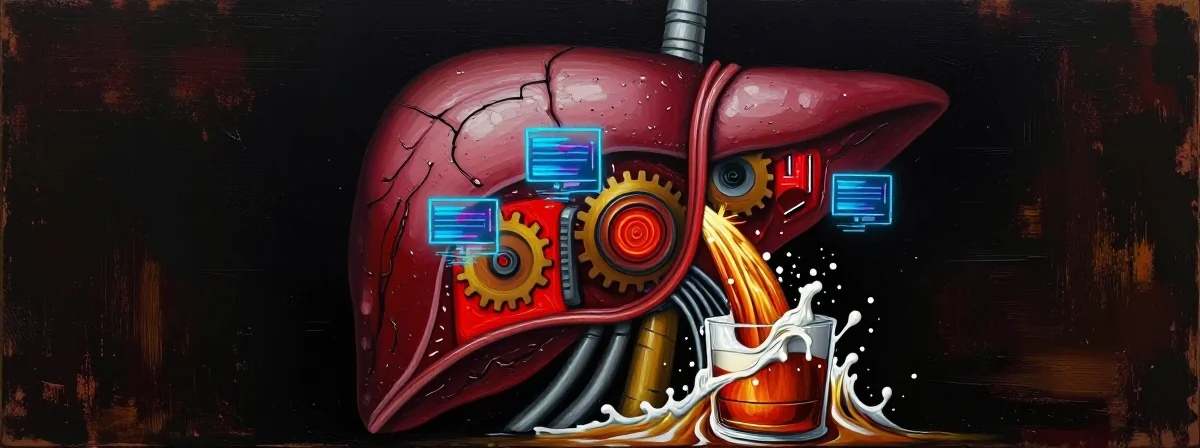
You probably don’t think twice about that morning coffee or the crusty sourdough you toasted for breakfast, but technically, you’re ingesting trace amounts of the same toxic compound found in hard liquor. Yet, one gets you through the morning meeting, and the other makes you hug the toilet at 2 AM. It’s not magic; it’s just math, and your body is strictly enforcing the terms of service.
Under the Hood
The Dose is the Root User Paracelsus had it right centuries ago: the poison is in the dosage. You can die from drinking too much water too fast—literally drowning from the inside out—or suffer sodium toxicity from chugging seawater. Your body is built to handle background noise, but it crashes hard when you turn the volume up to eleven.
Your Liver Has a Bandwidth Limit This is where the system architecture gets interesting. Both the enzyme that converts alcohol to acetaldehyde and the one that converts that acetaldehyde into acid rely on the exact same co-enzyme: NAD+. Think of NAD+ as a single-threaded processor. If you flood your system with ethanol, the processor gets stuck converting alcohol into the toxic byproduct, leaving zero resources to actually clear the poison out. The buffer overflows, and that backlog of acetaldehyde is what actually makes you feel like garbage.
Ingested vs. Rendered Toxins When you eat fermented food, you’re dealing with trace amounts of acetaldehyde that are often bound to other molecules or neutralized by antioxidants in the food matrix. It’s a slow packet transfer. Alcohol, on the other hand, hits your liver and instantly generates massive concentrations of pure acetaldehyde directly in your bloodstream. It’s the difference between downloading a file and having the server explode inside your house.
Bread is Just a Failed Brewery Sure, yeast produces alcohol, but in bread, we’re after the carbon dioxide for the rise, not the ethanol. Plus, the baking process hits the kill switch on the yeast and boils off most of the volatile compounds. You aren’t eating a shot of whiskey; you’re eating the ghost of fermentation.
Garbage Collection Takes Time Your body runs background processes to repair DNA damage and clear out cellular junk. Occasional drinking lets the garbage collector run between sessions. But if you’re constantly hammering the system, the repair mechanisms lag out, the code gets corrupt, and eventually, the hardware fails.
Bottom Line
Stop looking at the ingredients and start looking at the throughput. Your biology is an incredibly robust operating system, but even the best hardware will overheat if you push the clock speed too far for too long. Respect the limits, and the system stays optimized.