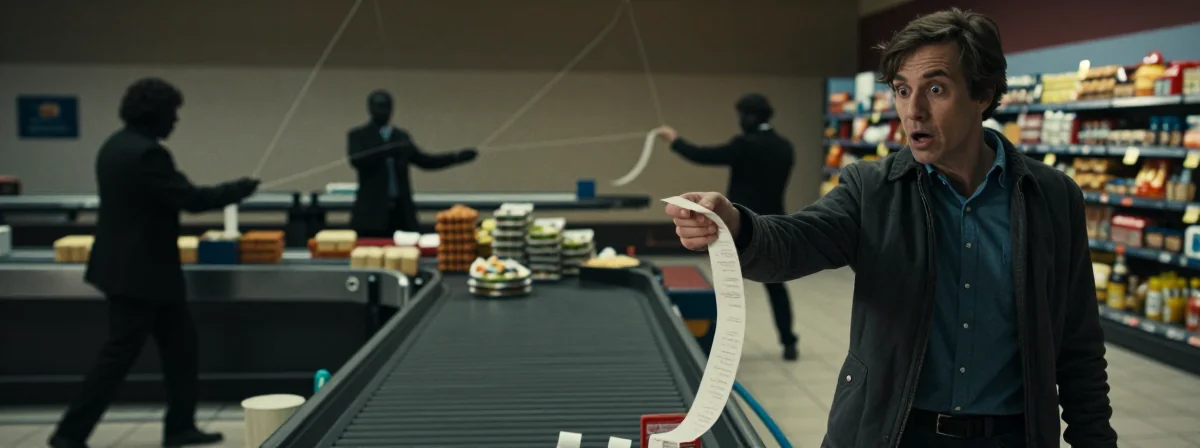
You stand in the checkout line, staring at the total on the screen, and feel a distinct sense of unreality. The number blinks back at you, accusing and bright. You look down at the conveyor belt—it’s not overflowing. There are no steaks, no imported cheeses, just the basics to get through the week. Yet the final tally feels less like a transaction and more like a mugging. It’s a scene playing out in kitchens across the country, a quiet, creeping panic that has nothing to do with how well you budget and everything to do with the ground shifting beneath your feet.
If you feel like you’re losing your mind, you can take a deep breath. You aren’t imagining it, and you aren’t suddenly bad at math. The cost of feeding ourselves has undergone a violent transformation over the last few years, a shift so subtle in motion and so drastic in result that it’s left an entire generation wondering how a simple grocery run became a financial tightrope walk.
The problem isn’t just that prices went up; it’s that the rules of the game changed while no one was watching.
The Invisible Hand of Shrinkflation
Walk down the frozen aisle and look for the ice cream you used to buy. You remember the tub—three liters of comfort for a few dollars. It was a ritual, a small treat that didn’t require a second thought. Now, that tub is gone. In its place is a two-liter container, shrunk down like a cotton shirt in a hot dryer, yet priced significantly higher than the original bucket ever was. This is the sleight of hand known as shrinkflation, and it is robbing you blind.
It’s insidious because it preys on your trust in packaging. You grab the familiar bag of chips, the one that used to feel heavy and substantial in your hands. You bring it home, open it up, and find it’s one-third air and disappointment. Even the candy bars have quietly slimmed down, shrinking away in their wrappers while the price tags hold steady or climb. It is a way of charging you more for giving you less, hoping you won’t notice the difference until you’re already home and the receipt is in the trash.
The Corporate Shell Game
Why is this happening? It would be comforting to blame it solely on supply chains or global events, but the truth is more cynical. When the pandemic hit, supply chains fractured, and prices rose to accommodate the chaos. That was the emergency. But the emergency passed, and the prices stayed. Corporations realized they could charge more, and the stock market rewarded them for it.
Now, it’s about maintaining those ever-increasing profit margins. You walk into a store and see a “sale” sign on an item marked up from $6.97 to $7.99, discounted back down to $6.97. You think you’re winning, but you’re just paying the original price while the store prepares to raise the floor again next month. It is a shady, predatory practice that treats the consumer as an endless resource to be tapped, fueled by a demand for profits that never plateau.
The Geography of Cost
Of course, the pain isn’t distributed evenly. Where you live determines how hard you get hit. A family of four in a high-cost area might stare down a $1,000 monthly bill, feeling the squeeze of tariffs and workforce shortages that send the price of produce skyrocketing. Yet, even in cheaper states, the sticker shock is real.
One person might spend $94 a week and feel like they’re splurging, while another spends $120 to feed three adults and considers it a victory. The variables are endless—do you eat meat? Do you shop at discount grocers or rely on convenience stores? The comparison game is a trap. The only universal truth is that the baseline has moved for everyone.
The Art of the Strategic Pivot
So, how do you fight back? You have to stop shopping like it’s 2019. The survivors in this new economy are the ones who have become ruthless about where their money goes. They have abandoned the shiny middle aisles of Target or the premium shelves of Kroger for the utilitarian efficiency of Aldi and the bulk bins.
There is a profound freedom in the bulk section. Once you learn to navigate it, buying 25-pound bags of rice, split peas, and steel-cut oats transforms your budget from a victim of inflation into a fortress. Measuring your meals in cents per serving rather than dollars per meal changes the psychology of eating. An Instant Pot becomes a magical device that turns cheap staples into hearty meals, shielding you from the volatility of the packaged goods aisle.
The Psychological Toll
It is exhausting, though. There is a real mental fatigue in doing gymnastics in the aisle just to save three cents here and there. You find yourself debating the price of a banana, hearing Lucille Bluth’s voice in your head asking, “How much could it cost? Ten dollars?” It’s funny until it’s not.
When you look around the store, you see the evidence in everyone else’s carts, too. They used to be full to the brim a decade ago. Now, they’re sparse, filled with the absolute essentials. It’s a visual reminder that everyone is struggling, that eating out has become a luxury and groceries are the new necessary vice. We are all just trying to figure out how to keep the fridge full without emptying the bank account.
Reframing the Battle
Here is the hard truth: you aren’t doing anything wrong. The system is built to extract maximum value from you, and it has become incredibly efficient at it. But recognizing the game is the first step to playing it better. You can navigate this by shopping smarter, cooking from scratch, and accepting that the days of mindless consumption are gone.
It’s not about deprivation; it’s about adaptation. When you stop buying the shrinkflated snacks and the precut fruit, when you embrace the store brands and the bulk bins, you take back control. The prices might not come down, but your ability to handle them can go up. You feed yourself and your family not by spending more, but by caring less about the marketing and more about the food. And in that shift, there is a quiet, resilient victory.