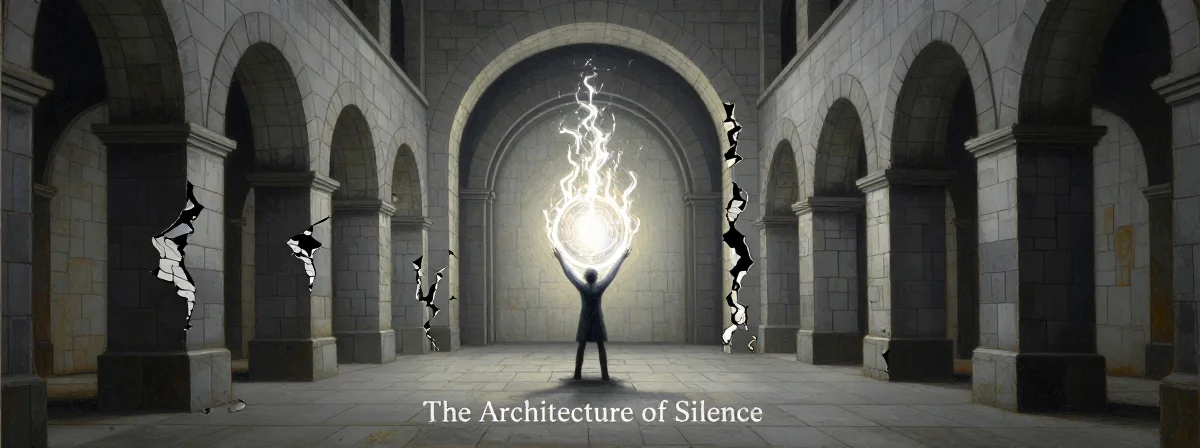
You know the heavy, suffocating feeling of shouting into a canyon and hearing nothing but your own echo return? It is a specific kind of loneliness—the realization that the world has decided your voice is not just unwanted, but dangerous. We like to believe we live in a time where truth is a shield, but history has a way of showing us that it is often treated as a weapon instead.
There is a quiet tragedy in the story of a woman committed to an asylum in the 1920s, not because she lost her mind, but because she refused to lose her grip on reality. It is a stark reminder that when power speaks, the truth often has to sit down and wait.
Looking Deeper
The convenient diagnosis of “hysteria” When the truth becomes too sharp for the powerful to handle, it is often blunted by labeling the messenger as unstable. It wasn’t just a medical tactic; it was a social pruning. If a woman spoke a reality that threatened a man’s standing or a family’s ambition, she wasn’t wrong—she was “hysterical.” It is the oldest trick in the book: discredit the witness so you don’t have to address the crime.
Paper is only as strong as the hand holding it You can win a lawsuit, secure a judgment, and have the law on your side, but if the system refuses to enforce its own rules, the paper is worthless. A civil judgment that is never paid is just a ghost. It haunts you, reminding you that justice is not a guarantee—it is a product that must be purchased and enforced, often by the very people who have already failed you.
The roots of inequality run deep, and they don’t pull up easily We often look back at the 1920s and sigh with relief that we’ve “moved on,” but the soil is still the same. Consider a mother in the late 1970s, college-educated and working, who was told a bank couldn’t find a “legal reason” to deny her a loan—yet the struggle remained. The branches of the tree look different now, but the grip on the earth is the same. From Rosemary Kennedy to the victims of the Wineville Chicken Coop murders, the mechanism of protecting power by discarding the vulnerable is a slow tide. It requires a constant, mindful vigilance to see where the water is rising before it drowns you.
Institutions protect themselves like a forest protects the old growth It is easy to look at the LAPD of the past and see a monster, seeing only the darkness in history while ignoring the shadows in our present room. But institutions act like living organisms—they prioritize survival over morality. Whether it is a framing scandal from the 1920s or the Rampart scandal decades later, the pattern is identical. A closed loop forms where only the insiders breathe, and the air outside gets thinner and thinner.
Speaking anyway is an act of spiritual rebellion To speak when you are labeled crazy, to push when the system says sit, is a profound act of presence. It is the bamboo bending in the storm, knowing the wind will eventually pass. The exhaustion of not being heard is real, but the decision to remain true to your own experience is the only freedom that cannot be taken from you.
In Stillness
Anger at the injustice of the past is like drinking poison and expecting the other person to die. It burns you, not them. But witnessing these patterns without turning away? That is how we cultivate clarity. We acknowledge the mud, but we focus on the lotus.
We cannot change the currents of history, but we can learn to navigate them with open eyes. The injustice isn’t there to enrage you into paralysis; it is there to wake you up to the reality of the world you inhabit. Sit with the discomfort, let it pass through you, and then choose to see clearly.