You know the sound—that ear-splitting shriek that turns a peaceful dinner into a panic attack, only to reveal you’ve slightly overcooked the garlic bread. We’ve all been there, standing on a chair waving a towel at a plastic box on the ceiling, wondering why a device designed to save lives is so hell-bent on ruining them. It’s not just annoying; it’s a desensitization waiting to happen. It turns out, the problem isn’t your cooking. It’s where you put the alarm, and the science inside it that can’t tell the difference between a crispy crust and a lethal inferno.
The Tale Unfolds
Your alarm is likely judging you on bad science. Most standard alarms use ionization technology, which looks for tiny, invisible particles. They’re great for fast-flaming fires but terrible at telling the difference between a searing steak and burning upholstery. You want a photoelectric detector near the kitchen; they’re the ones smart enough to see the “smoke” without screaming every time you turn on the broiler.
It thinks steam is smoke. Humidity is the silent enemy of the ionization detector. One technician recalled working in a butchery where the cleaning crew’s nightly steam scrubbing would trigger the alarm, calling the fire department every single night. In your home, a hot shower or a boiling pot of pasta creates the same dense air particles, tricking the sensor into thinking the house is burning down.
The kitchen needs a heat sensor, not a smoke alarm. Here is the fix most people miss: install a heat detector in the cooking zone instead of a smoke alarm. These devices don’t care about smoke or steam; they only trigger when the temperature hits a specific threshold, usually around 135°F or 194°F, or if the temperature spikes rapidly. Unless your stove is turning the ceiling into a furnace, you can sear, fry, and boil in peace, knowing that if a real fire ignites, the heat will still trip the alarm.
Linked systems are a special kind of torture. It’s bad enough when one alarm screams, but in modern rentals, they’re often wired together so that one trigger sets off the whole house. One renter admitted to walking toward their kitchen alarm with a hammer multiple times because the cacophony of unsynchronized beeping was enough to make anyone want to tear the walls down.
If the kitchen alarm melts, you’re already in trouble. The goal isn’t to alert you while you’re standing at the stove watching the pan; it’s to wake you up when you’re asleep in the bedroom. That’s why the detector belongs in the hall, not directly above the burner.
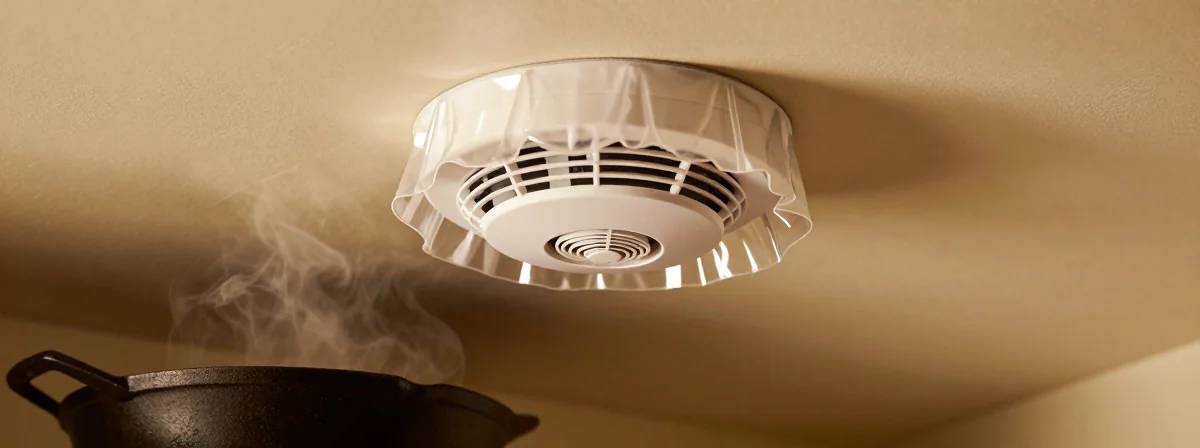
We resort to ridiculous measures to silence the noise. In those cookie-cutter condos where the layout forces the alarm right next to the stove, people get creative. One resident finally caved and covered their sensitive unit with a plastic shower cap just to cook dinner without the nightly serenade.
Safety shouldn’t feel like a constant battle against your own home. Move the alarm to the hallway, swap the kitchen unit for a heat sensor, and stop cooking under the threat of a false alarm. When the real thing happens, you’ll hear it—and you’ll actually believe it.