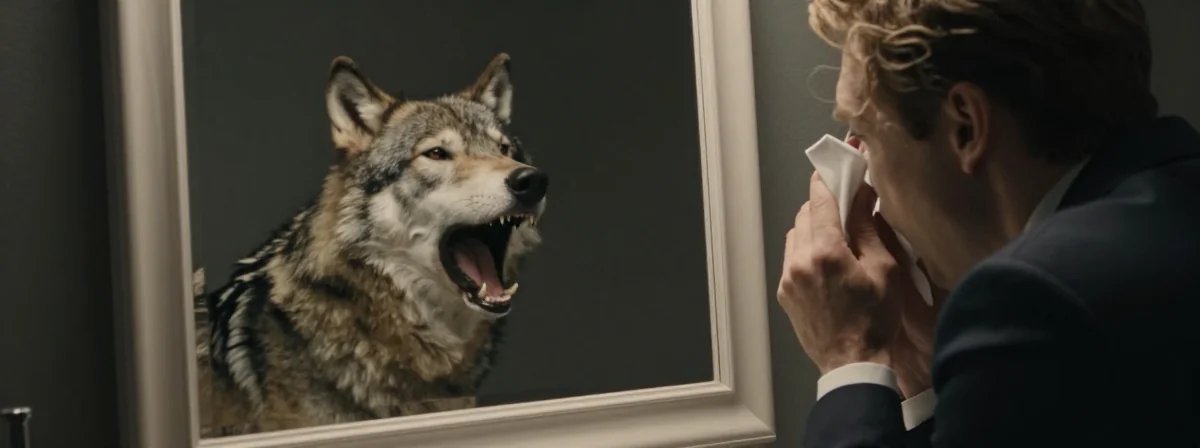
A sudden explosion shatters the silence of a room. Heads turn, hearts skip a beat, and someone offers a hesitant “bless you.” We accept this disruption as a biological inevitability, a necessary consequence of the body clearing its path. Yet, if you observe the natural world with a quiet mind, you begin to notice a discrepancy. The birds do not shout when they shake their feathers, and the wind does not scream when it moves through the trees. So why do we?
The truth about the human sneeze is far more fascinating—and far less involuntary—than we have been led to believe. We treat the sneeze as a reflex, a mechanical event like the beating of a heart or the blinking of an eye. But the sound that escapes us is not merely mechanics. It is a language. It is a learned behavior, a script written by our culture and performed by our vocal cords, often without our conscious permission.
Consider the last time you felt a sneeze building. Did you simply allow the air to escape, or did you brace yourself to deliver a specific sound? From the sharp “Achoo” of North America to the delicate “Hakashun” of Japan, the noise we make is not determined by the size of our lungs or the irritation in our nose. It is determined by the society we keep.
The Illusion of the Involuntary
We often move through life believing we are at the mercy of our biology, assuming that every noise our body makes is an essential function. However, the expulsion of air—the sneeze itself—is distinct from the noise we layer on top of it. The body requires the release; the voice does not. When we sneeze, we are unconsciously choosing to engage our vocal cords to shape the rush of air into a socially recognizable signal.
This becomes evident when we observe the youngest among us. Babies sneeze with force, yet they produce no shouted syllables. Theirs is a pure, unadulterated release of pressure, a simple exhalation devoid of performance. They have not yet learned the “social contract” of the sneeze. They have not been taught that a sneeze must be announced, must be dramatic, or must be loud. It is only as we grow, observing and mimicking those around us, that we begin to add the soundtrack to our physiology.
The Mirror of the Mind
Just as we learn to speak the dialect of our parents, we learn to sneeze the dialect of our culture. If you were to close your eyes and listen to a room full of people sneezing, you could likely guess where they are from or even who they spend their time with. We are mirrors, reflecting the behaviors of our tribe. One person learns a thunderous, window-rattling blast from a loud friend, while another adopts a series of high-pitched, mouse-like squeaks because that is what they witnessed in their youth.
This mimicry speaks to a deeper human need: the desire to fit in, to take up the appropriate amount of space. In many cultures, there is a distinct gendered pattern to this behavior. You may notice that some feel compelled to make themselves small, suppressing the sound to be polite or “ladylike,” while others feel free to let loose with a bellow that demands attention. These are not biological differences. They are learned postures, ways of navigating the social world through the medium of a sneeze.
The Wisdom of Silence
Perhaps the most profound lesson comes from those who experience the world without sound. Research and observation have shown that people who are born deaf do not vocalize when they sneeze. Without the auditory reference of hearing others say “Achoo,” they have no template to copy. Their sneezes remain what they are biologically meant to be: a silent or soft rush of air.
This offers us a powerful perspective. It proves that the loudness, the syllables, and the drama are entirely optional. They are additions we have chosen to carry. If the sound can be absent in one person’s life, it can be quieted in another’s. The silence of a deaf person’s sneeze is not a deficit; it is a return to simplicity. It shows us that the vocalization is a habit, a redundant layer we have placed over a natural process.
The Nature of the Beast
When we look to the animal kingdom, we see further evidence that the loud sneeze is a human eccentricity. A dog may sneeze with force, a sharp exhale used to clear its nose or communicate play, but it does not bark out a syllable. A cat’s sneeze is a quiet, decisive event. Even the massive blue whale, a creature of immense scale, clears its blowhole without the theatricality we humans apply to a minor irritation.
Animals sneeze to clear an obstruction; humans sneeze to announce themselves. While a cow or a cat might let out a noise that surprises us with its volume due to their sheer lung capacity, they are not “enunciating.” They are not trying to sound a certain way. They are simply being. We, on the other hand, often turn a biological reset into a social statement, sometimes unconsciously seeking the acknowledgment that follows a loud noise.
The Attention Trap
There is a contemplative question worth asking in a moment of stillness: why do some of us feel the need to sneeze so loudly? It can be an unconscious cry for connection, a way of ensuring we are noticed in a busy world. A sneeze that makes others jump is a sneeze that claims space. It says, “I am here.” But in mindfulness practice, we learn that needing to assert our presence so aggressively often stems from a feeling of lack.
We see this in the “karate chop” sneezes, the exaggerated explosions that seem designed to startle as much as to clear the sinuses. It is a form of noise pollution, a disruption of the collective peace. While it is rarely done with malice, it is worth observing the impulse within ourselves. Do we sneeze to release, or do we sneeze to be heard? Distinguishing between the two can be a pathway to greater self-awareness.
Returning to the Breath
The next time you feel the tingle of a sneeze approaching, try a small experiment. Instead of bracing for the performance, simply let it happen. Relax the throat. Release the need to make a sound. Allow the air to pass through you like wind through the reeds, leaving your vocal cords at rest.
You may find that the sneeze is just as satisfying, perhaps even more so, when it is quiet. You might find that you don’t need to scream to release the pressure. In this small act, there is a larger metaphor for living. We can move through the world clearing our paths, responding to irritations, and living fully, without feeling the need to add unnecessary noise to the silence. We can simply be, allowing the body to do its work, while the mind rests in peace.