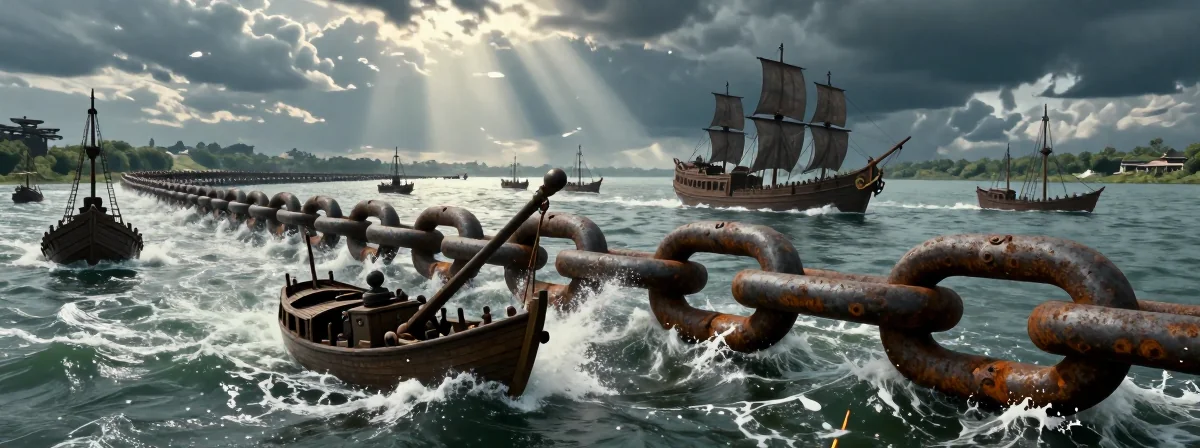
You walk up to it expecting something crude, maybe a little rusty. Instead, you find a monster. I’ve seen it—the Haliç chain—and the first thing that hits you is the physics of it. It shouldn’t exist. It’s too thick, too heavy, too absolute. We’re told history is a series of inevitable progressions, but standing there, looking at the links that held the Byzantine Empire together for centuries, you realize it’s actually a series of desperate, impossible gambles. And the people in charge? They don’t want you to know how easily the whole system can be gamed.
Think about the sheer audacity of stretching a giant iron barrier across a major harbor to stop a navy. It sounds like something from a fantasy novel, right? But this was real life. The Golden Horn wasn’t just a parking lot for boats; it was the lifeline of Constantinople. Block that, and you starve the city into submission. They knew it. Their enemies knew it. So, they built the ultimate “keep out” sign. But here’s the thing about obstacles: they only work if everyone agrees to play by the rules of physics. What happens when someone decides to cheat?
We’re not just talking about a rusty piece of metal here. We’re talking about a pattern that repeats itself through time, from the Vikings to the Ottomans, all the way to modern strategists who are still trying to figure out how to cross the uncrossable. The official narrative is simple: the chain fell. The reality? It involves greased logs, 21-year-old lunatics, and ships flying over hills.
Why A Simple Hammer Never Worked
You look at a chain like that and your first instinct is to break it. Bring a big hammer, right? Or better yet, just ram it with a ship until it snaps. That’s what the establishment wants you to believe—force meets force, and the stronger wins. But that’s a lie. When that chain was dropped into the water, it wasn’t just cold iron; it was a strategic nightmare. A ship sailing toward it doesn’t have the luxury of heating it up, beating it into submission, or using a lever the size of a tree trunk.
The chain worked because it turned the harbor into a kill zone. If you tried to batter it, you were sitting ducks for the archers and the Greek fire pouring down from the walls. It was asymmetrical warfare before the term even existed. The Venetians tried to brute force it during the Fourth Crusade, and they got absolutely wrecked. It took a completely different kind of thinking—a side quest, if you will—to finally break the seal. They didn’t beat the chain; they just went around it. And isn’t that always the way? While you’re staring at the wall, the real threat is already coming through the back door.
The Viking Who Cheated Gravity
Before the Ottomans had their turn, a Viking named Harald Hardrada pulled off a stunt that sounds like pure fiction. This guy was the Chief of the Varangian Guard, an absolute legend, and eventually, he wanted to go home. But the Empress Zoe said no. She locked him down with that same iron chain across the Bosphorus. Most people would just accept their fate. Harald? He decided to defy physics.
Here’s where it gets interesting. He loaded his longship with men and treasure, but he didn’t try to smash through. He waited for the right moment and ordered everyone to run to the stern of the ship. The weight shift drove the prow of the ship high into the air, literally lifting it over the chain. Then, they all ran to the bow, tipping the ship down the other side. It was a seesaw maneuver in a warship. The second ship wasn’t so lucky—it split in two. But Harald made it. Now, ask yourself: was this a one-time genius moment, or is this an ancient technique that’s been scrubbed from the manuals? Roman texts describe similar maneuvers at the Siege of Syracuse. The pattern is clear: when the path is blocked, the elite don’t stop—they tip the board.
The Day Ships Flew Over A Hill
But the wildest part? The Ottomans didn’t even bother with the tipping act. In 1453, 21-year-old Sultan Mehmed II looked at the “impenetrable” chain and laughed. He had the money, the troops, and the cannons, but he knew the chain was a hard counter to a naval assault. So, he did the one thing the Byzantines were too arrogant to prepare for. He moved the ships over land.
Seventy ships. Greased logs. Hundreds of men pulling. Overnight, an entire fleet was dragged up a hill, around the tower of Galata, and dropped back into the Golden Horn, completely bypassing the chain. Imagine being a Byzantine guard on the walls that morning. You’re watching the empty horizon, and suddenly, you hear creaking and turning to see enemy ships sailing in from the “safe” side. It breaks your mind. They didn’t break the defense; they rendered it irrelevant. It’s the ultimate metaphor for modern control systems. Build a wall, and they’ll build a tunnel. Build a firewall, and they’ll just walk in the front door with a fake ID.
The Recurring Nightmare of Impossible Logistics
Once you see this pattern, you can’t unsee it. Hernán Cortés did the same thing in Mexico—disassembling ships to carry them over mountains just to attack the Aztecs by surprise. Even the fictional world knows this secret; Tyrion Lannister’s chain in Game of Thrones was directly inspired by these events, right down to the wildfire. It’s almost like the architects of our media are trying to tell us something about how fragile our fortifications really are.
They want you to believe that safety comes from thick walls and heavy chains. They want you investing in “impregnable” defenses. But history screams the opposite. Safety comes from adaptability. From being the lunatic who greases the logs and drags a galleon up a mountain while everyone else is arguing about who has the thicker armor. Whether it’s the British chains at Portsmouth or the boom across the Hudson River at West Point, the story always ends the same: the barrier is just a challenge to the people who are willing to look ridiculous to win.
The Real Lesson of the Broken Link
So, what are they hiding by teaching us these battles as boring dates and dead kings? They’re hiding the fact that the system is always fragile. The Great Chain of Constantinople wasn’t defeated by superior steel or a bigger hammer. It was defeated by imagination. By a refusal to accept the rules of the game as presented.
Next time you see a “no entry” sign or a barrier that’s supposed to stop you, remember the greased logs. Remember the Viking seesaw. The map is not the territory, and the chain is only as strong as the desperation of the person trying to cross it. They can build the walls as high as they want, but they can never stop the people who are willing to carry their ships over the mountain.