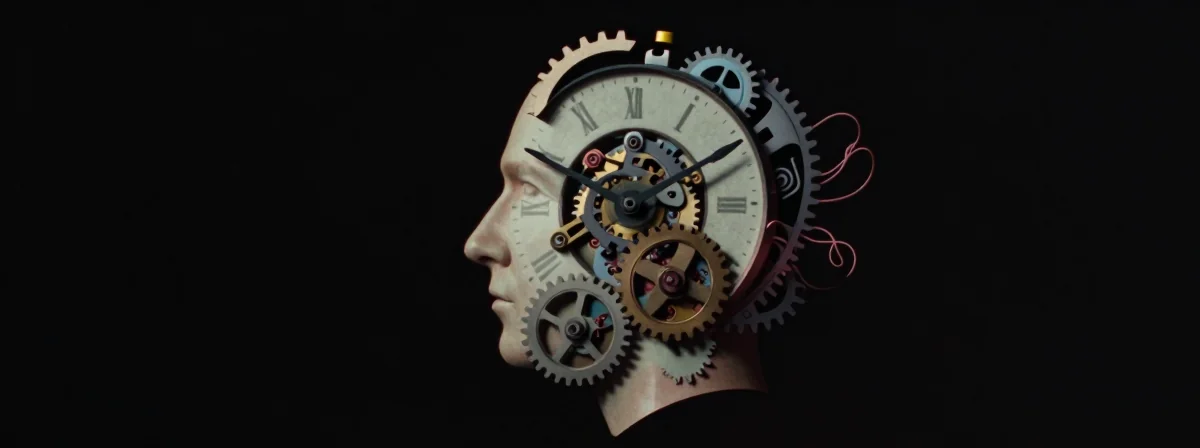
Think about the last time you took a nap. You woke up in a panic, convinced you’d slept through the night and ruined your schedule, only to check the clock and realize twenty minutes had passed. That wasn’t just a weird dream—it was a glimpse into how fragile your grip on reality actually is. Without constant external cues, your brain quietly rewrites your entire timeline and you don’t even notice.
Real Talk
Your biology is millions of years old We didn’t evolve to live in caves or dark rooms. We are hardcoded to sync with the sun. When you fight that rhythm with artificial light and screens, you break a mechanism that took millions of years to refine. You can’t cheat your biology forever. Eventually, the lack of light sync will catch up with you.
Survival mode distorts reality Harrison Okene survived a shipwreck trapped in an air pocket at the bottom of the ocean. He spent three days in freezing, complete darkness. When rescuers finally found him, he was convinced he had been down there for less than a day. Your brain lies to protect you. It edits the horror out of the timeline to keep you sane.
Novelty is the only thing that slows time down You wonder why years fly by now but childhood summers lasted forever. It’s not just age; it’s memory density. When you’re a kid, everything is new, so your brain stacks high-resolution memories that stretch your perception of time. As an adult, you operate on autopilot. You stop creating new markers, so the days blur. If you want time to slow down, you have to break the routine and do something you’ve never done before.
You need to go touch grass If your sleep schedule is wrecked, go camping for a week without artificial lights. It sounds like a cliché, but it’s a forced factory reset for your circadian rhythm. You’ll wake up at 6 AM not because an alarm screams at you, but because the sun hits your face. Your body knows what to do if you just let it.
You killed your own boredom I spent weeks hiking without cell service and noticed something strange—I started having vivid, deep daydreams again. I thought I’d just lost that creativity with age. I hadn’t. The second I got back to civilization and reached for my phone in a checkout line, that mental space vanished. Instant relief is the enemy of deep thought. Being bored is healthy, but you have to relearn how to sit with the discomfort.
“Stoner time” is real Everyone has that friend who says “be there in 10 minutes” and shows up two hours later. It’s annoying, but it’s not always a lie. Time perception is relative. To them, that internal clock is accurate. You just operate on a different timezone.
Stop checking your phone every time you wake up confused. Step away from the clock and let your brain recalibrate. You might be surprised how much time you actually have when you stop obsessing over it.