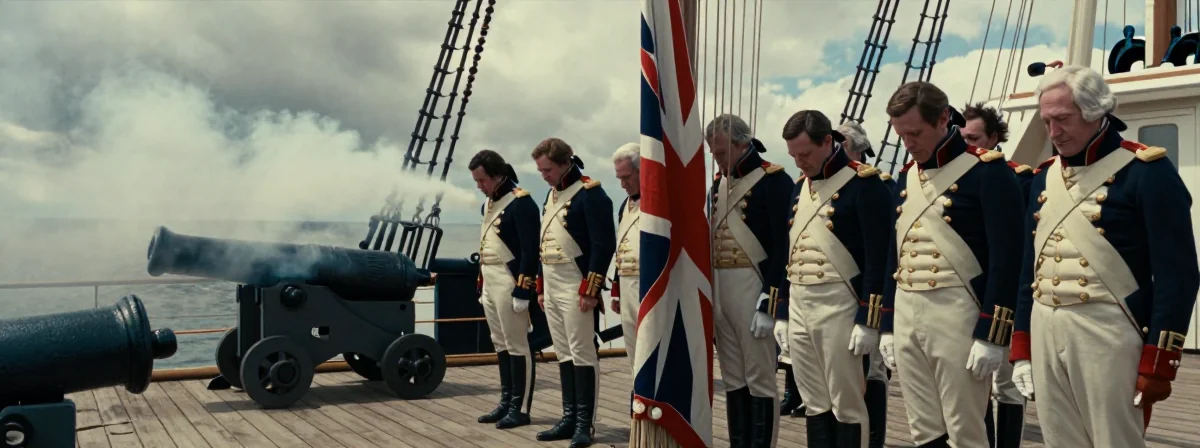
History is rarely black and white. It is painted in shades of gray, often by the victors, but sometimes the truth lies in the quiet moments that follow the conflict. Consider the death of George Washington. He was, by all definitions of the British Crown at the time, a traitor. He led a violent uprising, severed ties with the King, and helped birth a new nation. Yet, when news of his passing reached the shores of England, the Royal Navy—a force that had fought him on the high seas—lowered their flags to half-mast. It is a gesture that defies our modern understanding of war and hatred. It suggests that even in the heat of revolution, there was a lingering thread of respect, a recognition of a shared past that could not be burned by the fires of war.
This paradox sits at the heart of the American story. It was a separation conducted through blood, yet with shockingly little animosity when all things are considered. To understand why, we have to look past the textbooks and the simplified narratives of good versus evil. We have to look at the nature of the revolution itself, the economics behind the tea, and the forgotten moments that defined a break not from a people, but from a policy.
Was It Really a Revolution?
We often lump the American Revolution together with the great social upheavals of history—the French Revolution or the Russian Revolution. But to do so is to misunderstand its nature entirely. Those other conflicts were earthquakes, shaking the very foundations of social hierarchy, toppling kings and aristocrats to upend the lives of the peasantry. The American Revolution was different. It was a political adjustment, not a social reset.
The same wealthy elites who chafed under the thumb of the Crown found themselves in power after the dust settled. They had simply unshackled themselves from a distant master to rule a bit closer to home. It was a revolution of management, not necessarily of the masses. The social hierarchy remained largely intact; the faces in the governor’s mansions changed, but the structure of the society did not. It was a transfer of power, yes, but one that kept the reins in the hands of the same class of men who had held them all along.
The Paradox of Representation
You have likely heard the phrase “No taxation without representation” repeated like a mantra in history classes. It is a noble cry, one that speaks to the heart of justice. But the reality of who could speak was more nuanced. In truth, the colonies actually enjoyed a wider suffrage than the motherland. Land ownership—the key to the ballot box—was nearly ubiquitous in the New World. A free household in America often had a voice where a similar one in England might not.
The grievance wasn’t necessarily that the common man couldn’t vote; it was that those who could vote had no seat at the table in Parliament. They were subjects expected to pay, but forbidden to speak. It was a profound constitutional crisis. The colonists were not demanding a democracy as we might recognize it today—universal suffrage was still a distant dream. They were demanding the rights of Englishmen. They felt the British system was the best in the world, provided they were allowed to participate in it.
The Forgotten First Shot
When we think of the first shots fired in anger, our minds drift to the Boston Tea Party. It is the cinematic choice—the crates, the harbor, the painted faces. But history has a way of simplifying complex events into soundbites. A year and a half before that famous tea party, the Sons of Liberty boarded a British schooner named the Gaspee near Providence.
They didn’t just dump cargo; they shot the captain and burned the ship to the waterline. It was a violent, visceral act of rebellion, the first of its kind. Yet, it remains a footnote in our collective memory. Perhaps because the narrative of orderly resistance is easier to digest than the messy reality of men shooting their neighbors in the dark. The colonists were, for a long time, loyal subjects. They were angry at Parliament, not the Crown. They wanted the rights of Englishmen, not the destruction of England. That distinction is vital.
The Tea That Changed the World
And what of the tea itself? It was not merely a beverage; it was a brick. Compressed blocks of tea, stamped with the symbol of the Crown, were the currency of comfort. When the Boston Tea Party occurred, it wasn’t just a protest; it was the destruction of about 18 million cups of tea. In today’s economy, that is roughly $1.7 million of inventory.
But the target of the colonists’ rage was not just the drink, but the entity behind it: the British East India Company. This was not just a business; it was a state within a state, the largest corporation the world had ever seen. Their mismanagement in India, specifically their failure to heed the traditional wisdom of waiving taxes during famine, led to the death of millions and a collapse in textile output. The colonists saw a giant corporation, bloated and dangerous, receiving special favors from the Crown to save itself from its own incompetence. Destroying that tea was a stand against the marriage of corporate power and government tyranny—a sentiment that feels remarkably modern today.
A Family Squabble That Grew Up
So, how do we reconcile the traitor with the mourning flags? We must see the American Revolution not as a total rejection of the British identity, but as a coming of age. It was a family dispute that turned into a permanent separation. The colonists saw themselves as British subjects who had been wronged, and the British, eventually, saw them as wayward kin who had earned their place in the world.
The lack of deep-seated animosity—the ability to lower a flag in respect for a former enemy—suggests that while the political ties were severed, the cultural DNA remained shared. It teaches us that even our deepest divides often contain within them the seeds of mutual respect, waiting for the dust to settle. We are often more alike than our conflicts would have us believe, and sometimes, the strongest act of rebellion is simply insisting on being treated as an equal.