There is a specific kind of satisfaction in hearing your dryer beep, opening the door, and pulling out perfectly warm, completely dry laundry. You didn’t set a timer. You didn’t check on it every ten minutes. You just pressed start, and the machine knew. It feels like magic, but underneath that hum, there is a fascinating bit of physics and engineering hard at work.
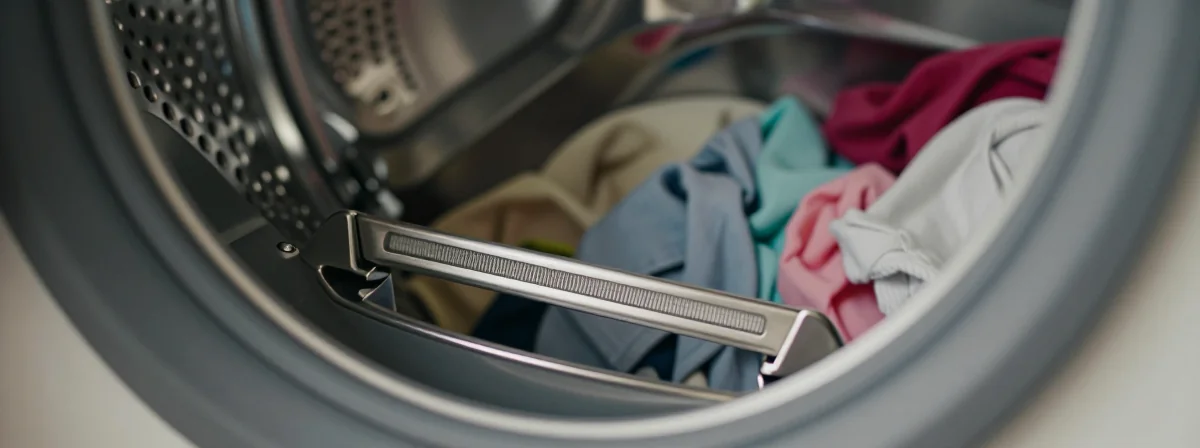
Most of us treat our dryers as simple heat boxes: hot air goes in, wet clothes come out. But if you look closely inside the drum—typically on the lint filter housing or the back wall—you might spot two metal bars staring back at you. These aren’t structural supports. They are the machine’s way of “feeling” your laundry, turning the drying process from a guessing game into a precise science.
Understanding this mechanism doesn’t just satisfy your inner curiosity; it explains why your clothes sometimes come out damp, why the machine shuts off too early, and why those metal bars need a good scrub every now and then.
How Wet Clothes Conduct Electricity
The core technology behind most modern moisture sensors is surprisingly simple, relying on a fundamental property of physics: conductivity. Pure water is actually an electrical insulator, but the water in your laundry is full of dissolved minerals and salts from the detergent and your skin. This impure water is an electrolyte, meaning it conducts electricity quite well.
Your dryer utilizes this with two metal strips located inside the drum. When wet clothes tumble and hit these strips, they create a bridge for electrical current. The machine sends a tiny electrical current between the bars. If the clothes are wet, the resistance is low, and electricity flows easily. As the clothes dry, they lose that conductive moisture, the resistance shoots up, and the current struggles to pass.
It is a brilliant feedback loop. The dryer monitors this electrical resistance continuously. When the resistance hits a specific high point—meaning the moisture is gone—the dryer knows its job is done. It shifts into a cool-down cycle to prevent wrinkling and shuts itself off. No guessing, just data.
Why Your Dryer Reads the “Spikes”
If you’ve ever wondered how this works when the clothes aren’t constantly touching the sensors, you’ve hit on a great point. The dryer isn’t looking for a constant connection; it’s looking for trends. As the drum spins, clothes will randomly brush against the metal strips, creating momentary dips in resistance—little electrical “spikes.”
The machine’s computer is smart enough to ignore the gaps where no clothes are touching and focus entirely on the height of those spikes. Early in the cycle, a damp sock hitting the sensor causes a massive drop in resistance. Near the end of the cycle, that same sock, now dry, barely registers a change. By tracking the peaks of these spikes over time, the dryer builds a reliable drying curve without needing constant contact.
This does have a downside, however. If you throw in a very small load, the clothes might tumble without hitting the sensors often enough to get a good reading. Or, if heavy sheets bundle up and stay on one side of the drum, the sensors might get “lonely” and assume the load is dry simply because they aren’t being touched. This is why larger, balanced loads tend to dry more accurately.
The Budget vs. The High-Tech Approach
Not all dryers use the metal strip method. While the conductivity strips are common—especially in budget-friendly models because they are incredibly cheap to manufacture—there is a more sophisticated way to measure dryness that you might find in higher-end units.
Instead of touching the clothes, these dryers monitor the exhaust air. They use thermal sensors to compare the temperature of the air entering the drum versus the air leaving it. Wet clothes act as a cooling agent; as the moisture evaporates, it absorbs heat, keeping the exhaust air relatively cool. Once the clothes are dry, that cooling effect stops, and the temperatures rapidly equalize.
Some advanced systems even combine both methods. They might use the metal strips for immediate feedback and the exhaust sensors as a fail-safe. It’s a wonderful example of engineering redundancy—using two different types of physics to ensure you don’t end up with damp jeans.
When Sensors Fail (And How to Fix It)
The most common reason for “smart” dryers to stop working effectively isn’t a broken motor or a bad heating element. It’s a dirty sensor. Over time, the metal strips inside your drum get coated in a thin layer of chemical residue from dryer sheets and liquid fabric softeners. This layer acts as an insulator, tricking the machine into thinking the clothes are dry (high resistance) when they are actually still wet.
If your dryer has started cutting off early or leaving towels damp, those two metal bars are likely the culprit. A quick wipe down with a bit of rubbing alcohol and a clean cloth can strip away that residue and instantly restore the machine’s accuracy. It’s a five-second fix that saves you hours of re-drying time.
The Invisible Efficiency Upgrade
We often think of efficiency in terms of LED light bulbs or electric cars, but the humble moisture sensor is a powerhouse of energy conservation. By stopping the exact moment the clothes are dry, you avoid the massive energy waste of tumbling dry clothes for an extra twenty minutes. It saves wear and tear on your fabrics, too, preventing the heat damage that comes from over-drying.
Next time you load the machine, take a peek at those metal bars. They are doing the heavy lifting, turning the invisible physics of electrical resistance into a tangible convenience. It’s not magic. It’s better. It’s engineering working quietly in the background to make your life a little bit easier.