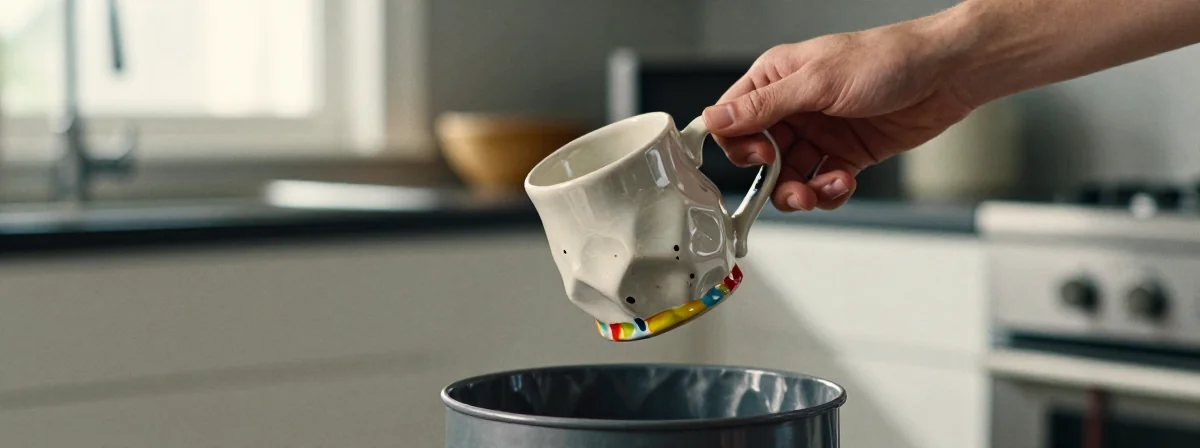
There is a distinct moment of hesitation we have all felt when standing at a neighbor’s door, holding a Tupperware container full of something warm and fragrant. It is a mix of gratitude and a quiet, primal calculation. Do I eat this? Do I pretend to eat this? Or do I quietly dispose of it when I get home? In an era where we can track the exact origin of an avocado down to the farm, accepting food from another person’s kitchen feels like a leap of faith. It is messy, unpredictable, and deeply, wonderfully human.
We have become accustomed to the sterile perfection of store-bought goods. The seal is unbroken, the ingredients are listed on the back, and a faceless corporation has taken all the risk so we don’t have to. But when someone hands you a loaf of sourdough or a tin of cookies, they are handing you a piece of their time. It is a gesture that predates modern commerce, a way of saying “I see you” without speaking a word. Yet, the modern mind often resists this intimacy, looking for the catch rather than the connection.
To understand why we react this way, we have to look past the flour and sugar. We have to look at the invisible transaction taking place. The conversation around homemade gifts usually revolves around taste or hygiene, but those are just surface-level symptoms of a much deeper question: Do we trust each other enough to be vulnerable?
The Currency of Time Over Money
There is a profound difference between buying something and making something. When you purchase a gift at a store, the transaction is simple—you exchange money for an object. It is convenient, often appreciated, but it requires very little of your soul. Homemade baked goods operate on an entirely different economy. They cost money, yes, but they also demand time, effort, and a specific kind of focus.
Consider the process. You have to buy the ingredients, measure them, mix them, and wait for them to transform in the oven. During that time, the baker is inevitably thinking of the person they are baking for. Every stir of the spoon is a silent thought directed your way. This is why a batch of “failed” cookies from a neighbor practicing their baking skills can feel more valuable than a box of expensive chocolates. The burnt edges or uneven rise are not defects; they are proof of a human trying to do something kind. The imperfection is the point. It signals that this was not manufactured by a machine, but crafted by hand.
The Barrier of the “Unknown Kitchen”
Of course, wisdom is not naivety. We would be foolish to ignore the very real concern many of us have about hygiene. We have all seen the kitchens of friends or family members that made us quietly cringe. Maybe it is the clutter, or perhaps it is the realization that their definition of “clean” does not quite align with yours. If you know for a fact that someone does not wash their hands before they cook, or if their home is overrun with pet hair that inevitably ends up in the batter, your hesitation is not rude—it is self-preservation.
This is where the nuance lies. The value of a homemade gift is inextricably linked to the trust you have in the giver. It is the difference between accepting a plate of brownies from a lifelong friend whose habits you know intimately, versus taking a treat from a distant acquaintance whose kitchen remains a mystery. Trust is the secret ingredient that cannot be faked. If you do not trust the person, you cannot trust the food. It is a natural boundary, and respecting it is part of maintaining your own peace of mind.
The Intimacy of Feeding Someone
To feed another person is one of the most intimate acts we can perform outside of a family unit. It involves saying, “Here, take this into your body. It will not harm you; it will nourish you.” That is a massive responsibility. It is why we feel so seen when a friend bakes something specifically tailored to our needs—like low-carb, low-calorie cookies for someone watching their health. That specific effort shouts, “I listen to you. I care about your journey.”
Conversely, this is why receiving food from someone we do not know well can feel intrusive or even threatening. We are not just accepting calories; we are accepting an invitation into their inner world. Sometimes, a home-baked good even carries the “scent” of the giver’s home—literal or metaphorical. If the relationship is strained or the dynamic is off, that bread will taste like the tension between you. But when the bond is strong, that same loaf tastes like love.
Why We Must Learn to Accept Gracefully
So, how do we navigate this complex landscape of flour and feelings? If you are on the receiving end, the key is to recognize the intent behind the offering. Even if you have legitimate doubts about the hygiene or the taste, the act of giving is a bid for connection. You can accept the gift with grace and handle the consumption privately later. There is no need to reject the gesture to protect your stomach.
But if you find yourself constantly throwing away homemade gifts, it might be worth asking why. Is it truly about cleanliness, or is it a fear of owing someone something? In a world that feels increasingly disconnected, the neighbor who sends over a “reject” loaf of sourdough is trying to build a bridge. They are risking rejection to offer you warmth.
The True Taste of Connection
Ultimately, the question is not whether the banana bread is perfectly moist or if the kitchen was spotless. The question is whether we are willing to let people in. When we reject these small, messy offerings of kindness, we reinforce the walls that keep us isolated. We become safer, perhaps, but also lonelier.
There is a quiet magic in breaking bread with someone. It signifies that for a moment, you are not adversaries or strangers—you are companions. So the next time a baggie of cookies appears on your doorstep, or a friend offers you a muffin that looks a little worse for wear, consider taking a bite. You might find that the taste of friendship is far sweeter than whatever perfection you were holding out for.