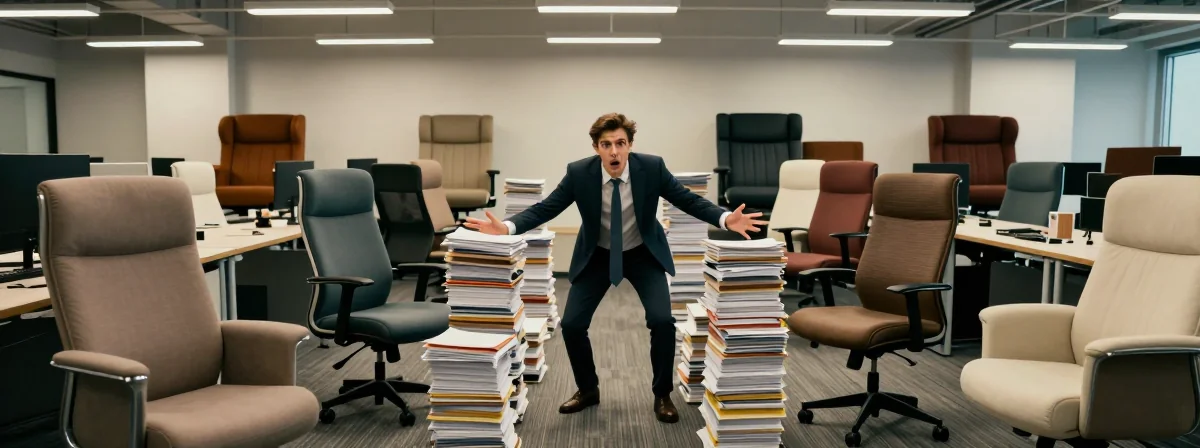
We’ve all been there. It’s mid-December, and suddenly that manager who usually makes you fill out a form in triplicate to buy a stapler is throwing money at you like they’re in a rap video. “Buy the new monitors! Get the ergonomic keyboards! Order the premium coffee beans!” It feels like a holiday miracle, right? Wrong. It’s the fiscal year end, and we are witnessing the beautiful, chaotic disaster known as “use it or lose it” budgeting.
You might think this is just a quirky corporate thing, but oh, it goes all the way to the top. We’re talking about the Pentagon, massive government agencies, and probably your local HOA. It turns out that whether you’re a junior analyst or a four-star general, the fear of having your budget slashed next year is enough to make you buy absolutely anything that isn’t nailed down. And honestly? It explains so much about why the world feels like it’s running on spreadsheet logic written by a toddler.
Take the recent news about the Department of Defense dropping millions on furniture and fancy meals in a single month. It sounds like a scandal, but to anyone who has ever worked in a big organization, it just sounds like Tuesday.
Why Do We Spend Money Like It’s Going Out of Style?
Here is the dirty little secret of big organizations: saving money is punished. I know, it sounds backward. You’d think the boss would give you a high-five and a pizza party for coming in under budget. But in the twisted world of accounting, coming in under budget sends exactly one message to the “bean counters” higher up: “You didn’t need this money.”
If you don’t spend it, they assume you were overfunded. And what happens next year? They cut your allowance. So, instead of being rewarded for efficiency, you’re penalized with fewer resources. It’s like being grounded for doing your chores too fast. The only logical move—the only move that keeps your department safe—is to go on a frantic shopping spree right before the deadline.
It is much easier to spend the money wastefully now than to incur the political spotlight of asking for a budget increase later. You don’t want to be the guy in the meeting explaining why you need more money for printer paper when you returned $50,000 last year. So, you buy the Herman Miller chairs. You buy the three-tiered fruit baskets. You buy the lobster.
The Herman Miller Chair and the $1,800 Price Tag
Let’s talk about that furniture report for a second because it is chef’s kiss. The Department of Defense spent over $225 million on furniture in a single year. Nearly half of that was just “office furniture.” We’re talking about premium chairs, including the legendary Herman Miller Aeron chair.
Now, if you’ve ever sat in an Aeron chair, you know it’s basically a throne for your lower back. They cost around $1,800 a pop. That is a lot of money for a place to park your butt while you stare at Excel spreadsheets. But when you look at the sheer scale of the US military—over 1.2 million active-duty soldiers—the numbers start to make a weird kind of sense. If you’re furnishing offices for that many people, you’re going to drop a fortune on seating.
But here’s the kicker: they spent the most on furniture since 2014. Did they just decide to renovate every office on the planet? Or was it just that time of year when the budget clock starts ticking down like a bomb in an action movie? It’s the latter. They bought the chairs because the money was there, and the alternative was losing it forever.
Is It Politics or Just Bad Math?
Whenever a story like this breaks, the internet immediately divides into teams. One side screams, “Look at the waste! This is why we can’t have nice things!” The other side whispers, “Actually, this was approved last year,” or “The other party does it too.” It’s the same old song and dance.
The truth is boring but important: this isn’t a partisan issue; it’s a systemic failure. Both sides of the aisle have been playing this game for decades. The funds were allocated months ago, and the rules of the game dictate that you must use them. Blaming a specific political party for this is like blaming a specific player for losing a game where the rules are “you have to set your money on fire to win.”
The media rarely reports on it because, well, it happens all the time. It’s not a scandal if it’s standard operating procedure. It’s like writing a news article that says “Sun Rises in the East, Scientists Confirm.” We’ve normalized the dysfunction to the point where spending millions on furniture is just a footnote.
The “Surf and Turf” Deployment Warning
There is, however, one specific type of spending that should terrify you. If you are in the military and you suddenly see crab legs and steak on the menu, run. Do not pass go. Do not collect $200.
There is a longstanding, dark-humor tradition that fancy food precedes bad news. If the chow hall is serving surf and turf, it usually means you’re about to get deployed. It’s the “last meal” before the chaos starts. So, while some of that food spending might just be end-of-year budget burning, there is a very real chance that a chunk of it is a farewell dinner for troops heading into harm’s way.
It’s a grim reminder that behind all these funny stories about budget dysfunction and expensive chairs, there are actual people making life-altering decisions. But even then, the logic holds up. They have the budget for the food; they spend it. If they didn’t, they couldn’t afford to feed the troops properly next year. It’s a vicious cycle.
We Need to Stop Rewarding the Panic
At the end of the day, we built this system. We created a structure where “saving money” is synonymous with “not needing money.” Until we change the incentives, we are going to keep seeing headlines about millions spent on fruit baskets and luxury chairs.
Imagine if we could roll over unused budget into a bonus pool or a savings account. Imagine if efficiency was actually rewarded. Instead, we are stuck in a game of hot potato where the goal is to get rid of the cash before the music stops. It’s wasteful, it’s frustrating, and it’s costing us billions. But hey, at least we’ve got really comfortable chairs while we watch the world burn.