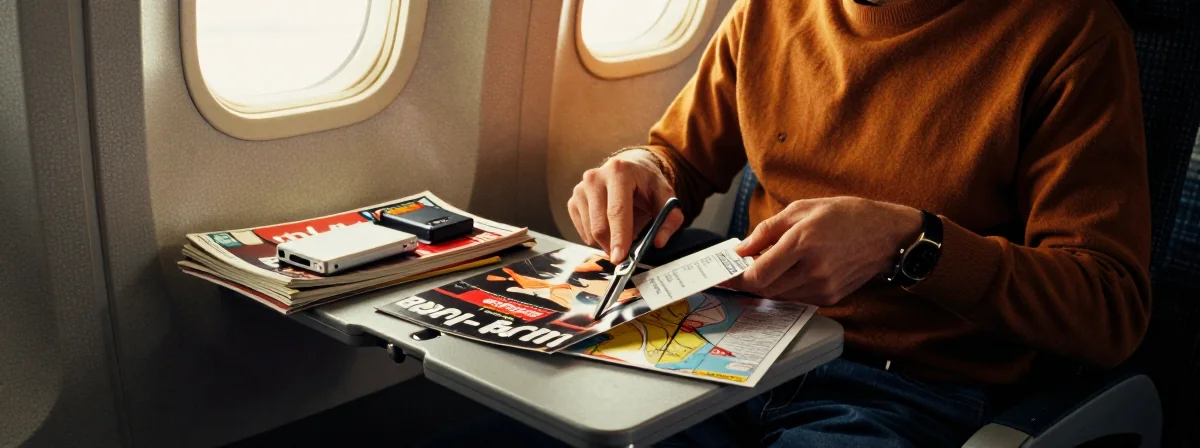
Remember when you could walk onto a metal tube flying 35,000 feet in the air with a boxcutter in your carry-on? It sounds like a fever dream now, a security lapse from a bygone civilization, but there was a time when the TSA didn’t exist and your grooming habits weren’t a national security threat. We look back at those pre-9/11 flights with a mix of nostalgia and disbelief, not just for the lack of security lines, but for the sheer weirdness of how we entertained ourselves. We didn’t just survive those flights; we engaged in tactile, dangerous, and surprisingly creative behaviors that would ground a flight today.
Breaking It Down
- The Era of In-Flight Crafts
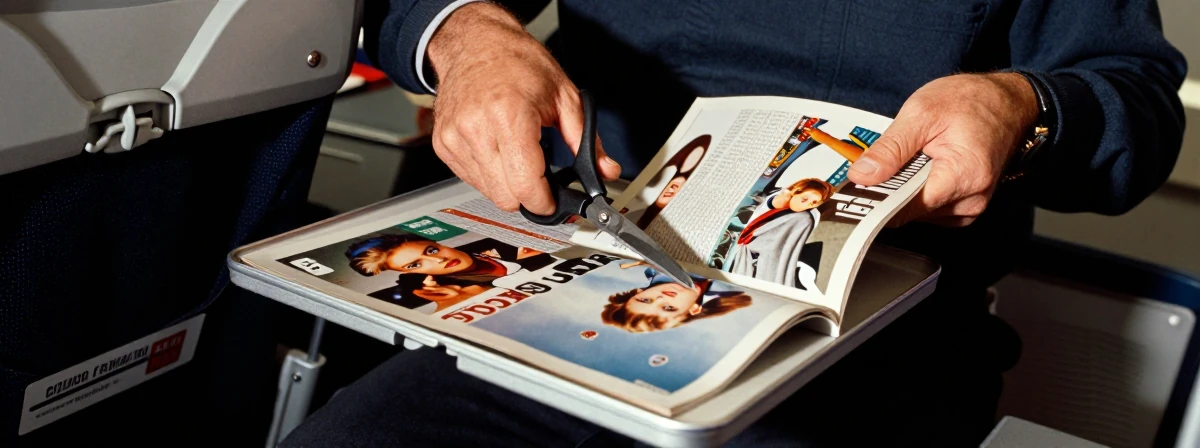
It sounds bizarre now, but there was a golden age of “scrapbooking” at 30,000 feet. Because you were allowed to bring scissors and even boxcutters—tools commonly used for collages back then—passengers actually spent their flight time cutting up magazines and reassembling them. It wasn’t just idle reading; it was active creation. You could physically modify your reading material without triggering a federal investigation, turning the dry husks of dead trees into personalized art projects before you even touched the tarmac.
The Communal Screen Experience Before every seatback came equipped with a high-definition touchscreen, flying was a collective exercise in attention. You watched whatever the central projector dropped down from the ceiling, or you stared at the small CRT TVs littered around the cabin. If you were on Southwest, you had zero tech options unless you brought your own gear. You couldn’t pause, you couldn’t rewind, and you certainly couldn’t choose between 4,000 movies. You either watched the movie the pilot picked, or you stared at the back of the seat in front of you.
The Physics of the Discman
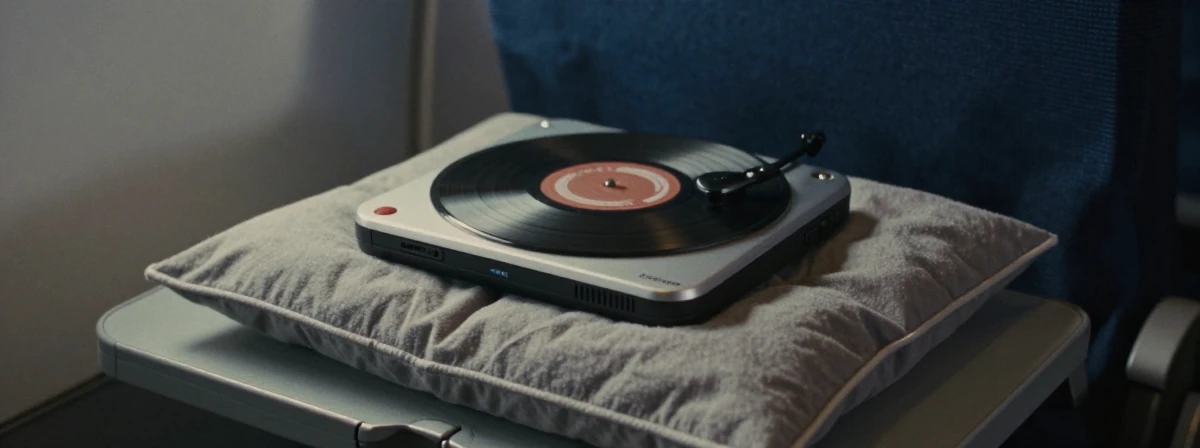
Trying to listen to music on a plane used to be a battle against physics and turbulence. You had your Discman or your Walkman, but you also had to understand the delicate mechanics of laser tracking on a vibrating aircraft. One bump of turbulence, and your song skipped like a broken record. It required a level of patience and manual stabilization—sometimes resting the player on a pillow on your tray table—that streaming services have completely obliterated. You worked for your audio entertainment.
- The Ancient Technology of Paper We often forget that the primary medium for information used to be physical ink on processed wood pulp. We didn’t have Wikipedia to settle debates; we had magazines that informed us which celebrities had “beach bods” and which couldn’t bounce back from baby weight.
It wasn’t instant, and it wasn’t backlit, but it was reliable. You didn’t need to worry about battery life or airplane mode; you just turned the page.
The Bottom Line
We traded the freedom of sharp objects and the patience of analog media for the safety and endless distraction of the digital age.
It is fascinating to realize that in our quest for convenience and security, we lost the permission to be bored—and the creativity that often comes with it. Next time you’re scrolling through your feed at cruising altitude, remember that you are sitting in a space where people used to make collages with boxcutters, and ask yourself if you’re really having more fun than they were.