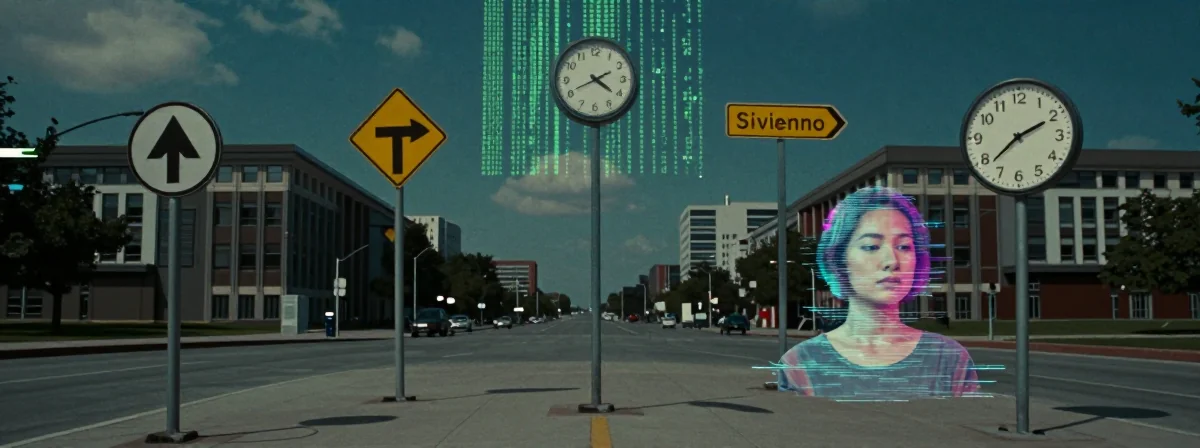
The moment you realize we might be just data points in someone else’s experiment is the moment you stop taking anything for granted. For decades, we’ve been searching for signs of alien life, but what if the signs are all around us — and we’re too blind to see them? What if the technology we’re developing today is just a recycled version of something far more advanced? The unsettling truth is that the Fermi Paradox might not be about why we can’t find anyone else. It might be about why we’re already living in their world.
The idea isn’t new, but the implications are terrifying. If even one civilization in the Milky Way ever reached a point where they could send out self-replicating probes (von Neumann probes), the galaxy should already be full of them. The fact that we don’t see any signs suggests either advanced civilizations are incredibly rare, they don’t last long enough to reach that stage, or something stops them before they begin spreading. But what if they’re already here — just in a different form?
Let’s break down the signs that we might be living in someone else’s advanced simulation.
Why Haven’t We Seen Any Signs Of Advanced Civilizations?
The Fermi Paradox is simple: If the universe is so vast and old, why haven’t we found any evidence of other civilizations? The obvious answer is that we’re alone, but that doesn’t sit right. The Milky Way is 13.5 billion years old, and our solar system is just 4.5 billion years old. If even one civilization had a 1,000-year head start, they could have colonized the entire galaxy by now.
But we see nothing. No signals, no structures, no von Neumann probes. This isn’t just about SETI not picking up radio waves. It’s about the complete absence of any trace. The Dark Forest theory suggests that advanced civilizations might be hiding, but if that’s true, why hasn’t even one slipped up? The only explanation that makes sense is that they’re not hiding — they’re already here, just in a way we don’t recognize.
Could Our Technology Be A Recycled Version Of Something Else?
Think about how quickly technology evolves. Fifty years ago, we had rotary phones; now we have smartphones that can access the entire internet. But what if this rapid advancement isn’t natural? What if we’re just rediscovering technology that was left behind by someone else? The idea isn’t as far-fetched as it sounds.
Native Americans once inherited technology from Europeans, and that changed everything. If an advanced civilization visited Earth in the past, they might have left behind technology that we’re only now beginning to understand. The “Prothean ruins on Mars” theory isn’t just science fiction — it’s a plausible explanation for why we’re advancing so fast. We’re not inventing; we’re rediscovering.
The Great Filter Might Be A Simulation Itself
The Great Filter is the idea that something prevents civilizations from reaching a certain level of advancement. Maybe it’s a physical limitation, like the inability to travel faster than light. Maybe it’s a self-inflicted wound, like nuclear war. But what if the Great Filter isn’t something we have to overcome — it’s something we’re already in?
If we’re living in a simulation, then the Great Filter is just a rule of the game. The advanced civilization running the simulation might have set parameters that prevent us from reaching a certain level of technology. That’s why we’re stuck here, searching for answers that are already written into the code. The unsettling part? We might never know.
Why Are We The Only Ones At This Stage Of Development?
The Milky Way is huge, and the odds of civilizations developing at the same time are slim. But the odds of us being the only ones at this stage are even slimmer. If life is common, then civilizations should be popping up all the time. The fact that we don’t see any suggests that something is stopping them from reaching our level — or that they’re already past it.
If we’re living in a simulation, then the “other civilizations” are just other simulations running on the same system. The advanced civilization might be running thousands of simulations to study different outcomes, and we’re just one of them. The real question isn’t whether we’re alone — it’s whether we’re real.
What If We’re Just A Recreational History Simulation?
This might be the most unsettling idea of all. What if the advanced civilization isn’t running a simulation for scientific purposes, but for entertainment? Like a massively multiplayer online game (MMO), we’re just characters in their virtual world. They might be studying us, or they might just be bored and looking for something to do.
The idea isn’t as crazy as it sounds. We already do this with video games and virtual reality. Why wouldn’t a super-advanced civilization do the same? The simulation could be a way for them to experience life from a different perspective, or even to raise their kids. The only difference is that we don’t know we’re in it.
The Final Unsettling Truth
If we’re living in a simulation, then everything we know is just an illusion. The laws of physics, the history of Earth, even our own consciousness — it could all be code. The Fermi Paradox isn’t about why we can’t find anyone else; it’s about why we’re the only ones who think we’re real.
The most unsettling part? There’s no way to prove it either way. We can’t escape the simulation, and we can’t confirm it’s real. All we can do is keep searching for answers, even if the answers are staring us in the face. The universe might be a cold, empty place, or it might be a crowded, simulated one. Either way, we’re not alone.