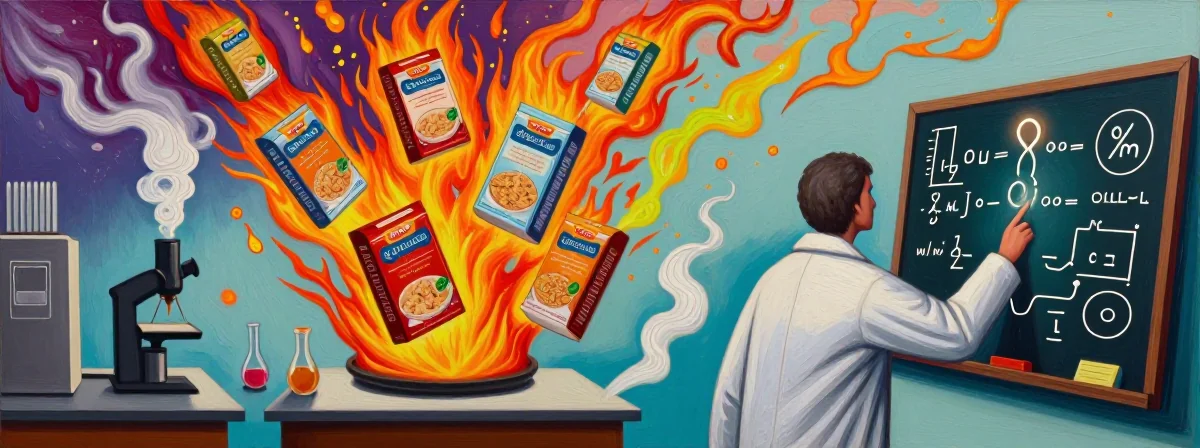
Ever watched a campfire and noticed how easily a small piece of cardboard catches flame? Now imagine that same flammability in your breakfast bowl. Reports indicate that many common breakfast cereals possess surprising combustion properties, burning with surprising intensity when exposed to flame. What we know so far suggests this isn’t just about sugary coatings—it’s about the fundamental chemistry of processed grains and their structure. Multiple sources suggest that understanding cereal combustion reveals important insights about food processing and safety.
The science of burning food dates back to the earliest nutritional studies, when scientists literally burned food samples to determine caloric content. Everything with calories contains stored energy that can be released through combustion, making the flammability of cereals less shocking when viewed through this lens. What many consumers don’t realize is how processing techniques actually enhance these flammable properties, creating a product that’s convenient for breakfast but potentially hazardous under certain conditions.
Can Something So Common Be So Flammable?
Yes, and the reason lies in the basic composition of breakfast cereals. Multiple sources suggest that cereals are essentially dried starch and fiber with sugars added, materials that burn much like wood or paper. The structure of many cereals further enhances their flammability—many are essentially compressed powders with high surface area. This powder burns even more easily and helps ignite the rest of the cereal mass. What we know so far indicates that the processing methods used to create puffed or flaked cereals dramatically increase their surface area, making them burn more readily than their whole grain counterparts.
The phenomenon isn’t limited to breakfast cereals. Reports indicate that powdered milk can explode under certain conditions, and grain silos regularly implement strict dust management protocols to prevent catastrophic explosions. What we know so far suggests that any flammable powder dispersed into the air has the potential to explode if a spark is present. This principle applies equally to flour, sugar, and other common food products when in powdered form. The structure of cereal, often containing numerous air pockets, creates ideal conditions for rapid combustion when exposed to an open flame.
Why Do Cereal Dust Explosions Happen?
The physics behind cereal dust explosions reveals fascinating science. When fine particles of cereal are suspended in air, they create a highly combustible mixture. Multiple sources suggest that the small particle size dramatically increases the surface area exposed to oxygen, allowing for rapid and violent reactions. What we know so far indicates that grain silo explosions occur precisely because of this phenomenon—when grain dust becomes airborne in confined spaces, a single spark can trigger a chain reaction that destroys entire facilities.
The addition of leavening agents like baking soda during processing further enhances these properties by creating even more surface area through puffing. Reports indicate that cereals with higher sugar content tend to burn more intensely, as sugar is an energy-dense carbohydrate that combusts readily. What we know so far suggests that the combination of fine particles, high surface area, and energy-dense ingredients creates a perfect storm for combustion when cereal is in powdered form.
Is Your Morning Cereal Just Processed Chemicals?
This question touches on a common misconception about food processing. The term “chemicals” applies to everything—water is dihydrogen monoxide, wood is made of cellulose, and even organic produce contains numerous chemical compounds. What we know so far indicates that processed cereals contain the same basic building blocks as whole grains, just rearranged through processing. Reports indicate that the flammability of cereals isn’t due to mysterious additives but rather to the concentrated energy content of carbohydrates and fats.
Multiple sources suggest that the processing of grains into cereals actually concentrates their energy content by removing moisture. What we know so far indicates that drying is a critical factor in flammability—wet wood won’t burn easily, but dry kindling ignites readily. Similarly, the removal of water during cereal processing creates a product that burns more efficiently. The structure created during processing, with its numerous air pockets, further enhances combustion by allowing oxygen to reach more of the material simultaneously.
What Happens When You Actually Burn Cereal?
The practical demonstration of cereal combustion reveals surprising intensity. Reports indicate that a handful of cereal dust can create a brief but impressive flame when exposed to a flame source. What we know so far suggests that the combustion process releases the same energy that our bodies would extract through digestion, just much more rapidly. Multiple sources suggest that this principle applies to all calorie-containing foods—the difference lies in moisture content, surface area, and structural properties.
The energy density of cereals varies by type, with sugary varieties often burning more intensely due to their higher carbohydrate content. What we know so far indicates that nuts, which contain oils, can burn even more dramatically, essentially functioning as small oil lamps. The combustion of cereal isn’t about mysterious ingredients but about the fundamental physics of energy release—burning is simply a rapid oxidation process that releases stored energy, much like cellular respiration but accelerated.
Should You Be Worried About Cereal Combustion?
For home consumers, the risk of cereal combustion is minimal under normal conditions. What we know so far indicates that the danger arises primarily in industrial settings where cereal dust becomes airborne in large quantities. Multiple sources suggest that home cooks might notice cereal burns easily when camping or using cereal as a fire starter, but this isn’t a significant safety concern for typical breakfast preparation. Reports indicate that the real lesson from cereal combustion is about understanding energy storage in food and the importance of proper dust management in food processing facilities.
The surprising flammability of breakfast cereals actually highlights important scientific principles. What we know so far suggests that this phenomenon demonstrates how energy is stored in chemical bonds and released through oxidation. Multiple sources suggest that rather than being alarming, cereal combustion should be seen as a fascinating educational opportunity about food science and energy transformation. The same principles that make cereals burn also make them nutritious—both processes involve releasing stored energy, just at dramatically different rates.
What Does Cereal Combustion Teach Us About Food?
The study of cereal combustion reveals important insights about food science and processing. What we know so far indicates that the structure of processed foods significantly affects their properties, including flammability. Multiple sources suggest that understanding these principles helps in designing safer food processing facilities and in developing more nutritious food products. Reports indicate that cereal combustion demonstrates how processing can concentrate energy and alter physical properties in ways that have both benefits and potential risks.
The surprising flammability of breakfast cereals ultimately teaches us about the fundamental nature of food as stored energy. What we know so far suggests that all calorie-containing substances can burn, with the rate and intensity depending on moisture content, surface area, and structural properties. Multiple sources suggest that this perspective transforms our understanding of nutrition—food isn’t just about nutrients but about energy storage and release, whether through digestion or combustion. The next time you pour a bowl of cereal, you might see not just breakfast but a fascinating example of energy transformation in action.