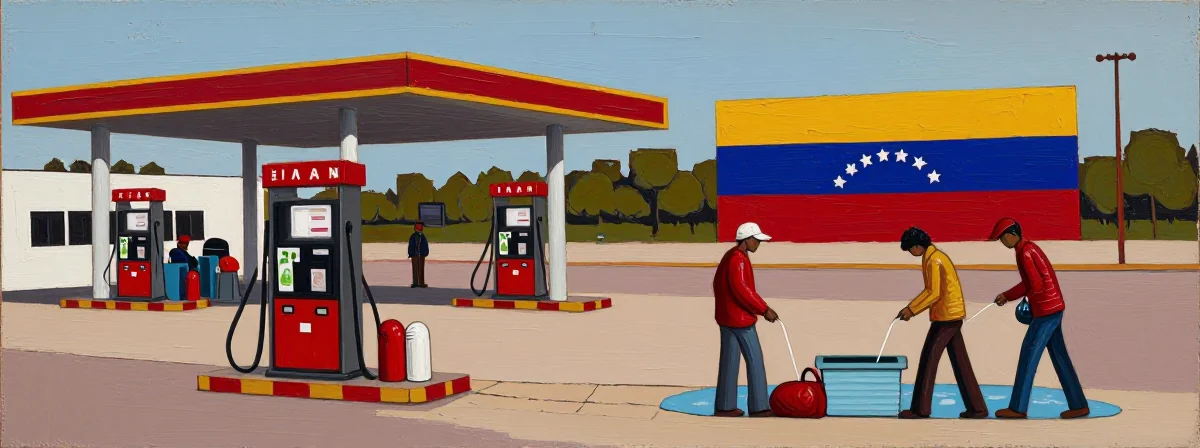
Some days you pull up to the pump and it feels like a victory just to keep your tank full. Other days, you wonder if you’re filling up a swimming pool. Ever notice how gas in Texas can be cheaper than almost anywhere else in the US? And then there’s Venezuela, where for years, gasoline was reportedly cheaper than water. It sounds impossible, but it’s true—and the reasons behind it are wilder than you might imagine. Let’s dive into the fascinating world of oil, control, and why your wallet feels the way it does.
More Than Meets the Eye
State Control vs. Global Markets: It’s a Whole Different Ballgame
In Venezuela, the government owns the oil. All of it. That means they can set the price for their own people almost任意ly. For decades, they kept gasoline prices absurdly low—like, cheaper-than-water low—as a political tool to keep citizens happy. But in places like the US, oil is mostly privatized. It’s bought and sold on global markets, where prices are driven by supply, demand, and what someone in China or Europe is willing to pay. The moment you mix state control with global markets, you get two very different price tags for the same commodity.Texas Oil Isn’t Just Cheap Because It’s There
You might think, “Texas has tons of oil, so gas is cheap!” But it’s more complicated than that. Texas also happens to be home to a massive number of oil refineries. When oil is refined close to where people live, the cost to transport it drops dramatically. That’s why gas in Texas is often cheaper than in states like California or New York—even if those states have oil too. It’s about the entire supply chain, not just the oil in the ground.Venezuela’s “Cheaper Than Water” Gas Was a Recipe for Disaster

For years, Venezuelans could fill up their tanks for pennies. Sounds great, right? Wrong. The government was essentially giving away oil, which meant they weren’t making money from it. To keep those prices low, they had to subsidize the cost—using money that could’ve gone to fixing roads, schools, or hospitals. The result? A collapsing economy, hyperinflation, and a country that can barely function. Cheap gas felt good in the moment, but it bankrupted the nation in the long run.
Oil Isn’t All Created Equal (And Neither Are Refineries)
Not all oil is the same. Venezuelan oil is heavy and sour, meaning it’s harder and more expensive to refine. Texas oil is light and sweet, which makes it easier to turn into gasoline. Because of this, refineries in the US are often set up to handle both types. We import heavy crude (like from Venezuela or Canada) because we can refine it efficiently and still make a profit. But that refining power also means we can produce a lot of gasoline—so much that the US is now a net exporter of gasoline. The type of oil and the refining capacity play huge roles in what you pay at the pump.Gas Prices Are Local, Even in a Global Market
Here’s something counterintuitive: even though oil is a global commodity, the price you pay at the pump is often determined by local factors. Taxes are a big one. States like California have higher gas taxes than states like Texas, which immediately bumps up the price. Refinery locations matter too—you’ll pay more the further you are from a major refinery hub. Even emission standards can affect prices; California has some of the strictest in the US, which means its gasoline is more expensive to produce. So while the global market sets a baseline, your local price is a whole other story.Why Would They Sell Cheap When They Can Sell High?
This is the golden rule of business, and oil is no exception. If a country can sell its oil on the global market for a premium, why would it sell it cheaply to its own people? It’s like having a lemonade stand: you wouldn’t sell lemonade for a nickel when everyone else is paying a dollar. That’s why the US doesn’t subsidize gas like Venezuela did. We let the market set the price, which means we get the benefits (and the drawbacks) of global oil economics. It’s capitalism at its purest—and sometimes, that means your gas prices go up when the market does.The Hidden Cost of “Cheap” Gas
Venezuela’s experiment with ultra-cheap gas is a cautionary tale. By keeping prices artificially low, they incentivized people to waste fuel—driving everywhere, idling their cars, using gas for things they didn’t need. It seemed like a win for the people, but it was a disaster for the country’s finances. Meanwhile, places like Norway—where gas is incredibly expensive—use high prices to encourage conservation and alternative transportation. It turns out, “cheap” gas isn’t always a good thing. Sometimes, a higher price is a nudge in the right direction.
Trust Your Instincts
The next time you fill up your tank, take a moment to think about the invisible hands at work. It’s not just about how much oil is in the ground or how far away the refineries are. It’s about who controls the oil, who sets the prices, and what the rest of the world is doing. Gas prices are a window into global economics, politics, and human behavior—all wrapped up in the price per gallon. So yeah, gas in Texas might be cheaper than water in Venezuela, but the real story is what that tells us about power, choice, and the choices we make when it comes to the resources we rely on every single day.