Every time you cut your finger, your body performs a miraculous feat: it heals the wound. But what if you lost an entire finger? Unlike some animals that can regrow severed limbs, humans are left with permanent loss. This fundamental difference isn’t just a curiosity—it represents one of the most exciting frontiers in medical science. The secret lies not in our DNA’s limitations, but in how our cells interpret developmental instructions, a discovery that’s paving the way for revolutionary regenerative therapies.
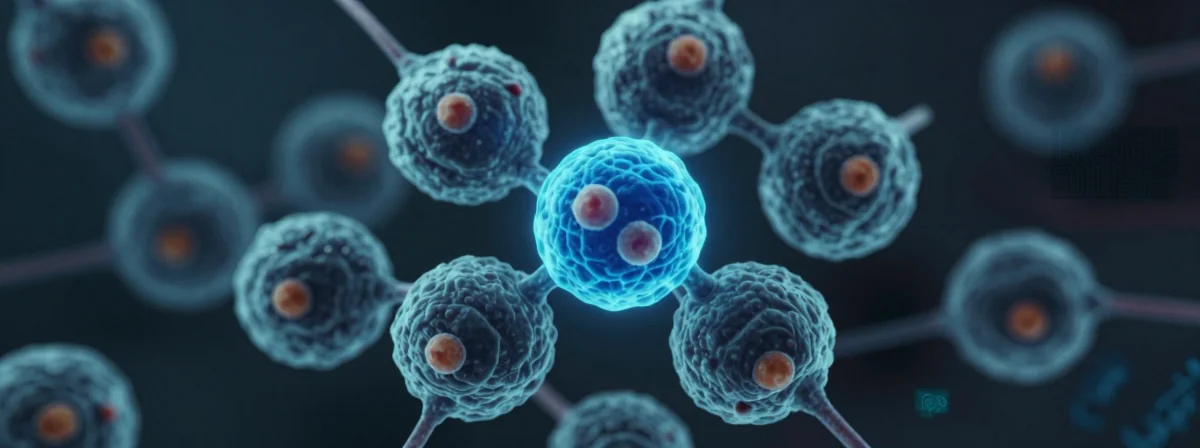
The journey to understand why humans can’t regrow fingers begins at the cellular level, where the potential for regeneration exists but remains dormant. Early in development, our cells possess a remarkable property called totipotency, meaning they can become any cell type. As we mature, this potential diminishes until cells become specialized—skin cells, muscle cells, nerve cells—each with a specific function but no longer capable of becoming something entirely different. This transformation is the first key to understanding why regrowing a finger isn’t as simple as activating dormant cells.
Can Cells Simply “Remember” How to Grow a Finger?
If our cells once had the ability to form any tissue, why can’t they simply relearn this skill? The answer lies in how cells receive instructions during development. Even if a cell could become any type again, it needs precise chemical and cellular markers to know where it is in the body and what structure it should form. Think of it like trying to rebuild a house without blueprints or reference points—the materials might be available, but without knowing the original design, the result would be chaotic.
Scientists have discovered that regeneration isn’t just about having stem cells—it’s about having the right environment and signals to direct those cells. When a salamander regrows a tail, it’s not just cells multiplying randomly; it’s a carefully orchestrated process where chemical gradients tell cells exactly where they are and what they should become. Humans retain some regenerative capabilities—newborns can sometimes regrow fingertip tissue—but these abilities fade as we age, leaving behind only the capacity for limited healing.
Why Did Humans Lose the Ability to Regenerate Limbs?
From an evolutionary perspective, the ability to regrow complex structures like fingers presents an interesting trade-off. Maintaining the genetic and cellular machinery for complete regeneration requires significant energy and increases the risk of cancer—when cells begin dividing uncontrollably. For most of human history, losing a finger wasn’t immediately life-threatening, especially as we developed tools and social structures to compensate for physical limitations.
This evolutionary path differs dramatically from species like starfish or lizards, where regeneration provides a clear survival advantage. For humans, the energy costs of maintaining regeneration capabilities outweighed the benefits, leading to a gradual loss of these abilities over evolutionary time. It’s not that our DNA has forgotten how to build fingers—it’s that we’ve optimized for other survival strategies, leaving regeneration as a secondary priority.
What Would Happen If We Could Regrow a Finger Today?
The most fascinating aspect of this research isn’t just understanding why we can’t regenerate, but what would happen if we could. Unlike the simple healing process that fills a wound with scar tissue, regrowing a finger would require reconstructing complex structures—bones, nerves, blood vessels, and skin—in the correct arrangement. Without the proper developmental instructions, introducing stem cells to a severed finger would likely result in uncontrolled growth rather than proper regeneration.
This is why cancer often begins with cells that reacquire some stem cell properties—pluripotency genes turning back on can cause cells to multiply without proper regulation. The challenge for regenerative medicine isn’t just activating dormant cells, but creating the precise chemical and physical environment that guides them to form the correct tissues in the right places.
How Close Are We to Regrowing Human Limbs?
While we’re still years away from regrowing entire fingers or limbs, significant progress is being made in regenerative medicine. Scientists are developing techniques to:
- Create scaffolds that provide structural guidance for new tissue growth
- Develop chemical cocktails that mimic developmental signals
- Engineer stem cells that can differentiate into specific tissue types
- Use 3D bioprinting to construct complex structures
Recent breakthroughs include partial regeneration of fingertips in children and advanced tissue engineering that can reconstruct damaged joints. While these aren’t complete finger regeneration, they represent incremental steps toward understanding how to rebuild complex structures.
What Does This Mean for the Future of Medicine?
The quest to understand why humans can’t regrow fingers has led to fundamental insights about development, aging, and disease. As we decode the instructions that guide cellular regeneration, we’re not just unlocking the potential to regrow limbs—we’re discovering new approaches to healing damaged tissues, treating degenerative diseases, and even extending healthy lifespans.
The future of medicine isn’t just about treating disease; it’s about harnessing the body’s natural healing potential. By understanding why we can’t currently regrow fingers, we’re developing technologies that may one day make this possibility a reality, transforming medicine from reactive to regenerative.