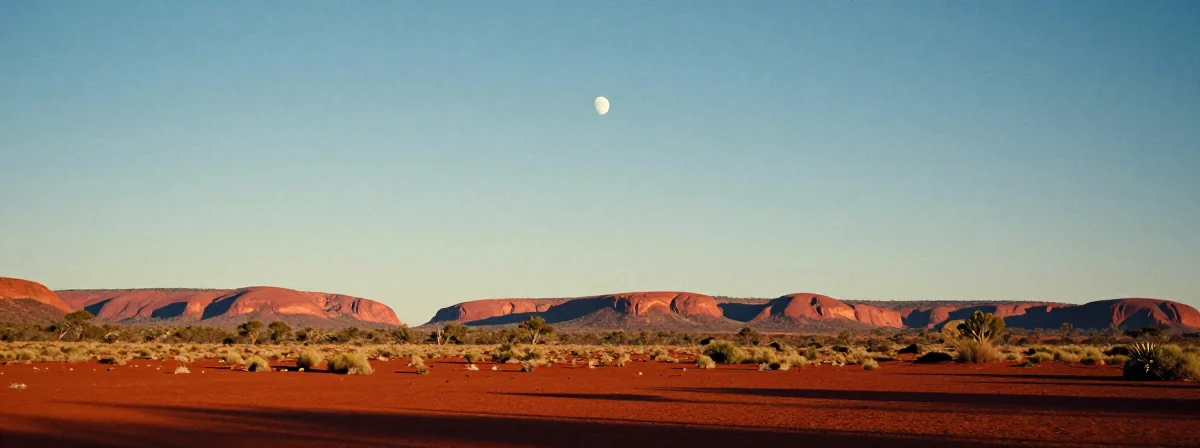
Some days you wake up and the universe decides to rearrange your sense of scale. Like when you realize Australia—yes, that continent with the koalas and deadly spiders—is actually wider than the Moon. It’s one of those facts that makes you tilt your head, like discovering your pet goldfish is secretly a world-class pianist. You knew it was smart, but not that smart. Or in this case, not that big.
This isn’t just a quirky piece of trivia. It’s a reminder that our brains are terrible at judging size, distance, and scale—especially when we’re comparing things that live in entirely different realms, like a landmass and a celestial body. So let’s unpack this cosmic-sized mind-bender together.
The Wisdom
- Your thumb knows more than you think.
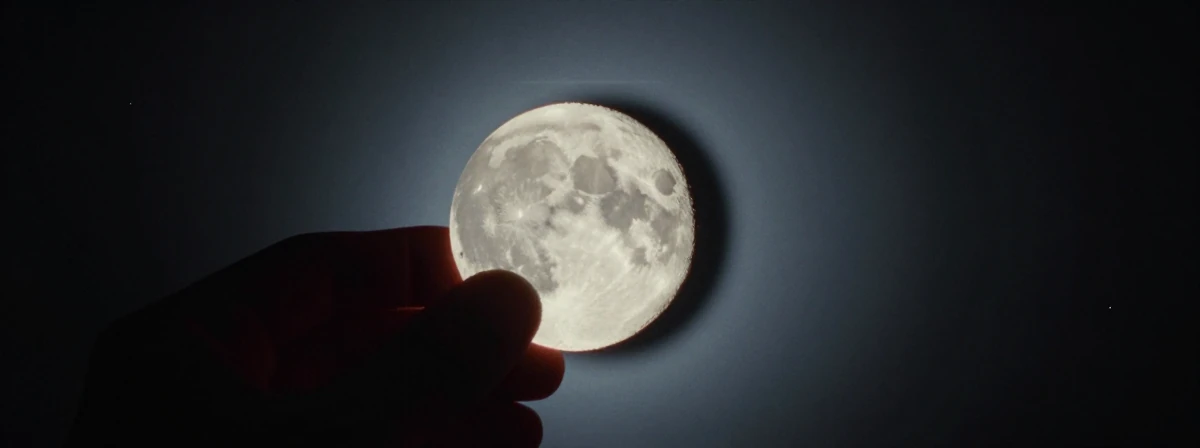
Hold your thumb up to the Moon, and it perfectly covers the lunar disk. Now try that with Australia on a map. Your thumb barely scratches the surface. This is how we intuitively “know” the Moon is huge—because it fills our sky. But intuition is a liar. The Moon’s diameter is about 3,474 kilometers, while Australia’s widest point is roughly 3,862 kilometers. That extra 400 kilometers isn’t something you’d notice from 384,400 kilometers away. Perspective is everything—literally.
- Diameter vs. width: The shape game.
The Moon is a sphere, so its diameter is a straight line through its center. Australia is a blob of land, so its “width” is the farthest distance between two points on its edge. It’s like comparing the straight-line width of a bent piece of paper to its flat width. The Moon could fit inside Australia’s outline with room to spare, but that doesn’t make the Moon small—it just shows how differently we measure things when one is round and the other is… not.
- Surface area: The Moon wins the land grab.
If we’re talking total space, the Moon crushes Australia. Its surface area is about 37.9 million square kilometers—larger than Asia. Australia is just 7.7 million square kilometers. So while Australia beats the Moon in width, the Moon could swallow Australia whole and still have space for dessert. It’s a reminder that “bigger” depends on what you’re measuring. Like saying a marathon is longer than a swimming pool—obviously, but that’s not the whole story.
Australia > Moon > Thumb: The hierarchy of scale.
This isn’t just a cute mnemonic. It’s a way to retrain your brain to think in nonlinear terms. We’re used to thinking of the Moon as this immense, distant thing, and our thumb as tiny. But scale is relative. Your thumb is about 2 centimeters wide—closer in size to the Moon (3.5 times bigger) than to Australia (1,931 times bigger). So next time you feel small, remember: you’re actually more like the Moon than you think. It’s just perspective.The tyranny of the visible.
One person argued, “I can see the Moon, but not Australia, so the Moon must be bigger.” That’s like saying you can see your neighbor’s cat but not Canada, so the cat is larger. Our eyes lie to us. We overestimate the Moon because it’s bright and fills our sky, while we underestimate Australia because it blends into the Earth’s background. The universe doesn’t care about our categories. It just keeps being vast in ways that defy our everyday logic.Australia on the Moon: The ultimate relocation nightmare.
Imagine if the Moon were Australia-sized. Every night, we’d look up and see a continent hanging in the sky. Australians would have to deal with being the only country that’s also a moon. (And yes, kangaroos would be terrifyingly high-jumping on the lunar surface.) It’s a fun thought experiment, but it also highlights how much we take for granted—the Moon’s quiet presence, Australia’s grounded reality. Swapping them would upend everything.Safety first? Maybe not.
One commenter pointed out that the Moon is “safer” because Australia has 66 of the world’s most venomous snakes. The Moon, on the other hand, has no atmosphere, -173°C nights, and constant radiation. It’s a false choice—both are deadly in their own ways. But it raises a question: what do we even mean by “safe”? Sometimes the things that seem wild and dangerous (like Australia) are more livable than the things that seem calm and perfect (like the Moon). Life has a way of complicating our simple ideas.Math doesn’t care about shapes.
Someone noted that Australia isn’t a circle or sphere, so it doesn’t have a diameter. Technically true—but math doesn’t care. We can still measure the farthest distance across it. It’s like saying a mountain doesn’t have a height because it’s not a perfect cone. The universe is messy; our tools are just approximations. The fact that we can even compare a continent and a moon is a miracle of human curiosity, not a cosmic rule.The joy of losing respect for the Moon.
One person admitted: “I learned this and honestly, it made me lose respect for the Moon. It doesn’t look as big now.” That’s the beauty of learning—sometimes it shatters illusions. The Moon is still majestic, still ancient, still a piece of rock holding poetry for billions. But knowing it’s just slightly smaller than a continent doesn’t make it less magical. It just makes it more real. And realness, in the end, is what grounds us.The map that changed everything.
After this fact, someone said they’d now imagine the Moon hovering above Australia whenever they saw a world map. And that’s the takeaway: once you see it, you can’t unsee it. The world doesn’t change, but your perception does. That’s what learning is—rewiring your brain to see the same things in new ways. So the next time you look at a map, ask yourself: what else am I taking at face value?
The real lesson here isn’t about Australia or the Moon. It’s about how easily we’re fooled by scale, distance, and the way things appear versus the way they are. The universe is full of these quiet contradictions—things that seem obvious until you look closer, then turn into something else entirely. And that’s not just fascinating. It’s humbling. It’s a reminder that the biggest truths often hide in the smallest details—if we’re willing to look.