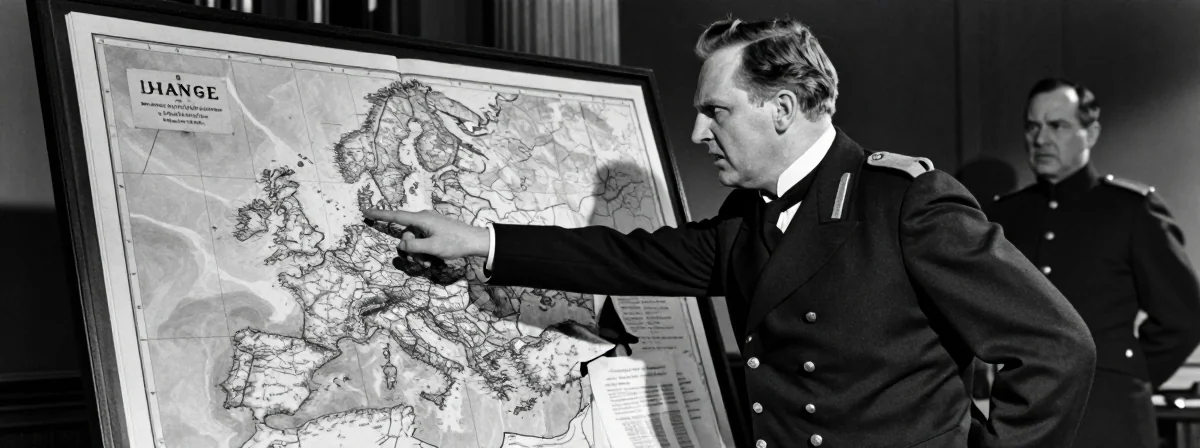
Ever wonder why some chapters of history feel like they’re missing a piece? Like there’s a secret handshake between the facts we know and the full story? Take America’s entry into World War I. We learn about Woodrow Wilson’s 14 Points and the League of Nations, but there’s a wild, almost unbelievable twist that history books barely whisper about. Teddy Roosevelt—the Rough Rider, the Bull Moose, the man who’d ride into battle on the back of a bear—almost dragged the U.S. into WWI with tactics that would’ve made the trenches look like a carnival. And Woodrow Wilson? Well, let’s just say his reasons for blocking TR weren’t exactly statesmanlike.
The real kicker? This isn’t just dusty history. It’s a lesson in how personality, ego, and even fashion choices can shape the course of nations. Ready to dive into the wild side of presidential history? Let’s go.
Could You Imagine TR Leading WWI? The Warhawk Who’d Charge With a Lasso
Teddy Roosevelt was a force of nature. The man who led the charge up San Juan Hill wasn’t exactly the type to sit back and let generals do the heavy lifting. In fact, when WWI broke out, TR was itching to jump in—and not just as a cheerleader. He wanted to lead a volunteer division, charging into battle with the same gusto he brought to everything else. The problem? His ideas about warfare were straight out of the Spanish-American War. Tanks? Air power? Forget it. TR was all about the cavalry charge, the bayonet, the old-school glory of close combat.
Wilson, ever the academic, saw the disaster coming. TR’s romanticized vision of war would’ve been a slaughter. But here’s where it gets juicy: Wilson’s opposition wasn’t just about strategy. It was personal. Wilson hated TR, plain and simple. The two men were political rivals, and Wilson’s petty refusal to let TR lead troops had less to do with national security and more to do with petty spite. It’s like if your boss blocked your promotion because you once called their tie ugly.
The Versailles Backfire: How Wilson’s Snub Cost Him the League of Nations
Wilson’s disdain for TR went so far that when it came time to negotiate the Treaty of Versailles, he didn’t invite a single Republican to the talks in Versailles. Can you imagine? The leader of the free world deliberately excluding half the political spectrum. It’s like trying to plan a wedding without telling the groom. Unsurprisingly, this move blew up in Wilson’s face when he tried to get Congress to ratify the League of Nations. Without Republican buy-in, his dream died.
TR, for his part, would’ve loved to see the League fail. But the irony? His own ambition to lead troops might have saved the League. If he’d been in charge, maybe the U.S. would’ve had a stronger voice in post-war Europe. Instead, we got Wilson’s stubborn pride and a world that’s still dealing with the fallout.
From Haberdashery to Helmets: The Odd Jobs of America’s WWI-Era Presidents
Speaking of oddities, did you know TR was the only U.S. president to run a haberdashery? Yes, the same man who’d later lead the charge in San Juan Hill once sold hats and suits. It’s a fun fact, but it speaks to something deeper: these men weren’t just statesmen; they were real people with real quirks. Wilson, for his part, was a clothes horse—Chester A. Arthur could’ve run a haberdashery out of his closet, but Wilson took it to another level.
Then there’s Harry S. Truman, whose middle name is just an “S.” No period, no meaning—just a letter. His presidential library insists on it, but try telling that to every bureaucrat who wants to put a period after it. It’s a small thing, but it’s the kind of detail that makes history feel human.
The Mystery of the Middle Initial: Grant, Truman, and the Silent “S”
And speaking of middle initials, Ulysses S. Grant’s “S” doesn’t stand for anything either. The story goes that when Grant enrolled at West Point, his name was accidentally recorded as “Ulysses S. Grant” instead of “Hiram Ulysses Grant” (his real name). He decided to roll with it because “US Grant” sounded patriotic. It’s like when you accidentally sign up for a yoga class and end up loving it.
Truman’s “S” was different—it stood for both his grandfathers’ names: Shippe and Solomon. But the public never knew, and the myth of the silent “S” persists. It’s a reminder that even the most powerful men have secrets, even in their own names.
The Forgotten Veterans: Why No WWI Vets Ever Became President
Here’s a twist you don’t hear often: only three presidents—FDR, Truman, and Eisenhower—served during WWI, and none saw combat. The rest? Either too young or too old. It’s a small window in history, but it means we’ve never had a president who truly understood the trenches of WWI. Compare that to Vietnam, where not a single combat vet has ever made it to the White House.
Kerry and McCain were the closest, genuine veterans who almost made it. But their near-misses highlight how rare it is for combat experience to translate into the Oval Office. Maybe that’s a good thing—war shouldn’t be a prerequisite for leadership. But it’s still odd that we’ve never had a president who truly walked in the shoes of WWI soldiers.
From Cavalry to Atomic Bombs: The Military Evolution of Presidents
One president’s journey is particularly wild: Dwight D. Eisenhower. He served in WWI as an artillery officer in France, but never saw combat. Fast-forward, and he’s the Supreme Allied Commander in WWII, then president, and ultimately the man who oversaw the dropping of two atomic bombs. Talk about a glow-up.
It’s a stark contrast to the cavalry charges TR would’ve led. Eisenhower’s path shows how military technology and strategy evolved in just a few decades. From horses to nuclear weapons—it’s the kind of transformation that makes you wonder what the next 50 years will bring.
The Legacy of Wilson’s Pride: Why TR’s WWI Ambition Still Matters
So why does any of this matter today? Because history isn’t just about dates and names; it’s about the choices people make and the ripple effects that follow. Wilson’s refusal to let TR lead troops wasn’t just petty; it shaped the course of the 20th century. Without TR’s influence, the U.S. entered WWI with a different strategy, and the post-war world looked different as a result.
The next time you hear about America’s role in global conflicts, think about TR’s almost-war. Think about Wilson’s pride. Think about the silent “S” in Truman’s name. These aren’t just trivia; they’re the threads that weave together the story of who we are. And maybe, just maybe, they’ll make you look at history a little differently.