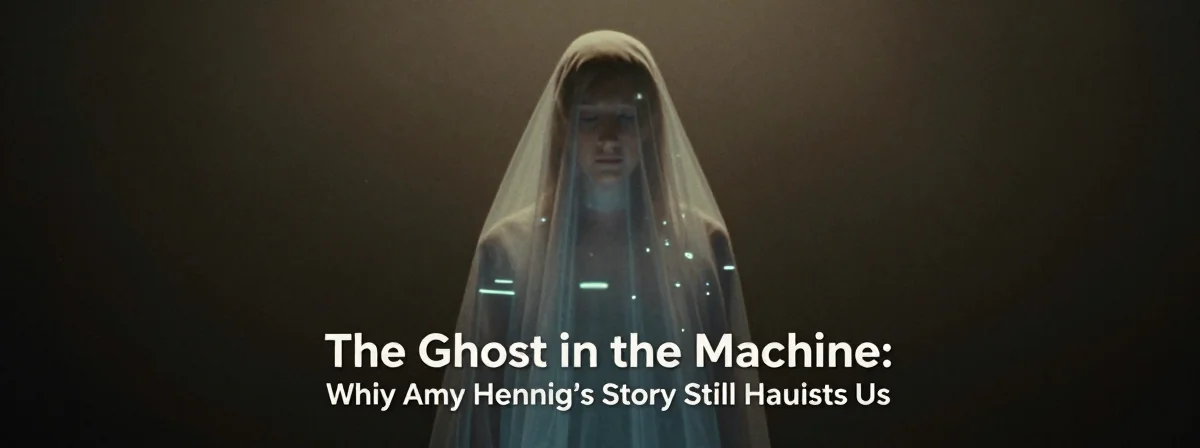
You’ve felt it too, haven’t you? That pull toward a game so rich with atmosphere that you lose track of time—hours bleeding away while you’re lost in a world that shouldn’t exist. That’s the magic Amy Hennig used to conjure, again and again. Now, somewhere between Legacy of Kain and Uncharted, between Star Wars dreams and Forspoken’s fractured reality, her career hangs in a strange limbo. Let’s talk about what we’ve lost, and what we might still find.
Beyond the Excitement
You remember Soul Reaver. Even now, a grainy YouTube clip can pull you in—the weight of Raziel’s movements, the gothic poetry in every line of dialogue. It wasn’t just a game; it was an experience that felt handcrafted, every puzzle a testament to spatial reasoning, every cutscene dripping with existential dread. That’s Hennig’s signature: worlds that feel lived-in, stories that linger long after the credits roll.
N. The Great Disconnect
Legacy of Kain had this bizarre schizophrenia—operatic tragedy one moment, clumsy combat the next. And yet, you kept playing. Because the story was that compelling. It taught us that gameplay mechanics could be rough if the world felt real. Too many modern games forget this—polishing the surface while hollowing out the soul.
N. The Uncharted Mirage
You loved Uncharted 2, right? That train sequence still gives me chills. But what if I told you we only got half of Hennig’s vision? The real tragedy isn’t just the rumored ousting from Uncharted 4 or the vaporware that was Star Wars 1313—it’s how we’ll never know what those projects could have become. Imagine 1313, the one game that might have finally given Star Wars the mature narrative it deserves.
N. The Forspoken Fizzle
Then came Forspoken. A beautiful mess, really. Stunning visuals masking a narrative that couldn’t decide if it wanted to be a fantasy epic or a slice-of-life comedy. It felt like watching a master chef forced to cook with ingredients they didn’t choose. The result? A game that cost millions but felt like it was fighting itself at every turn.
N. The Misogyny Myth
Wait—before you jump on the “fired for being a woman” bandwagon, let’s pause. Hennig herself has said she hasn’t encountered sexism in the industry. And maybe she’s right. Maybe the real problem is something subtler—how auteur vision clashes with corporate timelines, how passion projects get suffocated by spreadsheets. The narrative of “she was pushed out” is tempting, but it might be too simple for a story this complex.
N. The Legacy of Kain
Go back and play Soul Reaver 1 & 2. Seriously. The storytelling in those games isn’t just good—it’s revolutionary. In an era of primitive graphics, Hennig created worlds that felt more real than most games today. It’s not about polygons; it’s about intention. Every environment, every line of dialogue, felt meticulously placed. We’ve lost that craft in the rush for bigger budgets and shorter development cycles.
N. The Battlefield Blunder
Battlefield Hardline. Remember that? A game so out of place it felt like a fever dream. Hennig’s foray into the Call of Duty-adjacent crime saga showed us something important: even the most talented creators can be misdirected by market pressures. Sometimes the system wins—not through malice, but through inertia.
N. The Marvel Mystery
Now she’s working on a Captain America and Black Panther game. Rise of Hydra, they’re calling it. After everything that’s come before, what can we expect? Will it be another Forspoken—a technical marvel with narrative vertigo? Or will it finally recapture that elusive magic? Only time will tell—but I’m not holding my breath.
N. The Naughty Dog Aftermath
After Hennig left, Naughty Dog did… remakes. And a mediocre sequel. It’s not just nostalgia talking—there’s a tangible difference in the studio’s output. The soul went with her. It’s a cautionary tale for any creative industry: when you let your visionary go, you might not get another one like her.
N. The English Tutor
You know what’s wild? People credit games like Soul Reaver with teaching them English. Hours lost in those gothic corridors, absorbing dialogue that felt like poetry. That’s the power we’re losing—games that don’t just entertain, but educate, elevate, transform. We’ve traded that for bigger explosions and more microtransactions.
The real question isn’t whether Hennig was mistreated or misunderstood. It’s what happens when we prioritize the machine over the ghost inside it. Every time a studio demands more, faster, shinier, we lose something irreplaceable. And maybe, just maybe, we’re finally starting to notice.