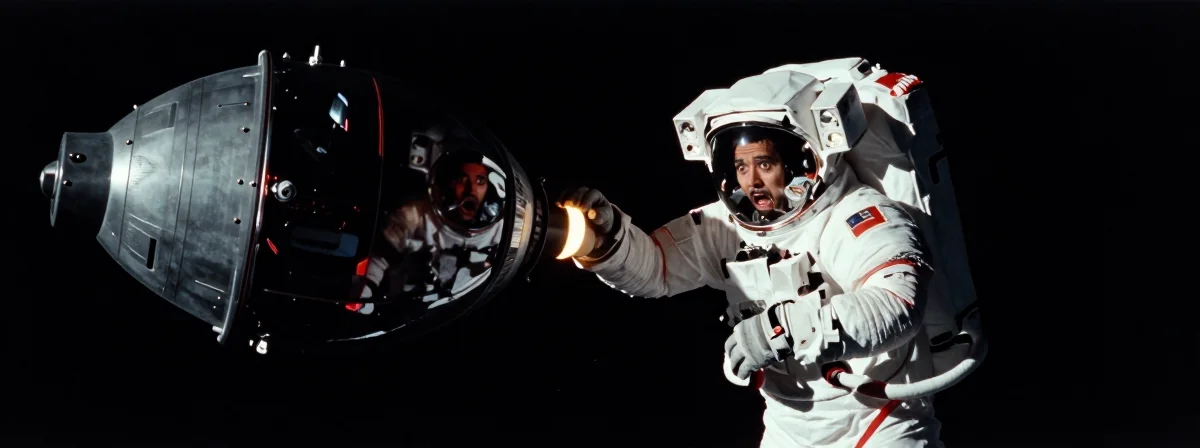
Space travel has always been the ultimate frontier—the stuff of dreams, science fiction, and, increasingly, reality. But buried in the equations and engineering challenges is something far more uncomfortable: the Epstein Drive. Named after a man with no boundaries, this theoretical engine promises near-infinite acceleration, but the truth is far more complicated. Let’s peel back the layers and confront the uncomfortable truths no one’s talking about.
Why Is It Called the Epstein Drive? (The Naming Controversy No One Acknowledges)
The name itself is a clue. The Epstein Drive is named after an engineer who pushed boundaries—literally and metaphorically. In the Expanse universe, Epstein’s ship is simply called “Epstein’s Yacht,” a darkly humorous nod to the man’s legacy. But the naming isn’t just a coincidence. Just as the Epstein-Barr virus carries a name with unintended weight, the Epstein Drive carries the baggage of its namesake. The irony? The drive’s power is matched only by the discomfort of its origin.
But names aside, the drive’s mechanics are where things get truly unsettling.
The Math That Makes Your Head Spin (Energy Requirements Beyond Comprehension)
Here’s the first uncomfortable truth: the Epstein Drive requires energy on a scale that defies human imagination. For a 100-ton spaceship, we’re talking about 5e23 joules—thousands of times more energy than humanity produces in a year. Factor in the rocket equation, and the number jumps to 5e45 joules. That’s not just “a lot”; that’s “attach a dozen stars to your ship” territory.
Relativistic effects? They make it worse. As you approach light speed, the energy required grows exponentially. The drive’s promise of 1g acceleration for years? It’s theoretically possible, but the energy cost is the equivalent of a black hole’s mass-energy.
Time Dilation Isn’t Your Friend (The Universe Moves On Without You)
Sure, you might experience a 12-year trip to the next star. But back on Earth, 54,000 years might have passed. The Epstein Drive’s acceleration means time dilation becomes your greatest enemy. By the time you reach the Andromeda Galaxy in 57 years (your time), over 5 million years will have elapsed on Earth. The universe doesn’t pause for travelers. Stars will be born, civilizations will rise and fall, and the sun will expand into a red giant before you even blink.
The drive promises speed, but it delivers isolation.
The Heat Death of the Universe Is Closer Than You Think (Faster Travel = Faster Decay)
Here’s the kicker: continuous acceleration means you’re fast-forwarding to the far future. The heat death of the universe—the point where everything runs out of energy—becomes a tangible threat. At relativistic speeds, you’re not just traveling through space; you’re traveling through time. The restaurant at the end of the universe might sound appealing, but the cost is watching the cosmos die before you arrive.
Is it worth it? That’s the question no one’s asking.
Engineering Challenges That Make Rockets Look Like Toys
Forget the energy; the engineering is where the Epstein Drive truly becomes nightmarish. Sustaining 1g acceleration for years means materials that can withstand forces no known substance can handle. The drive’s thrust would tear apart conventional spacecraft. The solution? Attach a couple of dozen stars to your ship—or find a way to cheat physics.
The irony? We can barely sustain 1g for minutes, let alone years.
The Naming Isn’t the Only Controversy (Ethics of a Drive Named After a Boundary-Pusher)
While medicine has its share of eponyms (some with dark histories), the Epstein Drive’s name is a constant reminder of its origin. Pronounced “Ep-styne” in German/Yiddish, it’s a subtle nod to the man’s legacy. But the controversy goes beyond naming. The drive’s power is matched by the discomfort of its namesake—a man who pushed boundaries to the extreme.
Is it ethical to celebrate such a drive? The question lingers.
The Ultimate Payoff (Or Is It?)
The Epstein Drive promises to shrink the universe, making distant stars reachable in human lifetimes. But the cost is staggering: energy beyond comprehension, time dilation that isolates, and engineering challenges that may never be solved. The universe isn’t just big; it’s actively hostile to such ambitions.
So, is it worth it? The uncomfortable truth is that the Epstein Drive isn’t just a technological marvel—it’s a mirror reflecting our greatest ambitions and deepest fears. The universe may be vast, but our ability to traverse it without consequences is still just a dream.