First paragraph:
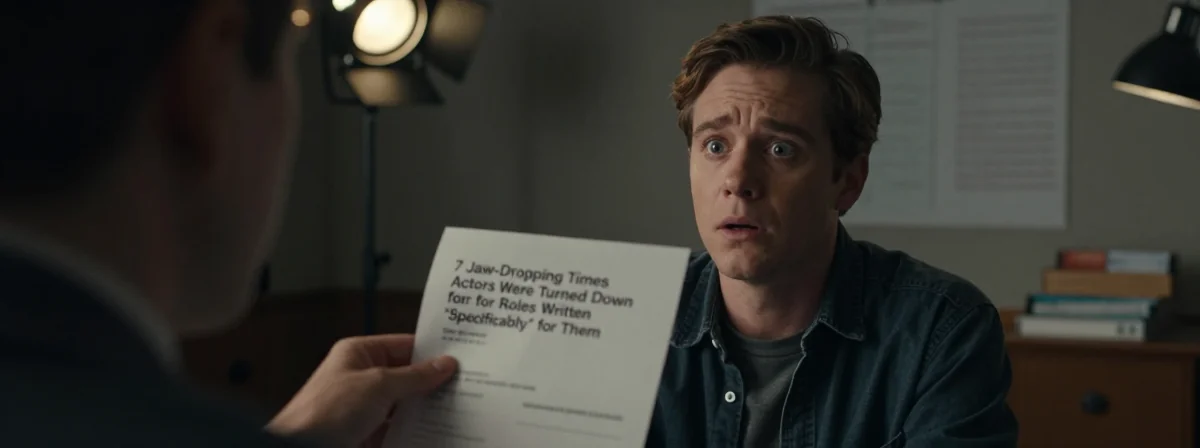
You ever get that gut feeling you’re perfect for a job, only to have it slip through your fingers? Imagine being told, “We need an actor who’s exactly like you,” and then still losing the part. Sounds like a nightmare, right? But in Hollywood, it’s a wild reality. These actors were rejected for roles written specifically for them, and the tea is absolutely scorching. Hold onto your seats, because this is the kind of drama that makes you question everything.
Second paragraph:
Typecasting is a double-edged sword. On one hand, it’s a compliment—producers see you and think, “This is who we need.” On the other hand, it’s a backhanded one. They want “a John C. McGinley type,” but when John C. McGinley shows up, they’re like, “Nah, we’ll find someone cheaper.” It’s a wild game of musical chairs where the prize is a role that was literally written for you. Let’s dive into the juiciest stories that’ll make you say, “Wait, what?!”
Third paragraph (optional):
Did you know Nathan Fillion once revealed he was rejected for a role where they were looking for “a Nathan Fillion type”? Yeah, it’s more common than you think. From Scrubs to The Wire, these actors faced the ultimate “you’re not good enough to play yourself” moment. Here are 7 jaw-dropping stories that’ll make you question the logic of Hollywood.
When Dr. Cox Wasn’t Excited Enough for Scrubs
Remember Dr. Cox on Scrubs? The volatile, hilarious, rage-filled therapist who made the show what it was? Well, the character was literally written as “a John C. McGinley type.” McGinley, who played him in the movie One Fine Day, thought he’d walk into the audition and nail it. He was probably like, “Okay, they want me? Easy peasy.” But nope. They weren’t excited enough. He lost the part. Can you imagine? They wanted you, and you still lose. Oof. Talk about a punch to the ego.
The twist? They ended up casting him anyway, but as another character, Lieutenant Mello. So he still got on the show, but not as the role he was meant for. It’s like being the backup dancer for your own song. Still, better than nothing, right? But the initial rejection? That’s the kind of tea that keeps you up at night.
Jay Landsman’s Wire Rejection (And How He Got His Revenge)
Over on The Wire, actor Dominic West was looking for someone to play the tough, no-nonsense detective Jay Landsman. He had an idea of who he wanted, and guess who auditioned? Jay Landsman himself. That’s right—the actor who would eventually become synonymous with the character tried out for the role. And they turned him down. Like, “Nah, we’ll find someone else.” Talk about a gut punch.
But here’s where it gets juicy. They cast someone else, and then—plot twist—they gave Landsman the role anyway, just not the one he auditioned for. It’s like being rejected for prom king, only to be named prom queen instead. Still, the initial rejection? That’s the kind of “wait, what?” moment that makes you question everything. But hey, at least he ended up on the show. Small victories, right?
Clerks: The Movie vs. The Sitcom (A Tale of Two Auditions)
Remember Clerks? The iconic low-budget masterpiece that launched Kevin Smith’s career? Well, when the ABC sitcom based on the movie was being cast, the original actors—Brian O’Halloran (Dante) and Jason Mewes (Jay)—had to audition. O’Halloran didn’t get the role. Like, “We need someone like you, but not you.” Meanwhile, Mewes actually got cast as Jay in Mallrats (another Smith movie) after auditioning. So one got rejected, the other got a different role. It’s like a twisted game of musical chairs where the music stops, and you’re left wondering, “Why am I not sitting down?”
The moral? Sometimes the universe has a weird sense of humor. You’re perfect for a role, but you don’t get it. Someone else gets a different role. It’s the kind of Hollywood logic that makes you want to scream. But hey, at least they both ended up in Smith’s universe. Small comfort, but comfort nonetheless.
The “Nathan Fillion Type” Rejection (And Why It’s More Common Than You Think)
Nathan Fillion and Alan Tudyk recently started a podcast called Once We Were Spacemen, and in the opening theme, Fillion drops a bombshell: “I didn’t get a part where they were looking for ‘a Nathan Fillion type.’” Wait, what? They wanted someone like him, but he wasn’t good enough? That’s like saying, “We need someone who looks like you, but acts nothing like you.” It’s a wild contradiction.
But here’s the tea: it’s more common than you think. Producers want “a John C. McGinley type,” but when McGinley shows up, they’re like, “Nah, we’ll find someone cheaper.” It’s the ultimate backhanded compliment. You’re recognizable, but not hireable. It’s the kind of Hollywood logic that makes you want to tear your hair out. But hey, at least Fillion ended up on Firefly and Castle. Small victories, right?
Steve Guttenberg’s 5 Stages of Celebrity (And How It Relates to Typecasting)
Remember Steve Guttenberg? He was a huge star in the ’80s, but then he faded into obscurity. He famously outlined the “5 stages of celebrity,” and one of them is: “Who makes Steve Guttenberg a star?” The answer? “Generally they mean ‘Someone less expensive than (actor).’” Ouch. It’s like being the prototype for a role, but then they find a cheaper version and go with that. It’s the kind of rejection that stings for life.
But here’s the twist: sometimes it works in reverse. Ernie Hudson was rejected for voicing Winston on The Real Ghostbusters because “He didn’t sound enough like Ernie Hudson.” Like, what? You want someone who sounds like him, but not him? It’s the kind of Hollywood logic that makes you want to scream. But hey, at least Hudson ended up in the movies. Small comfort, but comfort nonetheless.
Dorothy Zbornak Was Written for Bea Arthur (But They Went with Bea Arthur Anyway)
In The Golden Girls, the character of Dorothy Zbornak was literally written for “a Bea Arthur type.” And guess who played Dorothy? Bea Arthur. Wait, what? They wrote it for her, and then cast her? It’s like being told, “We need someone like you,” and then being like, “Okay, you can be you.” It’s a wild contradiction.
But here’s the tea: sometimes it works out. Bea Arthur was perfect for the role, and the show became a classic. But imagine being another actress who fit the description and then seeing Bea Arthur get the part. It’s the kind of “wait, what?” moment that makes you question everything. But hey, at least Bea Arthur got the role she was meant for. Small comfort, but comfort nonetheless.
Stephen Tobolowsky’s “Stephen Tobolowsky Type” Rejection (And Why It’s Hilarious)
Actor Stephen Tobolowsky (you know him from Snakes on a Plane and The Crown) once revealed he was turned down for a part where the character description was “a Stephen Tobolowsky type.” Like, they wanted someone who looks and acts like him, but not him? It’s the kind of rejection that’s so absurd it’s hilarious. It’s like being told, “You’re the perfect candidate, but we’ll go with someone else.” Ouch.
But here’s the twist: Tobolowsky has had a ridiculously successful career. So maybe it’s a blessing in disguise. Still, the initial rejection? That’s the kind of “wait, what?” moment that makes you question everything. But hey, at least he’s been in like a thousand movies. Small victories, right?
Jessica Walter’s Sweet Side (And Why It Makes Her Characters Even Better)
Jessica Walter is famous for playing stone-cold, domineering characters like Lucille Bluth on Arrested Development and Evelyn Vogel on You. But here’s the tea: she was apparently a complete sweetheart in real life. It’s like if Christopher Lee’s natural speaking voice was actually two octaves higher, and he just put on the iconic Voice of Saruman for the movies. It’s the kind of contrast that makes her characters even more fun.
I once wrote to her as a teen, telling her my daughter’s favorite character was Lucille, and asked if she’d send a signed picture. Not only did she reply, she sent three! My daughter was obsessed. It was so cool. It’s the kind of behind-the-scenes story that makes you love actors even more. But imagine being rejected for a role because “She’s not mean enough.” Ouch.
John Williams and Chris Columbus’s “John Williams-Type” Composer Request
Chris Columbus (the director of Home Alone) asked for a “John Williams-type” composer to score his little Christmas movie. And guess who the studio went with? John Williams. Like, they literally asked for John Williams, and then hired John Williams. It’s the kind of Hollywood logic that makes you want to scream. It’s like being told, “We need someone like you,” and then being like, “Okay, you can be you.” It’s a wild contradiction.
But here’s the twist: the score for Home Alone is iconic. So maybe it worked out. Still, the initial request? That’s the kind of “wait, what?” moment that makes you question everything. But hey, at least the movie is a classic. Small comfort, but comfort nonetheless.
John DeLancie’s “Q” Casting in My Little Pony
John DeLancie (you know him as Q from Star Trek: The Next Generation) was cast in My Little Pony because they wanted a “Q character.” Like, they literally wanted someone who could channel his iconic villain energy. And guess who they went with? John DeLancie. It’s the kind of casting that makes sense, but also feels like a wild coincidence. It’s like being told, “We need someone like you,” and then being like, “Okay, you can be you.” It’s a wild contradiction.
But here’s the tea: the episode is iconic. So maybe it worked out. Still, the initial casting call? That’s the kind of “wait, what?” moment that makes you question everything. But hey, at least DeLancie got to play a villain in a kids’ show. Small victories, right?
The Golden Girls’ “Airplane!” Reference (And Why It’s So Funny)
In Airplane!, there’s a scene where a woman speaks “jive,” and it’s played by Barbara Billingsley (who played June Cleaver on Leave It to Beaver). The joke is that America knew her as the wholesome June Cleaver, and now she’s playing this wild character. It’s the kind of casting that’s so absurd it’s hilarious. It’s like being told, “We need someone who looks like you, but acts nothing like you.” It’s a wild contradiction.
But here’s the twist: the scene is iconic. So maybe it worked out. Still, the initial casting call? That’s the kind of “wait, what?” moment that makes you question everything. But hey, at least Billingsley got to play a wild character. Small comfort, but comfort nonetheless.
The Final Word: Typecasting Is a Wild Game
Typecasting is a wild game. Sometimes it’s a compliment, sometimes it’s a backhanded one. Sometimes you get the role, sometimes you don’t. But one thing’s for sure: Hollywood is full of surprises. From Dr. Cox to Jay Landsman, these actors faced the ultimate “you’re not good enough to play yourself” moment. But hey, at least they ended up in some iconic roles. Small victories, right?
The real takeaway? Hollywood is unpredictable. You can be perfect for a role, but still lose it. You can be rejected for a part written for you, and then get another role. It’s the kind of chaos that makes the entertainment industry so fascinating. So next time you audition for a role, remember: it’s a wild game, and you never know how it’ll end. But hey, at least you’re playing. That’s all that matters.