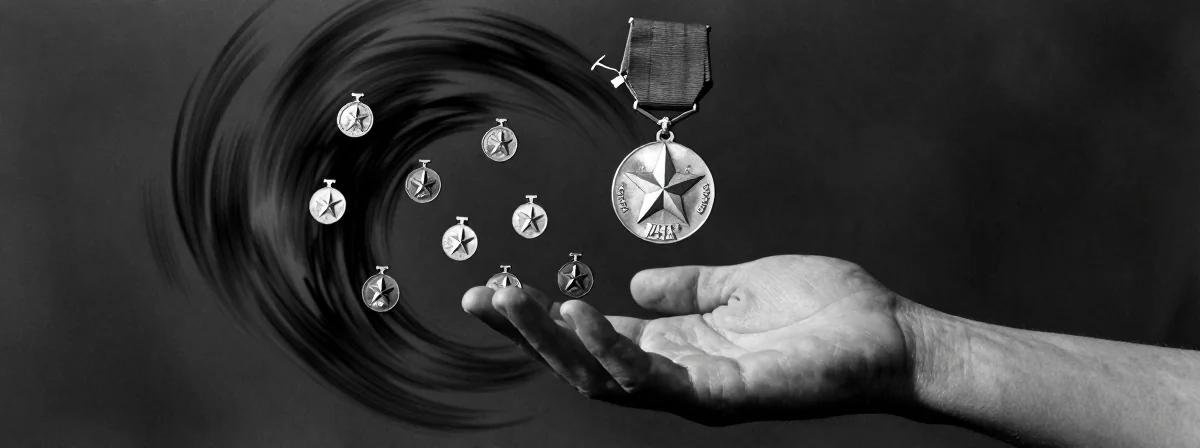
The Medal of Honor sits in a category all its own. It’s not just a military decoration; it’s America’s highest recognition for valor, awarded for “Conspicuous gallantry and intrepidity at the risk of life above and beyond the call of duty.” You might picture soldiers jumping on grenades or single-handedly taking enemy positions, and you wouldn’t be wrong. The citations read like scenes from the most intense action movies, except they’re real accounts of extraordinary bravery under fire. But this prestigious award has a complex history that includes a surprising chapter where nearly a thousand medals were awarded and then later revoked.
This isn’t about modern controversies over AI revoking medals or fictional “Medal of Honor: Tokyo Drift” expansions. It’s about a real historical event that reveals much about how military recognition works—and sometimes doesn’t work.
What Exactly Is the Medal of Honor and Why Does It Matter?
The Medal of Honor isn’t just another ribbon to pin on a uniform. It represents the absolute pinnacle of military service, awarded only for actions that transcend normal expectations of bravery. We’re talking about acts like calling artillery fire on your own position to save your unit, continuing to operate heavy machinery despite critical wounds, or staying behind on a sinking ship to ensure others can escape. These aren’t acts of simply “doing your job”; they’re conscious decisions to face certain death for the greater good.
Think about it: most military awards recognize duty performed well under difficult circumstances. The Medal of Honor recognizes something different entirely—voluntarily choosing to put yourself in mortal danger when there’s no obligation to do so, purely for the benefit of others. It’s the difference between being a good soldier and becoming a legend in the making.
The Surprising Story of 949 Medals Awarded During the Civil War
During the American Civil War, the Medal of Honor was awarded to 949 soldiers for one specific reason: reenlisting. At first glance, this seems bizarre. Why would reenlisting—a common practice—warrant America’s highest military honor? The story is more complex than it appears.
A group of 949 soldiers had initially signed up for a 9-month enlistment. When Confederate forces invaded Pennsylvania, these soldiers were asked to extend their service. Some accepted, but historical records are unclear exactly how many. When it came time to award medals recognizing this extended service, the unit commander was instructed to distribute them based on who he remembered reenlisting. He awarded 864 medals, but there’s no evidence that more than 300 actually reenlisted.
This creates an interesting historical puzzle. Were they awarded for reenlisting, or were the medals given under the assumption that reenlisting was the reason, even if documentation was lacking? The truth is nuanced. The official records listed “reenlistment” as the reason for the medals, but many recipients may not have actually reenlisted—or at least, there’s no proof they did.
Why Were These Medals Later Revoked?
The revocation of these medals wasn’t some arbitrary decision made centuries later. It happened in 1916 when a board of veterans created the Medal of Honor Legion and began reviewing all recipients. Their mandate was simple: ensure the Medal of Honor maintained its prestige by only being awarded for truly exceptional acts of bravery.
When they examined the 864 Civil War medals that had been awarded for “reenlistment,” they found a problem. Without proper documentation, they couldn’t verify that these soldiers had actually performed the acts that would justify such an award. Many may have received medals they didn’t earn, diluting the honor for those who had performed genuine acts of heroism.
The board recommended revoking these medals, and by 1917, the Army had formally revoked 864 awards. This wasn’t about dishonoring veterans; it was about preserving the integrity of an award that should represent the absolute highest standard of military service.
What Does This Tell Us About Military Recognition Today?
The story of these 949 medals reveals something important about how military honors work. Awards aren’t just given out casually; they represent specific standards of service that must be verified. The Medal of Honor has always required detailed documentation and multiple levels of verification before an award is finalized.
This historical episode also shows how military recognition evolves. What might have seemed appropriate in the heat of war—awarding medals to boost morale or recognize extended service—can later be reevaluated when viewed through the lens of maintaining high standards.
Today’s military maintains rigorous standards for all awards, especially the Medal of Honor. Each nomination requires extensive documentation, multiple levels of review, and congressional approval. This system isn’t perfect—controversies still arise—but it represents a commitment to ensuring that America’s highest military honor remains meaningful.
How Do Modern Controversies Compare to Historical Issues?
While the Civil War revocations represent one type of controversy, modern discussions about the Medal of Honor often take different forms. Some debate whether certain recipients truly deserve the award, while others question if changing societal values might lead to reevaluations of past awards.
There’s also the uncomfortable reality that some historical recipients whose actions might have been considered heroic in their time would face different scrutiny today. The example of Wounded Knee is telling—soldiers who received medals for actions during that conflict would likely not receive the same recognition today given our different understanding of that event.
These discussions aren’t about diminishing the bravery of service members; they’re about understanding how our standards for recognizing heroism evolve as society changes.
What Can We Learn From the Medal of Honor’s Complex History?
The story of the 949 Civil War medals teaches us several important lessons:
- Military honors have specific criteria that must be met
- Documentation and verification are essential for maintaining honor integrity
- Standards for recognition can and do evolve over time
- What seems clear in one era may require reevaluation in another
Most importantly, it reminds us that military awards aren’t just ceremonial; they represent real standards of service that have meaning both to those who receive them and to the nation they serve.
The next time you hear about military decorations, remember that behind each ribbon is a story—and sometimes, that story includes chapters of controversy, reevaluation, and the ongoing effort to ensure that America’s highest honors remain meaningful for generations to come.
This history isn’t just about medals; it’s about how we as a nation choose to recognize extraordinary service and how we maintain the integrity of those recognitions over time. And that, perhaps, is the most important lesson of all.