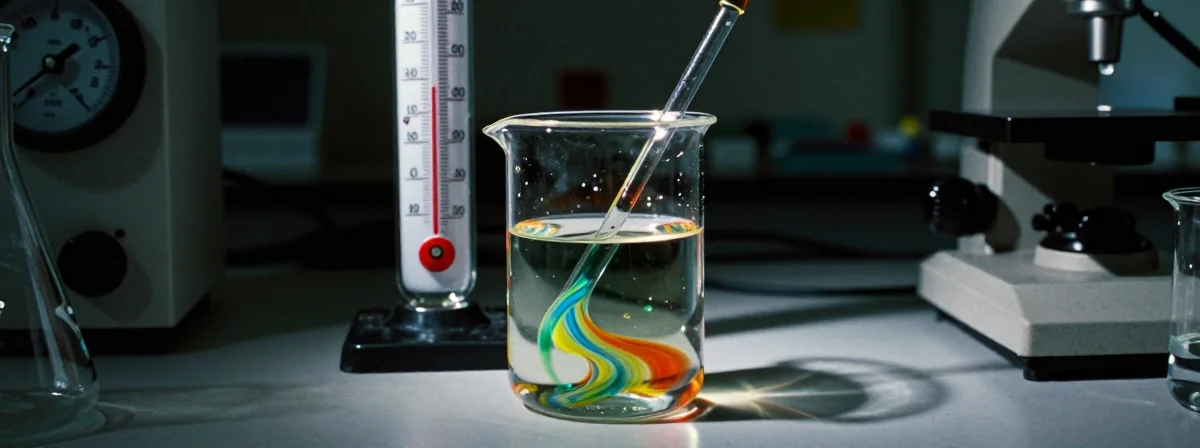
Ever wonder why some reactions zip along when heated, while others slow to a crawl? It’s not magic—it’s physics and chemistry at work. You might think “hotter always means faster,” but that’s only part of the story. Some reactions, like dissolving carbon dioxide in water to make soda, actually need cooling. The real trick? Understanding why temperature matters—and when it doesn’t.
Temperature isn’t just a number; it’s the measure of how wild atoms are dancing. When molecules heat up, they move faster, collide more, and sometimes rearrange into new substances. But there’s a catch: not all reactions play by the same rules. Some need heat to speed up, while others rely on cooling to shift balance. Let’s break down the science behind this temperature trick.
Why Does Heating Up Speed Up Most Reactions?
Think of molecules as bumper cars. At higher temperatures, these cars zoom around like maniacs, crashing into each other more often—and with more force. Some collisions are just glancing blows, but others are head-on wrecks that break bonds and form new ones. That’s a reaction!
Here’s the kicker: reactions often need a boost of energy to get started—called activation energy. It’s like pushing a boulder up a hill before it can roll down. Heat gives molecules the extra oomph to reach that peak. More molecules with enough energy means more reactions happening at once.
A real-world example? Combustion. Gasoline won’t ignite in air at room temperature because the molecules lack the energy to break bonds. But add a spark (heat), and—whoosh—the reaction takes off. Heat didn’t just make it faster; it made it possible.
But Wait—Why Do Some Reactions Slow Down With Heat?
Not all reactions are about speed. Some are about balance. Take carbon dioxide dissolving in water to make carbonic acid (the fizz in soda). At higher temperatures, CO₂ escapes more easily because the gas molecules move too fast to stick around. Cooling the water traps the CO₂, shifting the equilibrium to favor dissolution.
This isn’t about reaction speed; it’s about equilibrium. Think of it like a seesaw: heating shifts the balance toward gas, cooling tips it toward liquid. The reaction itself might still happen fast, but the overall outcome changes.
Ever notice how warm soda goes flat faster? That’s this principle in action. The CO₂ isn’t reacting slower—it’s just leaving the solution quicker because heat favors the gas phase.
The Hidden Role of Molecular Collisions
Here’s a mind-bender: even if two molecules collide, they might not react. They need to hit the right spots, like puzzle pieces fitting together. At higher temperatures, molecules zip around so fast they might miss the sweet spot. At lower speeds, they linger longer, giving reactions a better chance to occur.
It’s like trying to shake hands in a crowded room. If everyone’s sprinting, you’ll bump elbows but rarely connect. If everyone slows down, you’ve got time to reach out and grab hands. Some reactions need that deliberate touch, not just a fast collision.
Activation Energy: The Gatekeeper of Reactions
Every reaction has a hurdle—activation energy. It’s the minimum energy needed to break existing bonds and form new ones. Heat lowers the number of molecules that can’t clear the hurdle. More molecules with enough energy means more reactions.
Imagine a crowd trying to jump over a fence. If the fence is high (high activation energy), only a few can make it. Lower the fence (add heat), and suddenly dozens clear it. That’s why reactions accelerate with heat.
But some reactions have such low activation energy that they happen at room temperature anyway. Others have such high barriers that heat alone isn’t enough—you’d need a catalyst (like enzymes in your body) to help them along.
Real-World Implications: From Labs to Kitchens
This isn’t just theory—it changes how we design everything from industrial processes to cooking. Want to speed up a reaction? Crank up the heat (but watch out for equilibrium shifts). Need to preserve fizz? Keep it cold.
Ever wondered why cold water boils slower? It’s not just about starting temp; it’s about how many molecules have enough energy to escape as steam. Higher temps mean more energetic molecules, so boiling happens faster.
In baking, temperature is everything. Too hot, and your cake burns before it rises. Too cold, and the chemical reactions (like rising) take forever. That’s why ovens have precise controls—every degree matters.
The Paradox of Heat: When More Isn’t Faster
Some reactions actually slow down past a certain temperature. Enzymes in your body, for example, work best at around 37°C. Heat them too much, and they denature (unfold and stop working). The reaction grinds to a halt because the “helper” molecules are now useless.
This is why fever can be dangerous—it’s not just about feeling hot; it’s about throwing off the delicate balance of biochemical reactions. Too much heat, and your body’s chemistry starts breaking down.
Final Thought: Temperature Isn’t Just a Dial—It’s a Code
Heat doesn’t just make things go faster; it changes the rules. It can speed up reactions by giving molecules energy, shift equilibrium by favoring one phase over another, or even break down catalysts entirely. The next time you’re heating something up—or cooling it down—remember: you’re not just changing temperature; you’re rewriting the chemistry.
Now that you know the trick, you can control reactions like a pro. Want faster results? Heat it up. Need to preserve balance? Cool it down. The choice isn’t random—it’s science.