
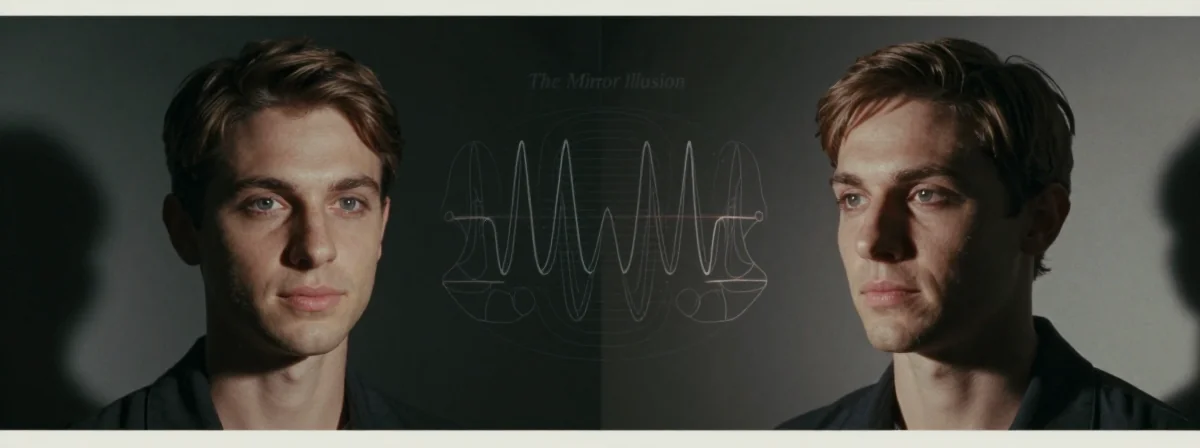
Ever catch your reflection and feel like a movie star—only to see a distorted, unrecognizable stranger in photos? It’s a universal experience: we all have that one friend who looks effortlessly gorgeous in person but vanishes in pictures, or that one selfie that made you question your entire identity. The truth is, the camera isn’t always honest. It’s not just about confidence or vanity; there’s a fascinating, often frustrating, science behind why what we see in the mirror rarely matches what the lens captures.
The disconnect between your mirror image and your photos isn’t just in your head. It’s rooted in physics, psychology, and even the way our brains process faces. We’ve all been there—smiling confidently for a photo only to later see a gargoyle staring back, or opening your camera roll to find a candid shot that could’ve been a magazine cover. The inconsistency is real, and it’s leaving many of us with a warped relationship to our own appearance. But why does this happen, and can we ever bridge the gap?
Why Do I Look So Different in Photos Than in the Mirror?
The simplest answer is that the mirror shows a reversed version of your face—the one you’ve spent your entire life seeing. When you smile, you see your left side as your right, and vice versa. The camera, however, captures what others see: the unflipped, asymmetrical reality. This means that if your right side is your best side (as is often the case, since it’s usually more expressive), the camera might catch your less flattering left side instead. It’s like meeting a stranger who looks vaguely familiar but not quite right—and that stranger is you.
But it’s not just the reversal. Cameras also flatten dimensions. In real life, your nose has depth, your eyes have sparkle, and your jawline has definition. A photo compresses all that into two dimensions, often losing the nuances that make you look alive. Think of it like a 3D movie flattened to 2D: the magic disappears. This is why even the most photogenic people can have “bad photo days”—the camera simply can’t replicate the richness of reality.
The Lens Effect: How Camera Quality and Focal Length Warp Your Face
Not all cameras are created equal—and neither are their lenses. Smartphone cameras, with their wide-angle lenses, often exaggerate features like noses and chins, making faces look distorted. Ever noticed how your selfies make your forehead look huge or your ears stick out like satellite dishes? That’s the lens playing tricks. Professional photographers know this, which is why they avoid wide-angle lenses for portraits and opt for longer focal lengths that compress features more naturally. But unless you’re carrying around a DSLR, you’re likely at the mercy of your phone’s built-in distortions.
Lighting is another culprit. In real life, natural light sculpts your face—highlighting cheekbones, softening shadows. But in photos, harsh flash or inconsistent indoor lighting can create unflattering contrasts. The result? A photo that looks nothing like how you appeared in the moment. It’s like trying to paint a portrait with only one color: you lose all the subtlety that makes the subject beautiful.
The 24-Hour Rule: Why Delayed Self-Viewing Changes Everything
Have you ever taken a selfie, immediately hated it, and then found yourself loving it the next day? It’s not magic—it’s your brain recalibrating. When you first see a photo of yourself, you’re comparing it to the familiar mirror image. The mismatch triggers a visceral reaction: “That’s not me!” But give it time, and your brain starts to accept the photo as just another version of you. This is why some people swear by the “24-hour rule” for selfies—waiting a day before judging gives your perception time to adjust.
Interestingly, this effect works both ways. Some find that immediate judgment is kinder (they’re harsher on fresh photos), while others find that distance makes the heart grow fonder. The key takeaway? Your reaction to your own photo is as much about your mood and mindset as it is about your appearance. If you’re already feeling self-conscious, you’ll likely magnify flaws in photos. If you’re feeling confident, you might even see beauty where you didn’t before.
The Unphotogenic Phenomenon: Why Some of Us Are Born Bad Subjects
Photogenicity isn’t just a myth—it’s a real trait. Some people naturally photograph well because their facial features align well with the camera’s perspective, or they unconsciously pose in flattering ways. Others, like those with asymmetrical features or unique expressions, struggle because the camera doesn’t know how to “fix” their look. It’s not about being unattractive; it’s about how the camera translates your face into pixels.
This is why some of us have entire folders of photos we’d rather delete. We might look great in motion, in person, or even in candid shots—but the moment we try to pose, we morph into someone else. It’s like trying to be charming while wearing a straightjacket. The camera adds pressure to perform, and when we overthink it, the result is often stiff, awkward, or just plain wrong.
Beyond the Face: Why Even Landscapes Fail to Capture Reality
It’s not just people who suffer from the photo curse. Have you ever tried to photograph a breathtaking sunset only to get a dull, overexposed mess? Or a full moon that looks like a smudge in the sky? The same principles apply: cameras struggle to replicate the dynamic range, color depth, and emotional impact of real-world scenes. A sunset isn’t just about colors; it’s about atmosphere, scale, and the feeling of being there. The camera reduces it to data, and data doesn’t always equal beauty.
This tells us something profound: we’re wired to experience reality in a way that no technology can fully replicate. Photos are approximations, not truths. They’re tools to remember, share, and communicate—but they’re not reality itself. When we demand that photos match our lived experience, we’re setting ourselves up for disappointment. The better approach? Appreciate photos for what they are—snapshots, not mirrors.
The Double Standard: Why We’re Harder on Ourselves Than on Others
Here’s a curious observation: most of us think we look worse in photos than we actually do, yet we rarely notice the same flaws in others. If you see a friend in a bad photo, you might chuckle but still find them attractive. But put yourself in that same photo, and suddenly it’s a disaster. This cognitive bias is called the “self-serving bias” in reverse—we’re naturally more critical of ourselves. It’s as if we’ve internalized a harsher standard for our own appearance than for anyone else’s.
This isn’t to say that objective flaws don’t exist, but our perception is heavily colored by self-esteem and emotional state. A bad photo can feel like a personal attack because it taps into our deepest insecurities. The solution? Practice self-compassion. Treat yourself the way you’d treat a friend—acknowledge imperfections without letting them define your worth. After all, the person you see in the mirror is the same person others see in real life, and that’s the version that truly matters.
The Future of Photography: AI and the End of Authenticity?
With AI increasingly editing and enhancing photos—smoothing skin, adjusting proportions, even generating “perfect” versions of us—we’re entering a new era of photographic unreality. Apps can now make you look thinner, younger, or more symmetrical with a single tap. While this might seem like a solution to the photogenic problem, it raises a bigger question: do we really want to live in a world where photos are less real than our memories? The constant pressure to curate perfection is already taking a toll on mental health, and AI could make it worse.
Perhaps the answer isn’t better technology, but better perspective. Instead of chasing photogenic perfection, we might focus on appreciating the moments captured, flaws and all. A photo isn’t meant to be a flawless replica of reality; it’s meant to be a reminder of an experience, a feeling, a connection. When we shift our focus from how we look to what we’re doing, the photo curse loses its power.
Final Reflection: The Camera Doesn’t Define You—You Do
At the end of the day, the mirror and the camera are just tools. One shows you what you’ve grown accustomed to, the other shows you what others see. Neither is inherently “right” or “wrong.” The real you is the sum of both—the confident person in the mirror and the flawed, beautiful person in the photo. Embracing this duality means letting go of the need for photos to validate your appearance. After all, if a sunset can’t be fully captured in a photo, how could a person ever be?
The next time you take a selfie and feel the familiar pang of disappointment, remember this: you’re not the photo. You’re the one holding the camera, the one smiling, the one living the moments between flashes. Technology will keep evolving, but your worth will always be beyond what any lens can capture. Maybe that’s the ultimate truth we need to see—clearly.