
You know that feeling? One minute you’re looking up a town you heard about, the next you’re staring at a gas station in rural Ohio you never knew existed. It starts with a single click and ends with you realizing you’ve just spent two hours scrolling through maps like it’s a video game you can’t put down. This isn’t just aimless browsing — it’s a secret system of exploration most of us never talk about.
The Evidence Points To
One Wikipedia Article, Endless Journeys
The pattern here is clear: a single point of interest becomes a launchpad for exploration. You start with a historical fact, a news mention, or a book setting, and suddenly you’re chasing rivers to their sources or tracing power lines across deserts. What the data shows is that our brains love this kind of associative navigation — it’s how we make sense of the world, one connected dot at a time.The Lunch Break Explorer
There’s something uniquely satisfying about turning a forced break into a voluntary expedition. All those stolen minutes between tasks become portals to other places. This isn’t about escaping reality — it’s about expanding it. The maps don’t just show places; they show possibilities.Covid-19’s Unexpected Gift
When the world closed in, our screens became windows. Following rivers in your hometown until the map gave out, or tracing coastlines until they disappeared into the horizon — these weren’t just time fillers. They were digital adventures that kept us sane. This anomaly suggests that virtual exploration is more than a hobby; it’s a human need.
The Power of Street View
What makes Google Earth so addictive? It’s the illusion of presence. Picking a random town in the Alps or a village in Africa and “walking” through it — that’s not just looking at pixels. It’s experiencing place without moving. The difference between this and passive scrolling is the sense of agency you feel when you turn a corner of your own choosing.From Favelas to Research Stations
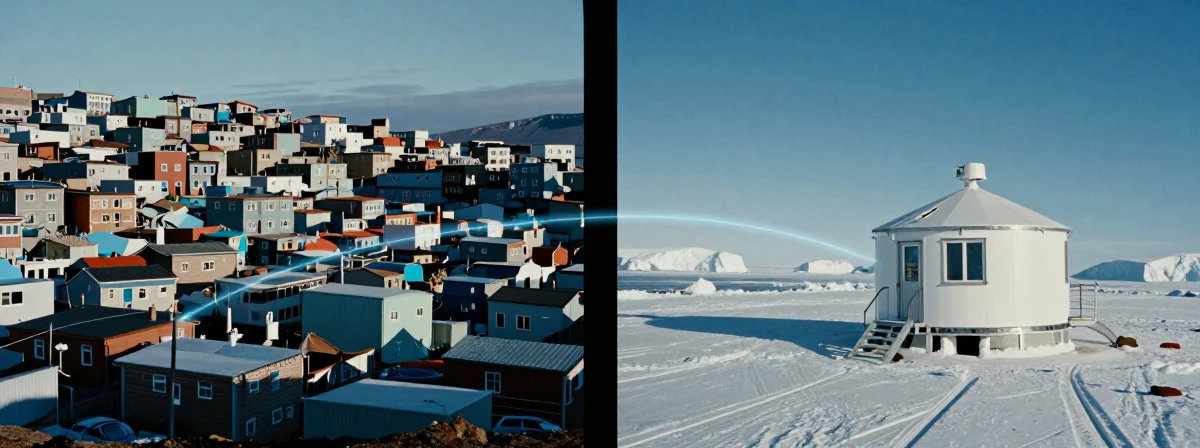
The most fascinating journeys are the nonlinear ones. One moment you’re looking at a favela, the next you’re at a research station in Antarctica. This digital jumping between extremes reveals something important: our curiosity isn’t limited by geography. It’s limited only by our willingness to follow a thread wherever it leads.
The Time Machine in Your Browser
Some explorers go deeper, using GIS sites to see how places change over time. Watching an interstate carve through a city or seeing old fire insurance maps layered over current views — this isn’t just nostalgia. It’s understanding the invisible forces that shape our world. This is when exploration becomes education.The Unaffordable Places We Visit
We star locations we’ll likely never visit in person. The Alps, New Zealand, remote villages — these starred places are more than bookmarks. They’re digital trophies of curiosity. This is the democratization of travel: seeing the world without the carbon footprint or the cost.The Soothing Nature of Maps
Why does this feel good? It’s the rhythm of discovery. The way your eye follows a road, the satisfaction of recognizing a pattern, the surprise of finding something unexpected. Maps are puzzles that always let you win — and that’s exactly what makes them addictive.
What We Can Prove
The maps aren’t just showing us places; they’re showing us how our minds work. Every click, every zoom, every random journey is a reflection of how we connect ideas, how we seek patterns, how we understand the world by moving through it — even when we’re sitting still. The next time you find yourself scrolling through maps for hours, don’t feel guilty. You’re not just killing time. You’re exercising the most fundamental human instinct: exploration. And in doing so, you’re connecting with something deeper than pixels on a screen — you’re connecting with the explorer inside all of us.