
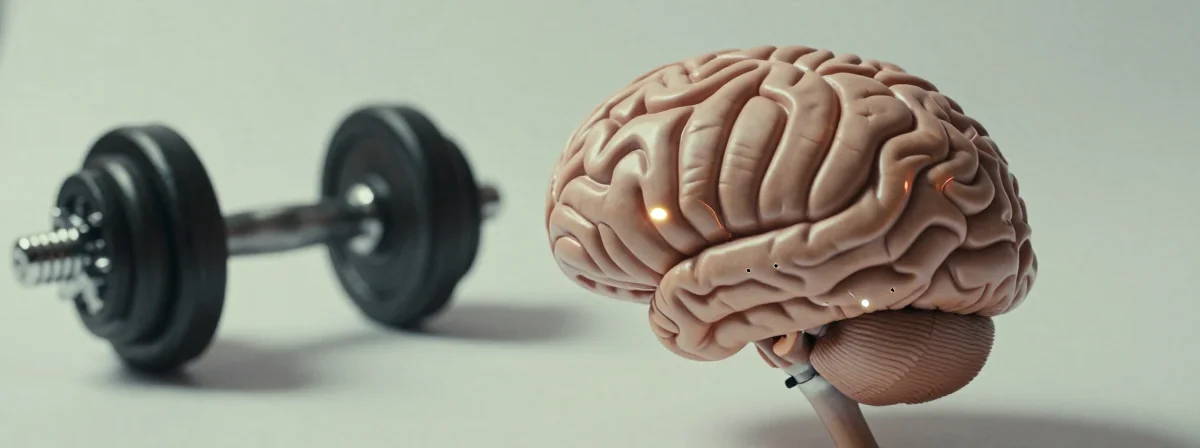
You stand up right now. Easy, right? But think about it—your brain just orchestrated a symphony of signals, muscles, and nerves to make that happen. Now imagine trying to build those muscles without its full cooperation. It’s like trying to bake a cake without telling the oven to turn on. The body is way more connected than we give it credit for—and when it comes to building muscle, your brain is the conductor, not just a bystander.
It All Connects
Bones Get Stronger When You Demand More
Ever wonder why astronauts come back with weaker bones? Gravity is the ultimate weight machine—and when it’s gone, so is the stimulus. But here on Earth, Wolff’s Law (yes, two f’s!) proves that bones adapt to the forces they experience. Strength trainers and ultra-runners like David Goggins don’t just have stronger muscles—they have bones dense enough to make surgeons take a second look. It’s not magic; it’s your body saying, “Okay, this is what we need to survive.”Failure Isn’t About Pain—It’s About Proof

Forget the myth of micro-tears being the only way to grow. Modern science shows that mechanical tension and oxidative stress are the real triggers for muscle growth. When you push to failure, you’re not just feeling the burn—you’re sending a clear message to your brain: “This is hard, and we need more power next time.” That’s when the mTOR pathway kicks in, and your body starts building bigger, stronger muscle as insurance.
High Reps vs. Low Reps? Your Brain Decides
Think high reps are for endurance and low reps are for strength? Think again. Newer research suggests that reps anywhere from 3 to 25 can work—what matters is intensity and how close you get to failure. Some people thrive on 5-rep sets, others on 15. The key is consistency and challenging your brain to adapt. Your neuromuscular connection is like a muscle itself: the more you train it, the more efficient it gets.Your Brain’s Secret Brake System

Why can’t you just keep growing indefinitely? Myostatin, a protein that limits muscle growth, is partly to blame. But even more fascinating is the brain’s role in regulating how hard you can push. The hypothalamus, pituitary gland, and even parts of your brain tied to emotional regulation work together to decide how much force you’ll actually use. It’s like a governor on a car—preventing you from “redlining” your muscles unless it’s truly necessary.
The Warehouse Warrior’s Secret
Ever notice how manual laborers get solid without hitting the gym? It’s not just about lifting heavy—it’s about the brain adapting to constant, varied resistance. Pulling boxes, shoveling, or even just moving furniture forces your brain to coordinate muscles in ways machines can’t replicate. It’s the ultimate real-world strength training, and your brain loves it because it’s unpredictable.What If You Could “Trick” Your Brain?
Testosterone and other anabolic steroids work by messing with myostatin and other growth regulators. But what if you could trigger that same pathway naturally? Flexing at your desk, using resistance bands, or even isometric holds can activate muscles enough to signal growth. It’s not a shortcut—but it’s proof that your brain is always listening.
The Truth Is Beautiful
Your body isn’t a machine that just follows orders; it’s a smart system that calculates every move. When you train, you’re not just breaking down muscle—you’re proving to your brain that you need more. And when it believes you, the growth happens. So next time you lift, stand up, or even flex at your desk, remember: you’re not just moving—you’re convincing your brain that you’re worth building bigger for. The truth is, you already are.