
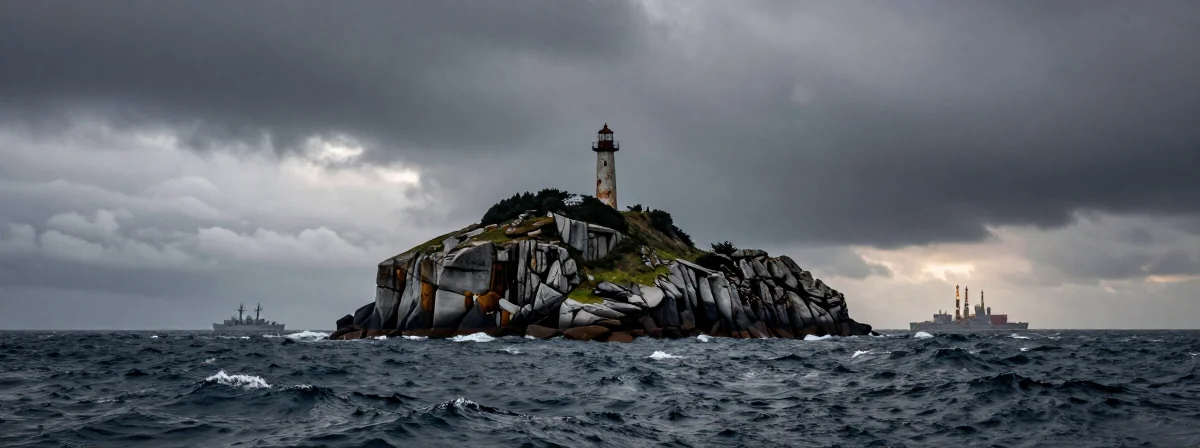
The world’s energy markets tremble at whispers of conflict in the Middle East, but few understand the true strategic jewel at stake — an island so vital that its control could reshape global economics and power dynamics overnight. While headlines focus on broad geopolitical tensions, the real battle centers on a single location that has become the linchpin of Iranian economic survival and a potential lever for global influence. Can you guess what it is? Prepare to uncover the truth about Kharg Island, a place far more important than you’ve been led to believe.
The Iranian economy isn’t just “built on oil” — it’s fundamentally defined by oil. This nation sits on oil fields representing approximately 10% of global supply, with petroleum products accounting for more than half of their economic output. Yet their position should be unassailable: with a long coastline and access to the vital Strait of Hormuz, why isn’t their oil dominance absolute? The answer lies in a geographical paradox that has shaped Middle Eastern energy politics for decades. Iran’s coastal waters are dangerously shallow for the supertankers that carry their black gold, creating a vulnerability that has dictated their entire export strategy. This isn’t just an economic challenge — it’s a strategic weakness that world powers have been exploiting for years.
What Makes Kharg Island the World’s Most Critical Energy Bottleneck?
Imagine a single bridge controlling 4% of the world’s food supply — that’s the reality of Kharg Island. This small island off Iran’s coast sits in waters deep enough for massive oil tankers, making it the only viable point for Iranian oil exports. Through a network of long jetties and pipelines from the mainland, Kharg has become the sole gateway for Iran’s petroleum products, including crucial fertilizers that feed millions. The island isn’t just infrastructure — it’s a geopolitical fulcrum. During the Iran-Iraq War, Iraq targeted Kharg as part of the “Tanker War,” understanding that damaging this single point could destabilize global markets. Iran spent years and billions rebuilding what Iraq destroyed, only for this vulnerability to remain at the center of regional tensions today.
The strategic importance extends beyond oil. Kharg Island also handles significant fertilizer exports, products essential for global agriculture that require natural gas and energy-intensive processes typically found only in the Middle East. This dual role as both energy export hub and agricultural input supplier makes Kharg uniquely valuable. When the Trump administration targeted Kharg, they weren’t just attacking infrastructure — they were attempting to strangle two critical global supply chains simultaneously. The implications of controlling this single point are staggering: not just economic leverage over Iran, but potential influence over food production worldwide.
Why Would Destroying an Oil Export Hub Actually Raise Prices?
This is where the global oil market’s dark secret becomes clear: when supply from any major source becomes uncertain, prices spike disproportionately. Iran produces about 4% of global oil, yet a disruption there can send prices soaring far beyond that percentage. Why? Because oil markets operate on psychology as much as supply. When traders fear that 4% might disappear, they bid up the price of all oil to account for the increased risk. This market panic creates a ripple effect that elevates costs across the entire energy sector. The recent price increases following tensions around Kharg Island demonstrate this perfectly — fears of disruption at this single point sent shockwaves through global markets, affecting everything from gasoline to airline tickets.
The situation is even more complex when you consider who buys Iranian oil. China, a global economic powerhouse, relies heavily on Iranian exports and has been stockpiling oil in anticipation of potential supply disruptions. If the US were to block these exports, China would need alternative sources, likely turning to Russia — creating an uncomfortable energy alliance between geopolitical rivals. This isn’t just about economics; it’s about reshaping global alliances based on energy dependencies. The Trump administration’s calculations included these factors, understanding that controlling Kharg could offer leverage far beyond Iran’s borders.
How Would a Ground Invasion of Kharg Island Change Everything?
The US has toyed with two approaches to Kharg: bombing or invasion. Neither is simple. Bombing carries the risk of destroying infrastructure that would be valuable as a bargaining chip, while also risking civilian lives among the 8,000 people who call Kharg home. An invasion, while potentially securing complete control, faces political hurdles when positioned as a “President of Peace” administration. Yet the strategic value remains undeniable. If the US could capture Kharg, they would gain control of Iran’s primary oil export mechanism, potentially using it as leverage in negotiations or even as a base for expanded economic influence.
What many don’t realize is that controlling Kharg could open the door to US investment in Iranian oil fields — a scenario that would fundamentally alter Middle Eastern energy politics. While Venezuela’s oil has been opened to US influence, Iranian reserves are vastly larger and more accessible. Kharg Island represents the key to unlocking this potential, making its strategic value immeasurable. The Trump administration’s calculus likely included this long-term economic leverage alongside immediate geopolitical advantages. In a region defined by energy politics, controlling the mechanism through which oil reaches markets offers influence far beyond what conventional military strength alone could provide.
What Does This Mean for the Average Citizen Watching From Afar?
The battle for Kharg Island isn’t just about abstract geopolitical strategy — it directly affects your daily life. When fertilizer exports from the Middle East are disrupted, food prices rise globally. When oil shipments through the Strait of Hormuz become uncertain, gasoline prices spike worldwide. The interconnectedness of global energy markets means that tensions centered on a single island can create economic pain felt across continents. This isn’t conspiracy theory — it’s the fundamental reality of how global energy markets function in the 21st century.
The most alarming aspect is how little most people understand about these critical energy chokepoints. While headlines focus on political statements and military posturing, the real stakes involve infrastructure that, if damaged, could create economic instability for years. Kharg Island isn’t just a military target — it’s a linchpin in global energy security, a fact that policymakers understand but rarely communicate to the public. The next time you feel the pinch at the pump or see food prices rise, remember that these fluctuations often stem from strategic decisions about places like Kharg Island — decisions made with little transparency or public understanding. The truth about our global energy dependencies is far more complex and consequential than most realize.