
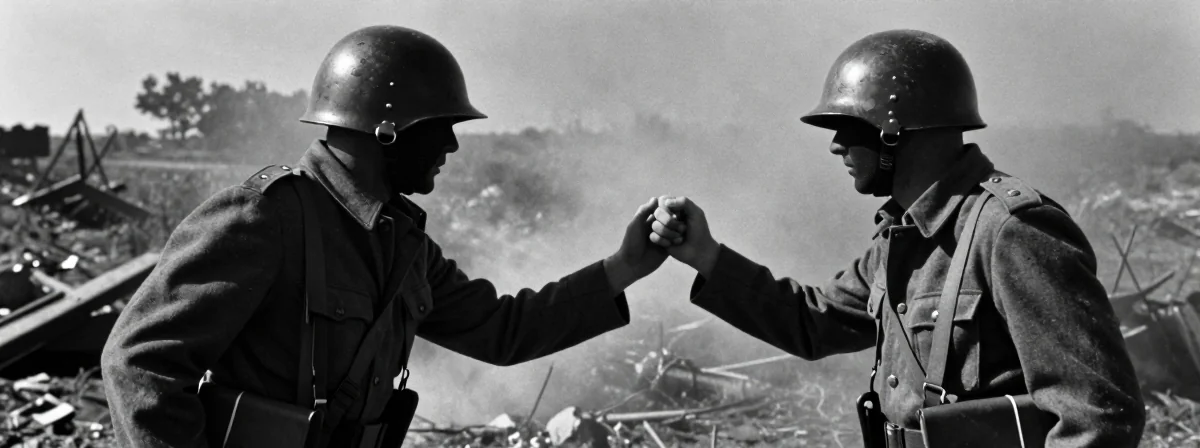
War’s not a game where you get to pick the rules. But somehow, most of us still act like it is. We talk about “rules of war” as if they’re handed down from on high, like the Ten Commandments for combatants. They’re not. They’re cynical, self-serving bargains—pacts made in blood because, frankly, no one wants to be the idiot who gets the worst end of the deal.
The truth is, almost every “rule” in war exists for one reason: to ensure your enemy doesn’t do something you’d regret if they had the chance. It’s the ultimate “I won’t if you won’t” deal. Break it, and you’re not just violating an agreement—you’re signing your own troops’ death warrants.
And if you think that’s obvious, just look at how often it’s forgotten. Or worse, how often it’s deliberately ignored.
Why Do We Even Pretend War Has “Rules”?
Because the alternative is unthinkable. Imagine if every captured soldier was blinded, maimed, or tortured back to their own side. Sound like a nightmare? That’s the point. The rules aren’t about morality; they’re about mutual deterrence. If you don’t want your guys treated like animals, you’d better not treat their guys like animals. It’s the military equivalent of not pissing in the pool—you don’t do it because you swim there too.
But here’s the kicker: this logic is so obvious that even the dumbest generals somehow grasp it. Which is why you’ll still see “no mercy” rhetoric from people who clearly haven’t thought it through. Like the Secretary of Defense who declared, “No quarter, no mercy for our enemies”—because nothing says “I care about my troops’ safety” like guaranteeing they’ll get none in return.
The Pacifist’s Nightmare: When Surrender Isn’t Safe
Surrender should be the safest moment in a soldier’s life. Instead, it’s often the most dangerous. Why? Because some idiots can’t tell the difference between a genuine surrender and a trap. The Pacific Theater in WWII wasn’t just brutal; it was a bloodbath of misunderstandings. Japanese soldiers, taught to never surrender, often faked it—only to pull grenades from their armpits when the enemy let their guard down.
And guess what? The response wasn’t “Let’s make sure surrender is safer.” It was “Now no one gets to surrender.” Which is how you end up with entire battles where the only option is death. Brilliant strategy, right?
The Cost of Breaking the Unspoken Contract
Ever wonder why armies don’t just use bullets designed to shatter bones or why medics wear distinctive uniforms? It’s not because they’re suddenly humanitarian. It’s because the second you start doing things that make your enemy’s casualties worse, they’ll do the same to yours. The rules aren’t about kindness; they’re about keeping the war from becoming a nightmare for everyone.
But some still don’t get it. They think “winning” means making the other side suffer more, not realizing that the moment you cross the line, you’ve just made your own suffering worse. It’s like playing chess and deciding to eat the opponent’s pieces before they move—sure, you get an advantage now, but the game’s over.
When “Rules” Become Weapons
Sometimes, the rules themselves are the problem. Dressing soldiers as civilians to sneak past defenses? Sounds clever until you realize it means all civilians become targets. The moment you blur the lines, you guarantee the enemy will too. The Finnish “whites” in the Winter War wore civilian clothes because they were poor, not because they were trying to trick anyone. But had they been deliberately disguising themselves? You can bet the Russians would have shot first and asked questions later.
War’s not about playing fair; it’s about making sure the other side thinks you’re playing fair. Because the second they don’t, you’re all just animals tearing each other apart.
The Skyrim Syndrome: Why Games Get It Wrong
Remember Skyrim? Enemies would yield, then immediately attack. It felt wrong because it is wrong. But in real war, the line is even blurrier. That’s why the Ukrainians machine-gunned surrendering Russians after one of them tried to shoot them. It wasn’t “evil”; it was pure self-preservation. You can’t take the risk when lives are on the line.
And yet, we still act surprised when war isn’t a gentleman’s duel. We pretend there’s some noble code, then get outraged when it’s broken. News flash: it was never about nobility. It was about survival.
The Mongol Lesson: Why Feigned Retreats Are Legal (But Still Dicks)
Here’s a fun fact: pretending to run away to lure enemies into a trap is entirely legal under the laws of war. Why? Because it’s not about “fairness”; it’s about preventing total chaos. The Mongols mastered this; the feigned retreat was their bread and butter. It’s smart, it’s effective, and it’s not technically against any rules.
But let’s be real: it’s still a dick move. War’s full of those. The only difference is whether they’re dumb dick moves (like refusing prisoners) or clever dick moves (like strategic deception).
The Real Reason Mercy Matters
At the end of the day, the “rules” of war are just a way to keep the worst impulses in check—because once they’re unleashed, no one’s safe. You don’t show mercy because you’re a saint; you do it because you want mercy shown back. You don’t maim prisoners because you’re civilized; you do it because you don’t want your guys maimed.
So the next time you hear someone cheering “no mercy,” ask yourself: who’s going to pay the price when the other side takes that literally? Because in war, the only rule that matters is this: if you want to be treated like a human, you’d better act like one. Otherwise, you’re just another animal in the slaughterhouse.