
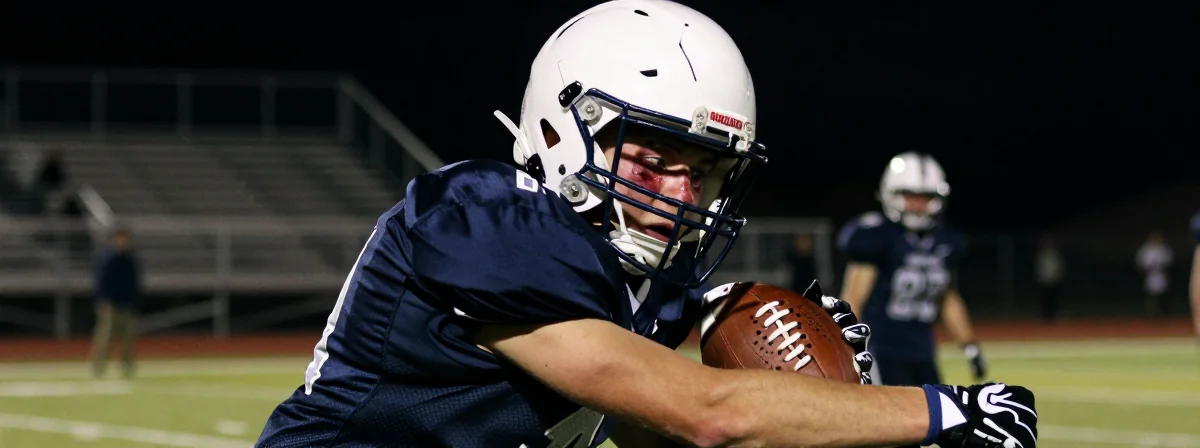
Some coaches build systems. Others just have the best players. The story of Pulaski Academy’s “never punt, always onside kick” strategy reveals everything you need to know about how systems break down when talent isn’t equal. It’s not just about strategy — it’s about the physics of competition.
The Architecture
High School Football Is a Sandbox Mode
Imagine playing Madden on rookie difficulty — that’s high school ball. The talent disparity between Pulaski Academy (a private school that recruits top athletes) and their opponents creates a situation where conventional strategy doesn’t matter. It’s like using a cheat code in real life. The strategy works because the game isn’t being played on a level field to begin with.The Onside Kick Isn’t the Point — It’s the Symptom
Pulaski’s coach didn’t invent the onside kick; he just noticed that in high school, kickers can’t boot the ball 65 yards like in the NFL. The difference between a regular kickoff and an onside kick might only be 10 yards in high school, making the risk-reward calculation different. It’s like exploiting a glitch in the game’s physics engine.NFL Kickers Would Make This Strategy a Suicide Mission
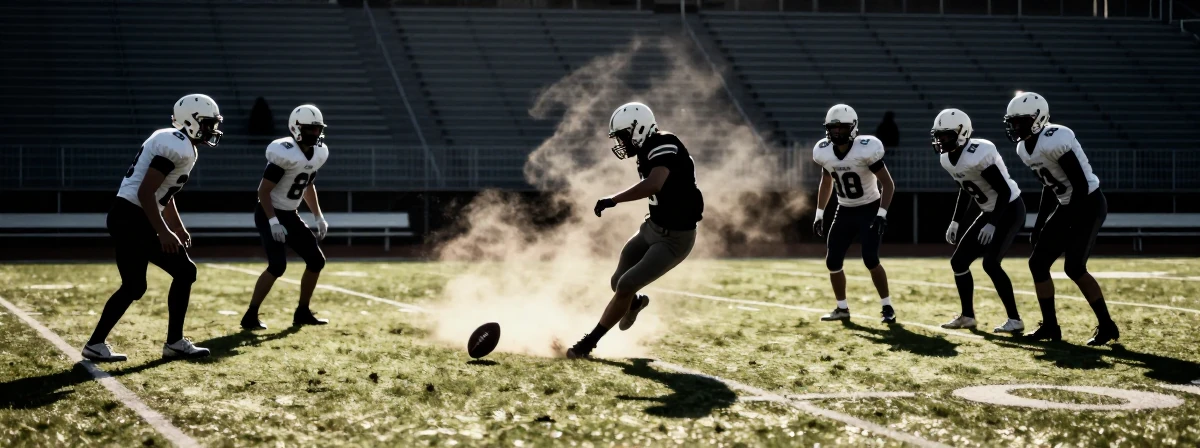
In the pros, an onside kick failure means giving the opponent a gimme field goal attempt from midfield. NFL kickers can nail a 55-yard field goal in the rain — you’re practically handing them points. It’s the difference between a game-breaking exploit and a guaranteed loss. No coach would survive a season trying this.
Madden Isn’t Real Football, But It Gets This Right
Competitive Madden players know: never punt, always onside kick, force turnovers at all costs. The simulation gets this right because it amplifies the same variables that make Pulaski’s strategy work — small field position differences and high turnover value. It’s a perfect mirror of high school ball’s reality.The Coaching Promotion Trap
When Pulaski’s coach tried this at the college level, his teams went 2-9. Why? Because at higher levels, the talent gap shrinks and the strategy becomes a liability. It’s like taking a cheat code from an easy mode game and expecting it to work in hard mode. The strategy only works when the system is rigged in your favor.
Recruiting Is the Real Play
Pulaski Academy isn’t just a school — it’s a talent aggregator. They pull from a massive pool, play smaller schools, and have unlimited resources. The “strategy” is just a way to maximize an already broken system. It’s like winning a game by exploiting a server bug and then claiming it was your skill.The Fear of Blame Kills Innovation
Coaches get fired for trying new things that fail. They don’t get fired for doing the same old thing and losing. That’s why you see the same conservative playcalling year after year. It’s not about what works — it’s about what’s safe. The data has been saying “never punt” for decades, but no one listens because the risk of failure is too high.
Optimization is about understanding the system you’re in. Pulaski’s strategy isn’t a blueprint for success — it’s a reminder that success often comes from manipulating the rules, not just playing by them. When the system is broken, the smartest play is to break it further.